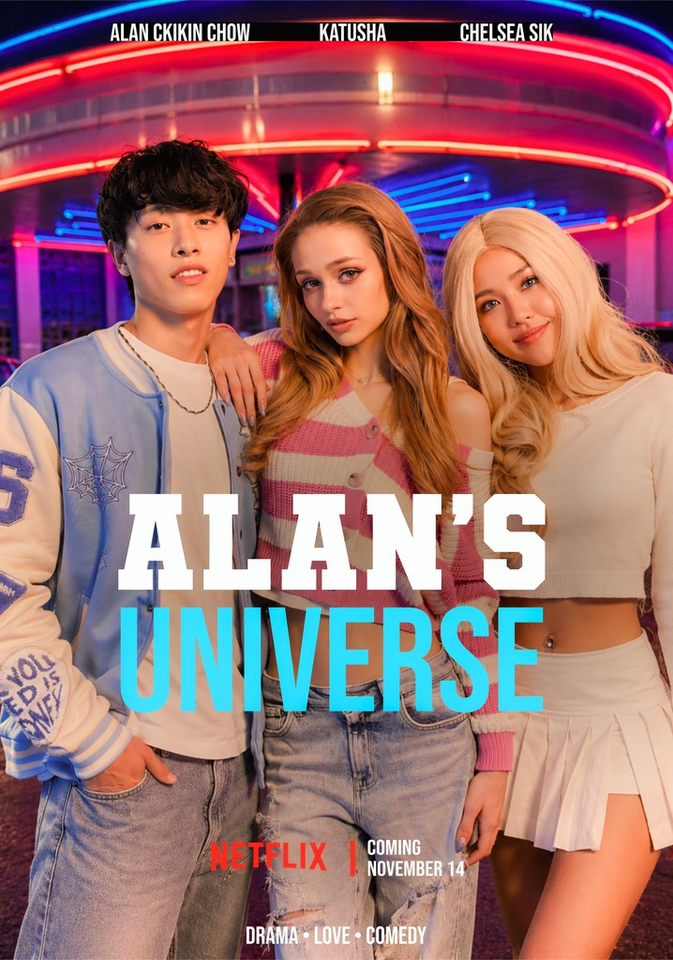
A familiar online series reaches a streaming audience
Alan's Universe entered Netflix's November 2026 release listings on 14 November, introducing a long-running online storytelling project to viewers who may not have encountered it through short-form video. The important distinction is that the title was not born on that day. Its creator had already built an extensive audience for interconnected stories about friendship, rivalries and unexpected transformations. The November development was the streaming availability of that existing universe, rather than the debut of an entirely new dramatic concept.
Netflix currently identifies the 2026 title as a comedy and lists 32 episodes in its catalogue. That is a snapshot of the service's listing when this guide was prepared on 23 November, not a claim about the precise number of episodes available in every region on opening day. Readers looking for a straightforward introduction can start with the premise and cast before exploring the instalments in their preferred order.
Who created Alan's Universe?
Alan Chikin Chow is credited as the creator and appears among the principal performers. His route into screen entertainment is unusual because the audience relationship developed through social video rather than an initial commission from a traditional broadcaster. The series demonstrates how a character-driven online format can travel beyond the platform on which its following was built, while keeping its recognisable combination of emotional situations, comedy and quickly understandable conflicts.
The creator's online following is relevant background, but the guide does not treat historic subscriber totals or cumulative video views as present-day measurements. Such figures change regularly and can distract from the more useful question of what Netflix subscribers will actually find. The streaming catalogue, rather than a viral headline, provides the clearest indication of the available viewing experience.
What is the story about?
At its broadest level, the show follows Alan and a circle of friends through situations in which ordinary school-age tensions can turn into fantastical detours. Romantic misunderstandings, social competition, family secrets and sudden changes of fortune give episodes their immediate hooks. The material combines the emotional vocabulary of youth drama with the rapid twists that helped make the project recognisable online.
Netflix presents love as a recurring force in the characters' adventures, but that does not mean every instalment tells the same story. Some episode titles point toward school status games, others suggest improbable physical transformations or wealthy and poor characters exchanging roles. The episodes should be approached as a varied collection of dramatic scenarios instead of a single conventional mystery with one continuous investigation.
Cast members and the character ensemble
The streaming listing credits Alan Chikin Chow, Chelsea Sik and Michelle Park in its principal cast display. Its extended credits also include Haven Everly and Kate Tolstopyatova. Those are verified performer names rather than an attempt to assign unconfirmed character biographies or romantic relationships to each actor. Viewers interested in a particular character should consult the episode itself, because the catalogue description does not provide a definitive part-by-part role map.
Reading the ensemble credits
The emphasis on an ensemble matters to the format. A youth-oriented drama can build engagement by shifting attention from one friendship or argument to another, allowing familiar faces to reappear in different social situations. That flexibility is especially useful for a series whose individual stories vary in duration and premise. It would, however, be premature to infer the personal experiences or motivations of any performer from a fictional storyline.
How many episodes can viewers find?
As checked on 23 November 2026, the Netflix catalogue presents 32 episodes. The displayed runtimes vary substantially, with some instalments closer to a quarter of an hour and others lasting around half an hour. This makes the show different from a tightly scheduled eight-part drama whose chapters all occupy roughly the same running time. The present episode count should always be read as a date-specific catalogue observation.
Examples of listed episode titles include No One Knew I Was a Famous Singer, Boys vs Girls: Control the School and My 7 Brothers Won't Let Me Date. Such titles communicate their dramatic premise before playback begins, helping audiences select a mood or scenario. They also signal the show's relationship to digital-first entertainment, where a sharply stated central situation can be just as important as a conventional episode number.
November 14 and the earlier announcement
The Netflix availability on 14 November was documented in contemporary November streaming schedules, including listings for the United Kingdom and United States. A separate creator announcement that Alan's Universe was headed to Netflix circulated on 13 July 2026. The July announcement is useful historical context, but it should not be repackaged as though the partnership itself had only been revealed in November.
These dates answer different questions. July establishes that the move was already public knowledge, while November marks when a new group of subscribers could find the programme in that month's catalogue. Separating announcement timing from service availability avoids confusing readers who remember seeing promotional material long before the title appeared on their streaming home page.
Why the format feels different from conventional television
The show's origins help explain its unusually flexible mixture of tones and lengths. Many conventional television dramas establish a consistent production structure and gradually deepen a single story over an entire season. Alan's Universe instead offers readily grasped situations that invite viewers into a conflict quickly. A school rivalry or romantic misunderstanding can become the entire point of an episode, with a dramatic reversal supplying the ending.
That structure has advantages and limits. It can make individual entries accessible to people who have never met the characters, yet it may also feel abrupt to viewers expecting extended psychological development in every chapter. These are observations about the format, not a claim of having reviewed each of the 32 episodes. A full critical assessment would require direct viewing and should remain separate from a factual availability guide.
Themes of friendship, appearance and belonging
One recurring dimension is the tension between how characters are perceived and how they want to be understood. Episode premises about popularity, beauty, wealth or unexpected family connections make that tension immediately visible. Beneath their heightened presentation, the stories can be read as invitations to consider loyalty and empathy when appearances change or social hierarchies are suddenly reversed.
Families choosing the series should note that playful marketing language does not replace regional maturity classifications. Netflix's India page displays U/A 13+, while other markets show age labels appropriate to their local classification systems. Parents and viewers should rely on the rating shown in their own account rather than assume that a single international classification covers every location.
Languages, access and regional availability
The Indian Netflix listing confirms that the title can be located on the service, while other regional listings show different combinations of audio and subtitle tracks. English is identified as the original audio language. Additional accessibility and language options can vary by country and by playback device, so the track menu inside an individual episode is the most useful final check.
Checking subtitles in your region
Subscribers should also avoid assuming that every country has identical episode availability solely because the programme has a globally visible title page. Library size, playback features and local classifications can differ. This article records the catalogue information available during its preparation, without promising a permanent regional inventory or suggesting that a programme's presence on a public web page guarantees access under every subscription.
The bigger picture for creator-led series
Bringing an established online universe to a major subscription platform illustrates a wider change in the relationship between creators and distributors. A performer can develop recognisable characters, repeated story situations and community expectations before a streaming service acquires or licences the resulting programme. For the audience, that shift can provide another route to discover a work that previously depended on recommendations within a social platform.
However, a streaming listing by itself does not prove that the distributor commissioned all existing episodes, financed the original production or agreed to produce a new season. Those are separate business claims requiring separate confirmation. The measured takeaway is narrower and more meaningful: as of November 2026, subscribers can encounter a creator-led series through Netflix's curated entertainment catalogue.
A separate K-pop project should not be confused with this series
Chow has also been connected with reports about a scripted music-oriented project involving HYBE America. Readers should not automatically merge that development with the existing Alan's Universe catalogue. A new production built around aspiring performers would have its own creative identity, episode structure and eventual release arrangements. The presence of Alan's Universe on Netflix does not establish the release date for a different project.
For now, the reliable distinction is between a series available to watch and another venture discussed in earlier industry reporting. This guide therefore avoids inventing an episode schedule, cast crossovers or a debut date for that separate production. Anyone tracking the artist's future work should look for an individually confirmed programme listing rather than draw conclusions from a shared creator's name.
What viewers should know before pressing play
People looking for a concise television-style season may be surprised by the wide spread of episode durations and the emphatic story titles. Starting with an instalment whose premise appeals to you is a reasonable approach, although following the service's displayed order can also introduce recurring relationships. Because the show draws from a broader online history, some viewers may already know its performers and character dynamics while newcomers meet them for the first time.
The most practical guidance is to check the available episode list, choose the preferred audio or subtitle track, and treat the displayed rating as a regional advisory. Readers should also distinguish catalogue facts from reviews or audience-rank claims. Neither a current view-count record nor an overall critical verdict has been independently established for this article.
Final perspective
Alan's Universe is a useful case study in how digital-native entertainment can gain a second discovery channel through streaming. Its November 14 catalogue arrival matters because it widens access to an existing body of character-led storytelling, not because it creates a new phenomenon overnight. The current 32-episode listing, named cast and flexible short-to-medium runtimes provide concrete information for curious viewers.
The enduring question is whether viewers accustomed to conventional television will enjoy a format built around sharply signalled conflicts and brisk emotional turns. That is ultimately a matter of personal taste, not a conclusion that can be settled from promotional material alone. What can be verified today is its presence in Netflix's catalogue, the artists credited there and the important difference between its July announcement and November availability.
PUBLISHED BY SUYASH PACHAURI, FOUNDER & OWNER, GLOBAL BOLLYWOOD | THE HOLLYWOOD SCOPE.