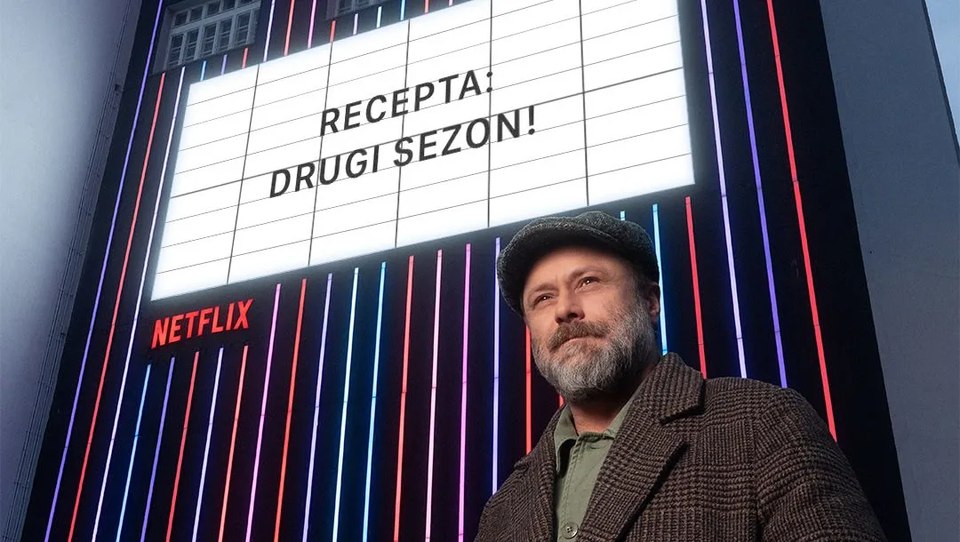
Anaesthesia secures a second season after its November success
The Polish medical drama Anaesthesia, also known as Znieczulenie, received a second-season renewal announcement on 17 November 2026. The decision gives the story of neurosurgeon Dawid Łazarz another chapter after a first season built around professional fallout, hospital politics and the difficult distance between clinical confidence and ethical judgment. Leszek Lichota is confirmed to return in the central role. The renewal is a dated industry development rather than a newly announced premiere, and there is no confirmed second-season release date to place on the calendar.
A continuation matters because the first season was designed around consequences, not simply the resolution of isolated medical cases. The premise moves a gifted surgeon out of the prestigious institution where his career collapsed and into a provincial hospital whose community does not automatically welcome his methods. That change of scale creates an unusually effective starting point for long-form drama. Instead of measuring the protagonist only by technical skill, the series can test whether he understands trust, accountability and the people affected by his decisions.
What has been confirmed for the next chapter
The principal casting confirmation is specific: Lichota will again portray Dawid Łazarz. The announcement raises questions about the aftermath of the doctor's earlier choices and the extent to which he can challenge established procedures without becoming captive to his own certainty. It does not provide a complete cast announcement for the second season, a new episode count, a filming timetable or a premiere window. Those omissions are important for readers planning what to watch, and they should not be filled with guesses.
The series already has an identifiable creative foundation. Its first season was directed by Łukasz Ostalski and written by Dana Łukasińska, Bartosz Janiszewski, Marcin Ciastoń and Beata Halastra. Medical consultants contributed to the production's depiction of treatment and procedure, while physician and television producer Neal Baer supplied creative experience. These are established first-season credits. They should not automatically be presented as commitments for every future episode until the production announces its next creative configuration.
The distinction between a renewal and a release
A renewal confirms the intention to continue a production; it does not confirm that cameras have started rolling, that a screenplay is complete or that a release slot has been secured. At the 17 November announcement, the newly ordered season had no disclosed broadcast schedule. The eight episodes available on the service belong to the first season. For viewers encountering the title for the first time, the practical position is simple: the first chapter can be watched now, while the announced follow-up remains in development without a publicly established arrival date.
Why the first season travelled beyond Poland
The first season quickly became a domestic talking point. The November announcement reported that the show reached the top position in Poland's series ranking within a day of its initial release. It also described an international audience extending to several European countries and markets farther afield. At that historical checkpoint, it was placed fifth in the global non-English television ranking. That fifth-place figure describes a particular reporting moment and must not be mistaken for the show's current chart position, an all-time record or a permanent ranking.
The broader significance is that the series does not require an internationally familiar hospital or an English-language cast to communicate its stakes. A medical emergency, a contested decision and the vulnerability of a patient are immediately understandable dramatic circumstances. The Polish setting adds another layer: personal reputation and institutional hierarchy operate within a particular community, producing tensions that cannot be reduced to generic action beats. A locally grounded story can travel when its emotional conflicts remain intelligible without sacrificing its identity.
Viewership needs the correct time frame
Streaming rankings are highly sensitive to release calendars, measurement windows and competing titles. A platform Top 10 position is not the same metric as unique viewers, total completed episodes or a lifetime audience. The renewal announcement linked early performance to its decision to continue the drama, but it did not publish a complete independent audience breakdown for every country. Any later comparison should use a similarly defined period rather than convert a dated rank into an invented viewership total.
Dawid Łazarz and the price of decisive medicine
The central character is a skilled neurosurgeon whose career at a major hospital is disrupted after a risky operation ends unsuccessfully. Moving to a smaller institution does not erase that history. It places him within a close professional environment where his willingness to disregard customary boundaries can save time yet damage confidence. His authority is therefore under constant scrutiny. The most compelling tension is not whether he can deliver a dramatic speech before surgery, but whether the people around him can responsibly rely on his judgment.
Medical drama is especially persuasive when it treats expertise as necessary but insufficient. Patients have rights, relatives carry fear, colleagues manage scarce resources and the hospital must maintain processes intended to protect everyone. A charismatic doctor may identify a better course in a particular emergency, but that does not make every challenge to protocol ethically justified. Anaesthesia has room to examine this ambiguity through relationships and decisions rather than by turning each episode into a simple contest between a hero and an obstructive institution.
The ensemble behind the first-season hospital
The first season features Karolina Gruszka and Aleksandra Popławska alongside Lichota, with Filip Kowalewicz, Dorota Kolak, Masza Wągrocka, Krzysztof Stelmaszyk, Gamou Fall, Hugo Tarres and other supporting performers in the production's wider cast. Their presence helps establish the hospital as a functioning community rather than a stage on which one doctor makes every decision. Whether each performer returns remains an individual question for the new season, not a point that can be settled merely from the renewal headline.
The creative opportunity for any continuing ensemble is to give secondary characters independent professional motives. A surgeon who values caution, a department head who must defend an institution, and a colleague dealing with private difficulties can all be sympathetic even when they disagree with the protagonist. When those perspectives are treated seriously, confrontation gains meaning. Viewers do not have to accept one character's position to understand why that position exists, and the story becomes richer than a string of clever medical rescues.
Procedural realism and dramatic responsibility
Hospital stories are necessarily condensed for television. A credible production can still distinguish diagnosis, informed consent, patient safety and professional disagreement instead of using clinical terminology solely for excitement. The first season's use of medical consultation is relevant for that reason. It provides a framework for making scenarios believable while allowing artistic interpretation. A second season can build upon that foundation without presenting fictional treatment choices as real-world medical instructions.
What the renewal means for European-language storytelling
The renewal reflects a wider commercial opportunity for locally produced, non-English drama. A Polish hospital is both a specific social setting and a source of universal narrative pressure. International availability enables viewers unfamiliar with the location to discover the series through characterization, while the original language and cultural detail give it an identity distinct from imported procedural templates. The lesson for producers is not that every market requires the same medical formula, but that a genre can remain recognizable while its characters and institutions feel rooted in place.
A renewal also gives the creative team more room to pursue the effects of earlier decisions. In a standalone story, an ethically questionable choice can be resolved with one final operation or a short apology. A continuing series may follow damaged relationships, policy changes and the ongoing cost of public attention. That continuity is particularly valuable in medical storytelling because the professional and emotional aftermath of a crisis can be as revealing as the crisis itself.
What viewers should know before the second season
For new viewers, Anaesthesia's existing first season has eight episodes and follows Dawid's transition from a prominent medical setting to a smaller hospital after an unsuccessful operation. The series mixes high-pressure clinical situations with workplace conflict and personal consequences. It is an adult-oriented drama rather than a documentary, and its medical cases are part of fictional storytelling. The title also appears under its Polish name, Znieczulenie, which can be useful when searching programme catalogues or discussing the series internationally.
For returning viewers, the key confirmed point is the survival of the central character's storyline with Leszek Lichota attached. As of the November 17 announcement, production dates, second-season episode count and precise release timing remained undisclosed. Any posts purporting to give a complete schedule, final cast list or specific plot resolution would go beyond the established information. Readers should distinguish official production updates from promotional speculation as further details emerge.
Editorial perspective: a continuation with genuine dramatic questions
Anaesthesia's appeal lies in the friction between an exceptional individual's instincts and the systems designed to protect patients. That conflict is durable enough to sustain another season, provided the writing respects the complicated reality of collective care. A renewal based on early audience response is encouraging, but the decisive creative question will be whether the continuation deepens the characters instead of repeating familiar emergencies. The original dramatic premise offers multiple paths through responsibility, humility, rivalry and the consequences of decisions made under pressure.
The 17 November 2026 renewal remains relevant because it confirms that a distinct Polish medical drama has a future, with its leading actor returning. It does not require inflated claims about record-breaking numbers or invented premiere dates to be worth covering. The story is a clear production milestone, situated in its actual historical context, and a useful guide for viewers who want to understand what is certain about the series and what has yet to be announced.
PUBLISHED BY SUYASH PACHAURI, FOUNDER & OWNER, GLOBAL BOLLYWOOD | THE HOLLYWOOD SCOPE.