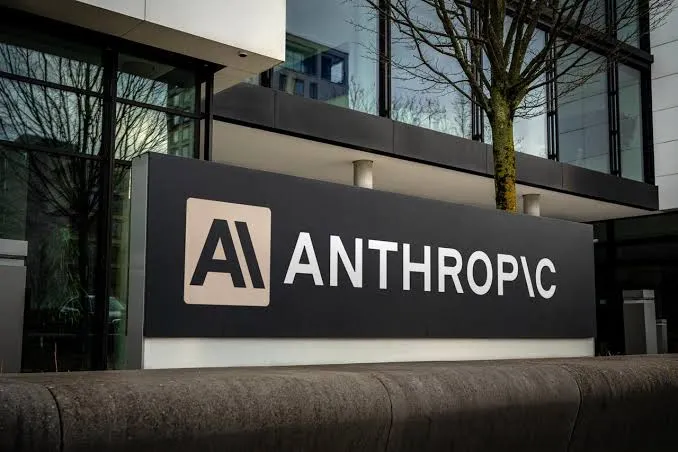
A blockbuster public-market test for artificial intelligence
Anthropic has priced its initial public offering at $83 a share, placing the artificial-intelligence company’s valuation near $1.5 trillion as trading begins. The scale makes the debut a defining moment for the current AI investment cycle, moving one of the sector’s most closely watched private companies into the daily scrutiny of public markets.
The Anthropic IPO arrives after years of extraordinary spending on models, computing infrastructure, research talent and distribution. Investors now have to judge whether that investment can produce durable revenue and margins rather than only technological progress. The offering therefore serves as a referendum on both the company and the broader belief that generative AI will become a foundational layer of the global economy.
Why the valuation attracts attention
A valuation approaching $1.5 trillion places Anthropic in territory normally occupied by the world’s largest technology businesses. That comparison creates demanding expectations. Public shareholders will look for rapid growth, expanding enterprise adoption and credible control of infrastructure costs. Any slowdown can have an outsized effect when a company begins trading at such a rich multiple.
The price also reflects scarcity. Investors have had limited direct access to leading model developers because much of the sector remains privately held or sits inside diversified technology groups. A listed pure-play AI company offers a clearer way to participate in the theme, which can increase demand even while the economics of training and operating advanced models remain uncertain.
Enterprise adoption is central to the case
Anthropic’s Claude products compete across coding, analysis, workplace automation and application development. Enterprise customers matter because they can sign larger, longer contracts and integrate models into recurring processes. That revenue may be more predictable than consumer subscriptions, but companies also demand security, reliability, regulatory support and measurable returns.
The public-market story will therefore depend on more than model benchmarks. Anthropic must show that customers keep using its systems after trials, that usage expands across departments and that the value created exceeds the cost of inference. Partnerships with cloud and technology providers can broaden distribution, though they also shape margins and strategic dependence.
Compute costs remain the difficult equation
Advanced AI requires expensive chips, data centres and energy. Training a frontier model is only one part of the bill; serving millions of queries generates continuing inference costs. Revenue can grow quickly while cash demands remain high, especially as competition pushes companies to lower prices and release more capable systems.
Investors will examine gross margins, capital commitments and the rate at which efficiency improvements offset rising model complexity. A company can reduce the cost per task while still spending more overall because demand and capability expand. Anthropic’s ability to manage that relationship will help determine whether the valuation is supported by operating leverage or remains dependent on enthusiasm.
The debut will influence the wider AI sector
A strong first trading period could encourage other AI companies and infrastructure providers to consider public offerings. It could also lift valuations across the private market by giving investors a new comparable company. A weak reception would send the opposite signal, forcing boards and venture investors to revisit assumptions made during the funding boom.
The Anthropic IPO is therefore larger than one listing. At $83 a share and a valuation near $1.5 trillion, the company enters the market carrying expectations for an entire industry. Its next results will need to convert technical leadership into transparent financial evidence. Public investors may reward growth, but they will also ask questions that private funding rounds could postpone.
What comes next
Trading volatility in the first days will reveal demand but not the company’s long-term value. Lock-up periods, index eligibility and future share sales can all influence the price after the initial excitement. Investors will need several reporting cycles before judging how closely market expectations match operating performance.
Regulation is another material factor. Governments are developing rules for safety, copyright, competition and the use of AI in sensitive sectors. Compliance can raise costs, yet clear standards may also favour well-capitalised companies able to document their systems. Anthropic’s public disclosures will now give markets a more detailed view of how those obligations affect growth. The listing also creates a benchmark against which future model-company funding rounds and potential offerings will be compared. That benchmark will evolve quickly once audited quarterly results replace private-market estimates. Revenue quality will matter as much as headline growth.
PUBLISHED BY SUYASH PACHAURI, FOUNDER & OWNER, GLOBAL BOLLYWOOD | THE HOLLYWOOD SCOPE.