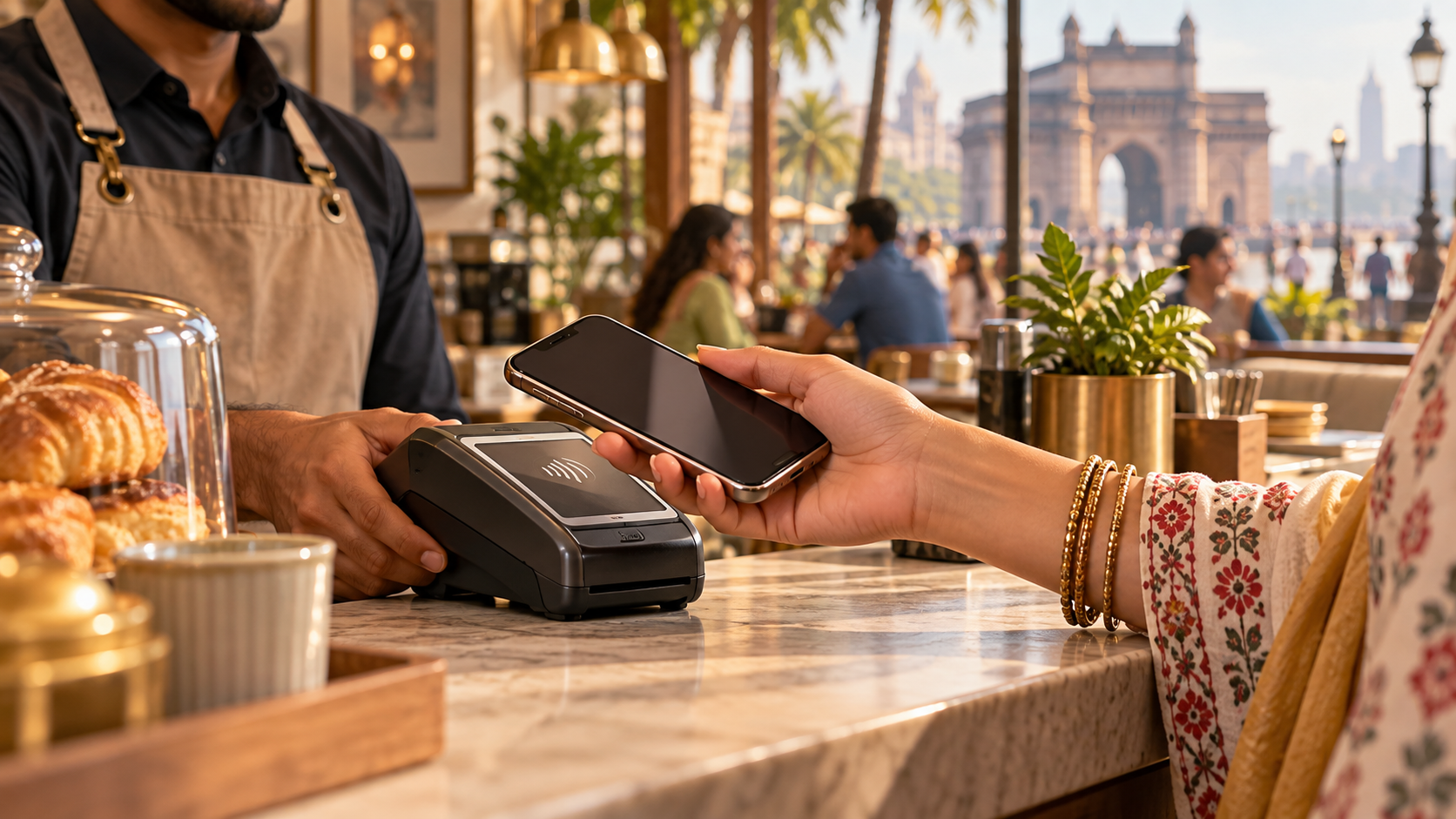
The Apple Pay India launch on September 30, 2026 introduces another way for eligible cardholders to pay through devices they already use. Axis Bank is the initial banking partner, with support beginning for its Visa and Mastercard credit cards. RuPay cards are outside the initial rollout. The announcement is significant, but its scope should remain clear: the arrival of a service in India does not make every Indian bank card eligible or mean that every merchant will accept every payment method offered through it.
Apple Pay India launch starts with Axis Bank eligibility
For a customer, the first question is whether the specific card and device combination is supported. The words “Apple Pay available” describe a market launch, while eligibility depends on the participating issuer and payment network. Those layers should be checked together. A person with a different bank's card should not assume access simply because a friend with an eligible Axis Bank card can use the service. Expansion beyond the initial arrangement requires its own confirmed announcement.
Device use also varies by setting. An iPhone or Apple Watch can support the familiar contactless experience at an appropriate terminal, while supported devices can offer Apple Pay during eligible online or in-app purchases. An iPad should not be described as a universal substitute for a phone at a shop's contactless terminal. The relevant question is where the payment is being made and which interaction the particular device and merchant support.
Contactless card payments and UPI serve different paths
The new service enters a market where customers already have established digital payment habits. Apple Pay uses supported payment cards, while UPI provides a route for eligible bank-account payments. A similar-looking checkout moment does not make the underlying services identical. Card eligibility, merchant acceptance and the way a transaction is processed still matter. The useful comparison is therefore about the circumstances in which each option is convenient, rather than a claim that one launch immediately replaces another system.
For many shoppers, the decision will be ordinary and practical. They may prefer a familiar payment instrument, a particular device or the option offered at a checkout. A merchant benefits when the customer can complete a legitimate purchase with minimal confusion. That does not require every business to redesign its payment experience around a single wallet. Clear acceptance information and consistent staff understanding can be as valuable as adding another button to an online payment page.
Apple Pay security changes what the merchant receives
Apple's security documentation explains that Apple Pay uses a device-specific account number and transaction security information instead of sending the actual card number to a merchant during an in-store payment. Authentication can involve the supported device's security features. This is a meaningful difference in how payment credentials are presented. It does not mean that a purchase stops being a card transaction or that the card issuer's normal relationship with the customer disappears.
The customer still needs to pay attention to the amount, merchant and purchase being authorised. A secure payment mechanism cannot determine whether a product is good value or whether an unfamiliar seller will deliver what was promised. Separating payment security from the merits of a transaction helps avoid exaggerated claims. The technology protects particular parts of the payment process; thoughtful purchasing and appropriate account management remain separate responsibilities.
Merchant acceptance is part of the experience
An Apple Pay India supported cards list answers only the cardholder side of the question. The merchant must also support the relevant payment route and network. In physical stores, terminal readiness and staff familiarity can influence whether the interaction is smooth. Online, the integration has to work with the checkout flow. A payment option that appears available but produces confusing failures can create more friction than a smaller, clearly explained set of dependable choices.
Businesses considering the service can assess their own customer demand rather than assuming a uniform national response. A retailer with many customers using compatible devices may see a different level of interest from a business whose customers primarily use other payment methods. The commercial test is whether the additional option helps shoppers complete purchases reliably. Adoption figures, repeat use and support questions would provide a more useful picture than launch-day enthusiasm alone.
A measured beginning in a crowded market
The initial Axis Bank Apple Pay arrangement creates a defined starting point from which broader adoption can be assessed. Its progress will depend on eligible-card coverage, merchant acceptance and whether customers find the experience useful enough to repeat. Each of those factors can develop at a different pace. More participating banks would increase potential access, but habitual use would still depend on a service fitting naturally into everyday shopping.
The Apple Pay India launch is therefore best understood as an expansion of choice within an already active payments environment. Customers gain another possible interface for supported cards, and merchants gain another option to evaluate against their needs. The strongest result would be an experience whose availability, authentication and acceptance are easy to understand. That clarity will matter long after the novelty of the announcement has passed.
PUBLISHED BY SUYASH PACHAURI, FOUNDER & OWNER, GLOBAL BOLLYWOOD | THE HOLLYWOOD SCOPE