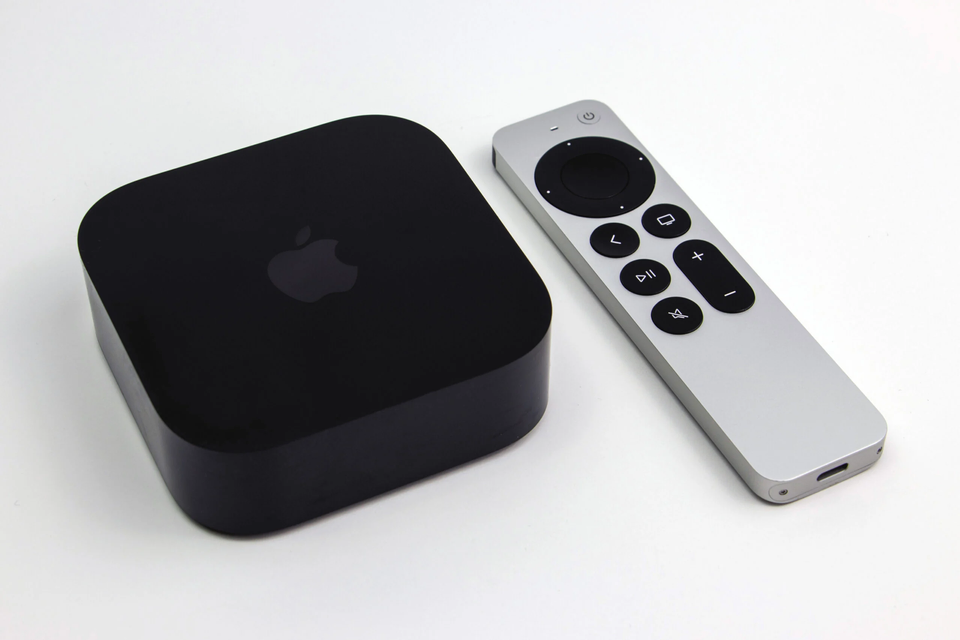
The fourth generation of Apple TV 4K went on sale in India on 13 November 2026, bringing a substantially more expensive proposition to households that use television as their primary screen for cinema and series. The product was introduced on 13 October, when advance orders began, but retail availability followed a month later. At ₹39,900, its appeal depends less on the number of streaming applications it can open than on whether its revised hardware and control system improve the experience of watching those applications.
A home cinema investment rather than another subscription
There are three different products hiding behind the familiar Apple TV terminology. The physical box connects to a television; the application organises compatible viewing services and digital titles; the subscription service provides its own catalogue. Paying for the first does not automatically purchase every film available through the second, or confer permanent access to the third. A household comparing the new generation against an existing smart television should therefore consider both the upfront outlay and the continuing cost of the services it actually watches.
This distinction matters in India, where an evening may move between a Hindi film, a regional language series and an international documentary. The value of a unified interface is the reduction of friction between viewing choices, not a guarantee that every distributor has granted the same rights in every market. Availability, subtitles and dubbing should still be checked against the individual title and the relevant subscription before a viewer commits to a particular platform.
Processing power and the moving image
The A19 processor underpins the hardware revision. The manufacturer's stated performance increases reach 50 percent for the CPU and twice the previous graphics speed under its comparison conditions. A dedicated AV1 decoding component is also part of the design. Neither specification means that an older master will suddenly gain detail that was absent from its original photography. Their more practical relevance lies in interface responsiveness and the handling of compatible video streams.
Why the television remains important
Cinematographers spend considerable effort controlling contrast, colour relationships and motion. At home, the display and its configuration remain central to the result, regardless of how fast the attached streaming box becomes. An external player can simplify navigation or supply a compatible signal, but it cannot compensate for every limitation of a panel, room lighting or the picture mode selected by the viewer. Before spending on a replacement player, film enthusiasts can examine whether their current system already reproduces the material they watch satisfactorily.
Finding films through conversational search
The fourth generation incorporates three microphones for voice interaction across the room. Siri AI is offered in English in India as a beta, and its ability to suggest programmes gives the television a different role from a conventional remote controlled menu. However, initial independent hands-on impressions reported inconsistent follow-up answers, a reminder that conversational recommendations should not be treated as a definitive source of film credits, classification or distribution information.
A viewer might use natural language to narrow a crowded catalogue by genre, actor or intended audience. The benefit is especially apparent when several members of a family have different preferences. The software can assist discovery, but it cannot replace a considered choice about what to show to children or resolve every disagreement about regional rights. The relevant age classification and language tracks should always be checked in the selected programme's own listing.
Existing owners have another option
Siri AI support extends to compatible Apple TV 4K models from the second generation onwards. Its operation requires the appropriate software and an eligible iPhone or iPad belonging to the person who configures the home. Personalised functions have additional device requirements. For that reason, someone who mainly wants the new assistant should check the eligibility of their existing equipment before buying another box. The newest remote adds locating capabilities, but it is also sold independently.
Planning the audio system
The new model permits a configuration of four compatible HomePod speakers arranged as matched front and rear pairs. This is an interesting option for viewers who prioritise spatial presentation without building a conventional receiver based system. It also introduces additional equipment costs and practical decisions concerning speaker placement, available sockets and room layout. A dedicated cinema enthusiast with an established surround system may have quite different priorities from a household assembling its first setup.
Sound design is not merely an effect layered on top of a story. The relationship between a whispered line, a distant environmental noise and a musical transition often determines how an audience understands a scene. A sensible upgrade should preserve intelligibility and balance instead of assuming that a greater number of speakers necessarily produces a more convincing interpretation of the soundtrack.
The Indian buying decision
The November retail launch provides a useful point at which to reconsider the home entertainment budget. Owners of older, slow television interfaces may see greater practical benefit than viewers with recent sets that already run their preferred services smoothly. The price is substantial enough to justify comparing alternatives, examining the existing audio system and checking the actual catalogue available in India. A subscription to the service itself can also be enjoyed on supported devices without purchasing this particular box.
For cinema professionals and serious home viewers, the most worthwhile question is whether the new equipment removes a real obstacle between the film and its audience. The fourth generation combines a revised processor, voice discovery and expanded speaker options, but its purchase should follow a clear assessment of the room and the films the household wants to experience. The screen, sound, source material and viewing conditions still work together to shape what reaches the spectator.
PUBLISHED BY SUYASH PACHAURI, FOUNDER & OWNER, GLOBAL BOLLYWOOD | THE HOLLYWOOD SCOPE.