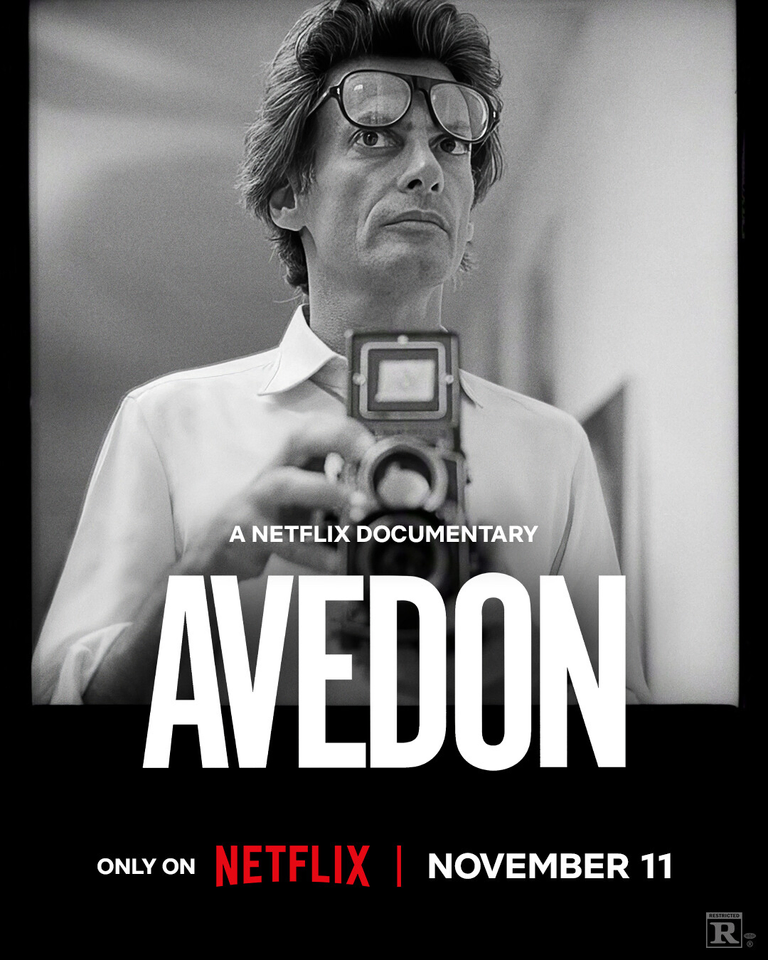
A November streaming arrival with lasting relevance
Ron Howard’s documentary Avedon became available on Netflix on November 11, 2026, bringing a film about Richard Avedon’s photographic career to home audiences after its festival circulation. The American feature runs approximately 104 minutes. Its subject is a photographer whose work traversed advertising, fashion, celebrity and the documentation of American society. For audiences interested in cinema as well as still photography, the attraction is the opportunity to explore how a director approaches an artist whose reputation rests on individual frames rather than moving pictures.
The November release is a distribution milestone, not the documentary’s first public screening. Avedon appeared in the Special Screenings programme at Cannes in May 2026. Howard’s film therefore arrives on streaming with a festival history already behind it. Readers who missed that earlier coverage can now approach the title as a complete feature rather than a forthcoming festival selection.
What the documentary investigates
The project draws upon Richard Avedon’s own archives, with material from his working life and interviews with people familiar with his artistic process. Those resources create a useful distinction between the finished photograph and the circumstances under which it was produced. A portrait can appear effortless when viewed in a gallery, yet its composition, lighting, subject direction and timing are the result of choices. For anyone learning to interpret visual storytelling, this difference between an image and its making is particularly valuable.
Avedon’s legacy is not limited to pictures of celebrated personalities. His career encompassed commercial assignments alongside socially engaged portraiture. The two forms raise different questions about representation. A fashion photograph may communicate aspiration, while a portrait of a worker or a public figure can invite reflection on status, identity or the way a person presents themselves to the world. The documentary’s broad subject offers viewers a way to consider these overlapping purposes without reducing photography to either glamour or reportage.
Why the still image matters to filmmakers
A film camera records change through time, but a photographer selects one instant and asks the viewer to infer what came before and after it. The relationship is especially relevant to directors and cinematographers. A subject’s posture, the distance of a camera and the space surrounding a face can all communicate ideas before a line of dialogue is spoken. Avedon’s work provides an interesting case study for people interested in those fundamentals, even if their own creative field is fiction rather than documentary.
The creative team and documentary contributors
Howard directs the film, with cinematography credited to Robert Chappell, editing to Andrew Morreale and music to David Fleming. Imagine Documentaries and Fifth Season produced the project in association with the Richard Avedon Foundation. Its producers include Brian Grazer, Howard, Dallas Brennan Rexer, Sara Bernstein, Christopher St. John and Justin Wilkes. This production structure brings documentary filmmaking together with access to a specialised photographic archive.
The people identified in the festival credits include Avedon’s son John, photographers Joel Meyerowitz and Tyler Mitchell, designer Calvin Klein, models Beverly Johnson, Lauren Hutton and Twiggy Lawson, writer Hilton Als and actor Isabella Rossellini. The participants represent different points of contact with the wider culture in which Avedon worked. Their inclusion does not mean that each has the same relationship to the photographer, and the film should not be approached as a fictional drama with an ensemble cast playing invented characters.
The editorial challenge of an extensive archive
An artist with decades of output presents a particular problem for a feature-length documentary. Reproducing a succession of celebrated photographs is not necessarily the same as explaining a creative career. A filmmaker must select which periods, experiences and changes of direction merit attention. The viewer can use the documentary’s structure to think about how biographical information acquires meaning when placed beside visual evidence. This is also a reminder that an archive-based film remains an interpretation shaped by its makers.
Where to watch and what to check before viewing
Netflix lists Avedon as a 2026 documentary and identifies English as the original audio language. Its accessible catalogue also lists an English audio-description track, alongside German, Latin American Spanish, French and Polish audio. The listed subtitle and download options may differ by location or device. The United States streaming date is November 11. Viewers in India and other markets should check their own account’s catalogue and playback options rather than assume every regional listing is identical.
The accessible US-facing title page displays an R classification. The documentary includes sensitive archival imagery and adult material, so families should consult their local classification and content guidance before viewing with younger audiences. The earlier cinema classification and the streaming listing are different records; neither should automatically be treated as a universal age recommendation.
A useful addition to a filmmaker’s viewing list
The enduring appeal of this release is its potential to connect several audiences: people interested in the history of fashion, students of portrait photography, documentary editors and filmmakers examining the use of framing. It also offers an occasion to reflect on the relationship between artistic ambition and paid work, an issue familiar to many professionals in visual industries. Rather than treating its arrival as a short-lived publicity announcement, the November streaming milestone opens a practical route to studying a substantial creative career.
PUBLISHED BY SUYASH PACHAURI, FOUNDER & OWNER, GLOBAL BOLLYWOOD | THE HOLLYWOOD SCOPE.