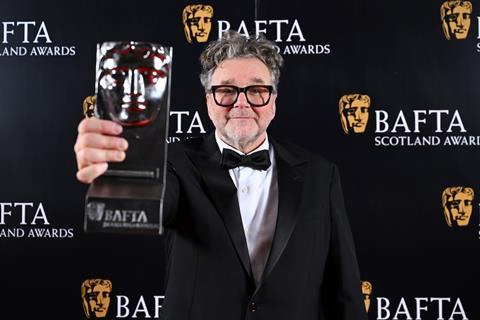
A Completed November Ceremony With Lasting Value
The BAFTA Scotland Awards took place in Glasgow on 15 November 2026, recognising achievements across film, television, writing and specialist craft. The results remain meaningful after the ceremony because they document careers and productions rather than simply announcing an event. I Swear led the winners with three distinctions: Feature Film, Director in Fiction for Kirk Jones, and Actor in Film for Robert Aramayo. The outcome provides a useful starting point for understanding the year's Scottish screen achievements.
A dated awards record should make a clear distinction between a nomination, an upcoming ceremony and a completed result. The 15 November winners supersede earlier promotional material as the definitive awards outcome. They also tell a broader story than a single feature's success. Recognition covered scripted television, documentary direction, factual entertainment, short-form filmmaking and the people whose work behind the camera makes production possible.
Three Awards for I Swear
I Swear secured the Feature Film honour. Kirk Jones was separately recognised for directing fiction, and Robert Aramayo won Actor in Film. These are distinct categories, and their meanings should not be collapsed into a generic statement that the production won three identical prizes. One award recognises the film, another the director's achievement and a third an individual performance. Taken together, they mark the feature's particularly strong position in this year's ceremony.
Film Recognition Is Collaborative
The three wins illustrate how a notable film can receive recognition across creative roles. Directing involves decisions about the whole dramatic structure, performance, pacing, sound and the relationship between visual material and the script. Acting asks a performer to make a character's experience accessible and persuasive. A feature-film prize also acknowledges the work as a completed production. Those contributions complement one another without being interchangeable.
Robert Aramayo had already received major British awards attention earlier in 2026. His Scottish acting honour adds another date to that career record. Such milestones are most useful when accurately linked to their award category and production, rather than turned into a generalised claim about future box-office performance. Awards can draw viewers toward a film and its performers, but they cannot predict commercial outcomes.
Film Performances Beyond the Leading Title
Lesley Manville was named Actress in Film for Midwinter Break. That distinction deserves individual emphasis even though I Swear collected the greatest number of awards. Coverage that concentrates only on the night's leading feature risks obscuring the breadth of work recognised across film. Accurate archives need the names of recipients, the productions attached to their recognition and the discipline involved.
A performance award should also not be confused with an award for the film itself. The distinction matters to readers tracing an actor's career, as well as to industry professionals assessing the range of roles that attract recognition. Maintaining this separation produces a clearer history of the ceremony and makes the article useful long after the original social-media attention fades.
Scripted Television Results
The Bombing of Pan Am 103 won the award for Television in the Scripted category. Lucy Halliday was recognised as Actress in Television for The Testaments, while Robert Carlyle won Actor in Television for The Hack. These results encompass a complete scripted production and two individual performances, rather than three awards for the same creative contribution.
Programmes and Performers Have Different Awards
The scripted-programme honour belongs to the production. The acting honours acknowledge the work of individual artists. That is a basic but important editorial distinction. When award lists are repeatedly shortened, programme titles can become detached from the people credited, and audiences can receive an inaccurate impression of which category actually recognised a particular achievement.
The diversity of the three television selections also reflects a screen environment in which different kinds of narrative material coexist. An archive need not claim that all the programmes share the same storytelling methods. It is more informative to recognise that they entered the results through different categories, each with its own professional emphasis. This is why precise credits and category names matter more than a generic description of an awards sweep.
Documentary, Writing and Factual Television
Felipe Bustos Sierra won Director in Factual for Everybody to Kenmure Street. Documentary direction calls for decisions about access, evidence, structure and the treatment of real people. Recognising this work within an awards ceremony broadens the meaning of screen direction beyond scripted performances and constructed fictional scenes.
Maggie O'Farrell received the Writer in Film or Television honour for Hamnet. Writing can remain less visible than acting in popular discussion, although a screenplay shapes the sequence of events, the relationships between characters and the possibilities for performance. A writing honour identifies an important dimension of creative authorship that should not disappear within celebrity-focused coverage.
Other factual results also deserve a clear record. Lover, Liar, Predator won Single Documentary, and The Beauty Queen and the Catfish won Factual Series. Banjo and Ro's Grand Island Hotel received the Factual Entertainment distinction, while Saturday Mash-Up! Live won Entertainment. These works belong to different programme categories, with different production and editorial demands. Their inclusion shows how the ceremony looked beyond prestige drama.
Short Film and Public Choice
Who Will Be Remembered Here won the Short Film and Animation award. Recognition for shorter work can be especially important to filmmakers building a career through projects with limited resources and tightly focused storytelling. Its placement alongside established feature films and television productions gives a broader view of creative achievement.
Stephen Libby received the Favourite Scot on Screen audience honour for The Traitors. This prize was decided by a public vote, which distinguishes it from the other competitive awards. A viewer-selected result reveals a different kind of engagement, and it should be identified as such rather than presented as though its voting process were identical to every jury or professional category.
Special Recognition for Television and Craft
Outlander received the Outstanding Contribution to Television award. Sam Heughan, an actor and executive producer on the series, and showrunner and executive producer Matthew B. Roberts were among those present for the recognition. The distinction celebrates the programme's wider contribution and continuing impact rather than one episode or performance. Such honours help preserve the history of sustained screen work alongside the awards for individual titles released during a particular year.
The Work of Location Management
Lloret MacKenna Dunn received the Outstanding Contribution to Craft award, presented in memory of Robert McCann. Location management combines creative judgment with permissions, scheduling, logistics, relationships with communities and the practical needs of a crew. Viewers may remember the places shown on screen without realising how much preparation was involved in securing and managing those spaces.
Recognising a supervising location manager makes the industry record more complete. Film and television production depends on departments whose work is often most successful when it appears effortless. Craft honours can encourage aspiring professionals to see the range of possible careers in production, rather than assuming that directing and acting are the only meaningful disciplines.
What the 2026 Awards Tell Future Readers
Edith Bowman hosted the 15 November ceremony in Glasgow. Earlier nomination announcements and guest lists helped audiences anticipate the event, but they are no longer substitutes for the completed results. The proper historical account begins with what actually happened, provides the correct winners and separates competitive categories from special contribution honours.
For filmmakers, the results create several useful reference points. I Swear demonstrates recognition across a production, its director and a performer. The television awards show the distinction between programmes and individual acting. The documentary and factual categories highlight other forms of screen work. Outlander and the location-management honour widen the focus from new releases to long-term achievement and professional craft.
Final Perspective
The lasting importance of the BAFTA Scotland Awards 2026 is not restricted to the three wins for I Swear. The ceremony recognised a broad landscape of screen practice, including film performances, fiction and factual direction, writing, short film, audience response and long-term television production. Precisely recording those achievements gives readers a reliable retrospective and leaves room for further exploration of each artist and programme.
This is a completed 15 November 2026 awards development, not breaking news. Its continuing editorial value comes from preserving accurate credits, distinguishing the different categories and acknowledging the varied creative contributions that shaped the year's Scottish screen culture.
PUBLISHED BY SUYASH PACHAURI, FOUNDER & OWNER, GLOBAL BOLLYWOOD | THE HOLLYWOOD SCOPE.