Introduction
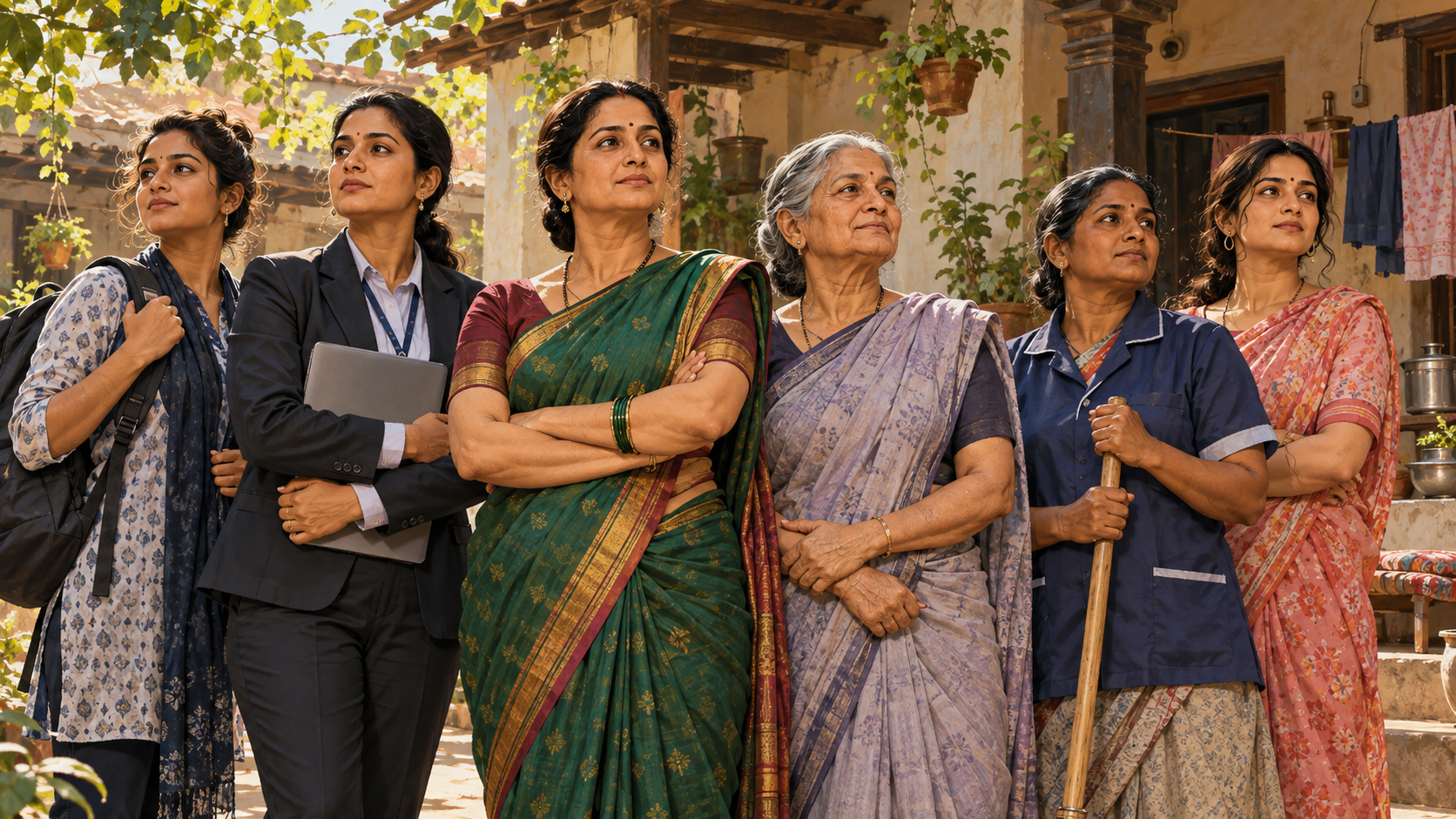
Bandkhor takes a word commonly used to condemn resistance and asks who gets to decide when a woman’s refusal becomes rebellion. Mahesh Manjrekar’s Marathi ensemble follows six women from different backgrounds whose lives are shaped by expectations they did not create. Meera, Sharda, Usha, Rupa, Seema and Urvashi face different forms of control, yet the film gradually links their struggles through the larger question of dignity. The subject gives Manjrekar room for a broad social drama rather than a single-issue film. Its strongest moments come from recognising that oppression does not always arrive through spectacular cruelty; it can also be hidden inside family duty, respectability, silence and the demand to keep adjusting.
Screenplay & Script Sense
The screenplay begins with confidence because the six-woman structure immediately promises contrasting experiences. Each track can illuminate a different mechanism of control, and the early sections benefit from that range. The challenge is repetition. Once the film has clearly established its central argument, several later scenes restate the same idea through different characters without always adding a new contradiction. That weakens dramatic momentum even though the intention remains important. The dialogue by Irawati Karnik and Siddharth Salvi is often sharper than the plot mechanics, particularly when characters reveal prejudice through apparently ordinary conversation. The film would have been stronger if each woman’s arc had produced a more distinct dramatic consequence rather than repeatedly arriving at similar thematic conclusions.
Direction
Mahesh Manjrekar is experienced with ensemble drama and understands how to stage confrontation without losing the human relationships underneath it. He gives the women room to occupy the frame and does not treat their stories as inspirational decoration. The direction is strongest in domestic and workplace interactions where power is negotiated through tone, interruption and social expectation. Manjrekar occasionally becomes too emphatic, particularly when the film wants to make sure its progressive message cannot be missed. Those moments reduce complexity. Yet his command of actors keeps the material alive, and the film rarely loses sight of the fact that social arguments matter only when viewers believe the people carrying them.
Acting
Priyadarshini Indalkar gives Meera a vivid presence and makes the character’s resistance feel personal rather than symbolic. Mrinal Kulkarni is particularly effective as Sharda, bringing maturity and emotional control to a role that could easily have been played more theatrically. Chhaya Kadam gives Usha weight and credibility, using her instinct for lived-in detail to make ordinary moments feel consequential. Pooja Katurde as Rupa, Titeeksha Tawde as Seema and Nityashree Patil as Urvashi complete the six-woman structure with distinct energies. The film’s argument is strongest when these performances are allowed to contradict one another, because rebellion means something different depending on age, class and circumstance.
Supporting Cast
Mangesh Desai makes an impression as Sadanand, while Angad Mhaskar, Sanket Pathak, Siddharth Bodke and Mahesh Manjrekar himself contribute to the male world surrounding the six protagonists. These roles are important because the film does not present patriarchy as a single villain; it appears through partners, relatives, institutions and habits. Some male characters are drawn more broadly than others, which can make the conflict feel predetermined. The better supporting performances resist that simplification and show how social control can coexist with affection, dependence or self-justification. More such ambiguity would have made the ensemble even richer.
Cinematography
Karan Rawat’s cinematography supports the ensemble by favouring clear, grounded compositions over decorative visual flourishes. Interiors often become spaces of pressure, with characters placed in relation to doors, tables, family members and workplace hierarchies. The visual language is not aggressively stylised, which suits a film rooted in everyday social behaviour. Where the camera becomes more expressive is in moments when one of the women is isolated within a group. Those compositions reinforce the difference between being surrounded and being supported. The film could have used stronger visual separation between the six individual worlds, but the overall work remains assured.
Music & Background Score
The songs by Hitesh Modak and Piyush-Mahesh serve the narrative without overwhelming it, while lyrics by A.M. Turaz, Vaibhav Deshmukh and Sameer Sawant are aligned with the film’s thematic concerns. Hitesh Modak’s background score is more consistently effective because it gives emotional lift to transitions between the women’s stories. The music is not designed primarily for mass recall, and that may limit its commercial impact, but the restrained approach suits the serious tone. The score occasionally underlines emotion that the performances have already communicated, though it generally remains supportive.
Editing
Satish Padwal’s editing has to manage six principal arcs while preserving a sense of one film rather than six separate shorts. The structure is reasonably clear, and cross-cutting between stories sometimes creates productive thematic echoes. The weakness is that repetition in the screenplay naturally becomes repetition in the cut. Once multiple characters arrive at similarly framed confrontations, the film starts to feel longer than the individual scenes justify. Tighter selection could have preserved the range while making each return to a character feel more necessary. The climax benefits from the cumulative ensemble effect, but the route there could be more economical.
Final Verdict
Bandkhor is a serious, performance-driven Marathi drama with a progressive intention and an ensemble capable of carrying it. Chhaya Kadam, Mrinal Kulkarni, Priyadarshini Indalkar and the rest of the principal cast give the film its emotional credibility. Mahesh Manjrekar’s direction is confident when it observes how control operates in ordinary life, but the screenplay sometimes repeats its argument until the drama becomes less sharp. The film is therefore more persuasive as a collection of lived confrontations than as a tightly structured narrative. Its central question remains worthwhile: when a woman stops accepting the role assigned to her, why is independence so quickly renamed rebellion?
On the Plus Side
A strong female ensemble, grounded direction, relevant social themes and effective dialogue give Bandkhor substance. The film is particularly good at showing how control can appear respectable or normal until someone refuses to participate in it. Chhaya Kadam, Mrinal Kulkarni and Priyadarshini Indalkar are major strengths.
On the Minus Side
The multi-character screenplay becomes repetitive, and some conflicts are drawn too broadly to create real moral ambiguity. The music has limited mass appeal, while the editing cannot fully compensate for repeated thematic beats. Greater differentiation between the six arcs would have made the final collective impact much stronger.
Best Catchy One Liner
“Bandkhor is strongest when rebellion is not a slogan, but the quiet moment a woman finally refuses to shrink.”
PUBLISHED BY SUYASH PACHAURI, FOUNDER & OWNER, GLOBAL BOLLYWOOD | THE HOLLYWOOD SCOPE