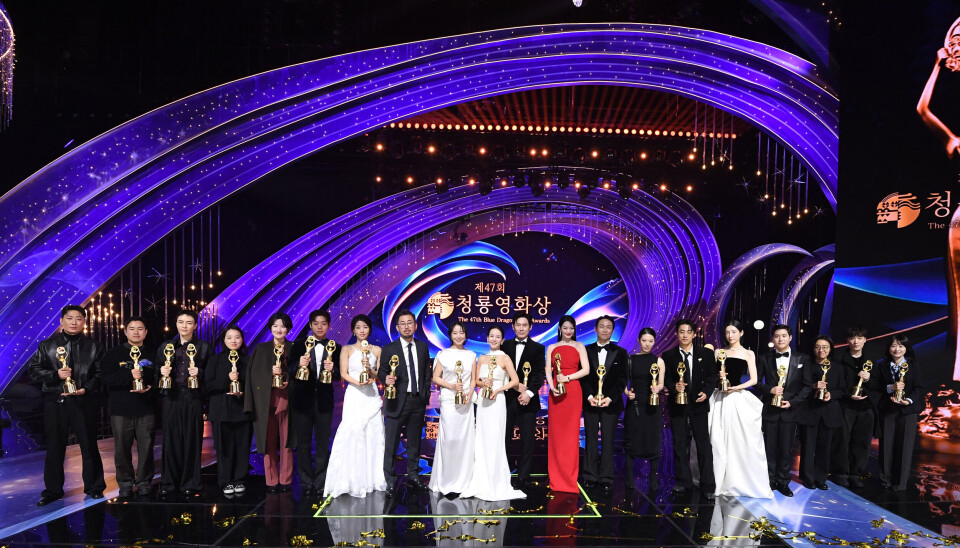
Two Films Define a Major Night for Korean Cinema
Na Hong-jin's science-fiction feature Hope won best picture at the Blue Dragon Film Awards, while Lee Chang-dong's Possible Love collected four prizes, including three acting awards and best screenplay. The results placed a large-scale genre production and an intimate drama side by side at one of South Korea's best-known film ceremonies.
Hope entered the event with ten nominations and also received the cinematography and lighting prize for Hong Kyung-pyo. Possible Love converted eight nominations into a concentrated group of wins that strengthened its profile during international awards season.
Hope Takes the Top Award
Hope had already reached a wide audience and premiered in competition at Cannes. Its best-picture victory recognises a film operating on an ambitious canvas while retaining enough formal distinction to compete beyond the commercial categories usually associated with science fiction.
Na Hong-jin is known for films that combine genre machinery with moral unease. The award suggests that Hope's scale did not overwhelm the craft beneath it. Hong Kyung-pyo's additional recognition for cinematography and lighting reinforces the importance of visual design to the film's impact.
Possible Love Dominates the Acting Prizes
Sul Kyung-gu won best actor for his role as a troubled husband in Possible Love. The victory is his fourth in the category, making him its most decorated winner. Jeon Do-yeon received best actress, reuniting with director Lee Chang-dong nearly two decades after Secret Sunshine brought her international acclaim.
Cho Yeo-jeong won best supporting actress for her performance as documentary maker Lee Ye-ji. The three acting prizes indicate that the film's ensemble, rather than a single star turn, carried its dramatic force.
Lee Chang-dong and Oh Jung-mi Win for Screenplay
Possible Love also took best screenplay for Lee and co-writer Oh Jung-mi. The film follows complicated adult relationships and has already received major festival recognition. Its screenplay win is especially significant because the project depends on emotional and ethical tension rather than a plot built around easy resolutions.
The production did not compete for best picture or best director after being withheld from those categories in accordance with the wishes of the director and production company. That decision makes its four victories more unusual: the film shaped the night without appearing in every headline category.
Other Winners Broaden the Picture
Yoon Ga-eun won best director for The World of Love, while Seo Su-bin from the same film received best new actress. Koo Kyo-hwan took best supporting actor for Colony. Park Ji-hoon won best new actor for The King's Warden, and Kim Mi-jo earned best new director for The Journey to Gyeongju.
Good News received prizes for editing and art direction, while Pavane won for music. The spread of craft awards prevented the ceremony from becoming a two-film sweep and reflected a year with strength across genres and production scales.
The distribution of honours also gives international audiences a more useful map of the season than a single sweep would have provided. Viewers drawn to technical ambition can begin with Hope, while those following performance and screenwriting have a clear reason to seek out Possible Love. The directing and newcomer awards widen that map further. For distributors and festival programmers, this range of recognised work strengthens the case for treating the Korean slate as a collection of distinct voices rather than searching for one title to represent the entire industry.
Awards Momentum Extends Beyond Seoul
Possible Love is South Korea's submission for the international feature Oscar. Its acting and screenplay recognition at home does not guarantee success with another voting body, but it adds evidence of broad professional respect. Jeon's victory also renews attention on a performance already central to the campaign.
Hope's best-picture win creates a different kind of momentum. Science fiction can struggle to move from technical recognition into top awards, particularly when scale encourages voters to treat it primarily as spectacle. This result places the film's complete achievement at the centre of the conversation.
What the Results Say About Korean Film in 2026
The winners demonstrate that Korean cinema's international visibility is supported by several traditions at once. Hope represents filmmaker-driven genre production with global ambition. Possible Love extends the humanist dramatic lineage associated with Lee Chang-dong. The World of Love points toward another generation receiving major recognition.
Awards cannot capture every worthy film, and ceremony results should not replace criticism. They can, however, direct audiences toward work that may otherwise receive uneven international distribution.
The Blue Dragon Film Awards ended with no single definition of the year's best Korean cinema. Instead, the ceremony rewarded visual scale, acting precision, screenwriting and new voices. Hope carried away the top title, but Possible Love supplied the night's deepest run of individual honours, leaving both films with distinct reasons for audiences to seek them out.
PUBLISHED BY SUYASH PACHAURI, FOUNDER & OWNER, GLOBAL BOLLYWOOD | THE HOLLYWOOD SCOPE.