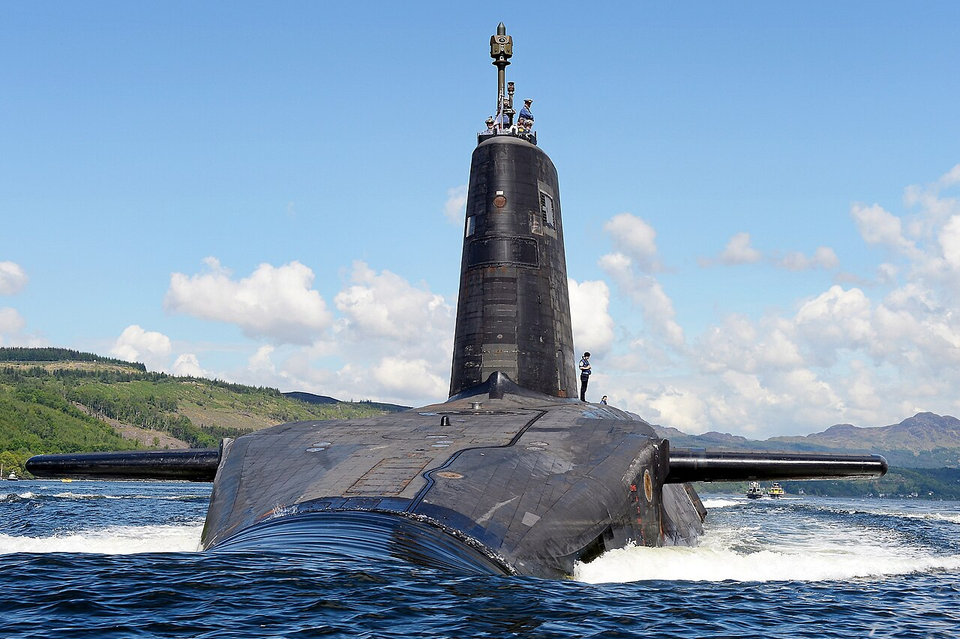
A Record Agreement Targets Maintenance Bottlenecks
Britain has signed a long-term submarine support agreement with Babcock that combines an 8 billion pound contracted backlog with a wider framework valued at 8.7 billion pounds. The Gateway Agreement begins on 1 December 2026 and runs for an initial five years, with the potential to extend across an aggregate period of up to 15 years. It is the largest contract in Babcock's history.
The central objective is to return Royal Navy nuclear submarines to sea faster by modernising maintenance and naval-base services. Availability has been constrained by limited dry-dock capacity and long refit periods. The new structure is intended to make maintenance more predictable, keep docks operating around the clock and align commercial incentives with faster, more reliable delivery.
Continuous Deterrence Depends on Industrial Capacity
Britain's nuclear submarines underpin its Continuous At-Sea Deterrence policy, which requires at least one ballistic-missile submarine to remain on patrol. That mission depends not only on crews and vessels but on docks, engineering teams, safety systems and a supply chain able to support complex reactors and hulls over decades. Delays in one maintenance programme can place pressure on the whole fleet.
The agreement covers services at Devonport and Clyde and is designed to speed maintenance across the submarine enterprise. Dry docks are expected to operate 24 hours a day. This does not remove the technical complexity of nuclear work, where quality and safety cannot be sacrificed for speed. The test will be whether better planning and investment reduce waiting time without creating new risks.
Thousands of Jobs Are Tied to the Programme
The contract is expected to support about 5,500 new jobs, mainly across Plymouth, Clyde and Bristol. Around 900 roles are associated with the Clyde base, alongside early-career opportunities such as apprenticeships and graduate positions. The programme also includes 2.4 billion pounds of spending across the wider supply chain, with 1 billion pounds directed toward small and medium-sized businesses.
Defence procurement is often presented as both a security investment and an industrial policy. Skilled engineering roles can support local economies and preserve knowledge that is difficult to rebuild once lost. The benefits will depend on recruitment, training and whether smaller suppliers can secure meaningful work rather than serving only as a headline target.
Performance Incentives Aim to Improve Value
The agreement includes financial incentives linked to efficiency and productivity. That is a response to repeated criticism that large defence programmes can overrun budgets and schedules. A longer framework may give the contractor confidence to invest in facilities and people, while performance measures are intended to hold it accountable for results.
Long contracts can also reduce competitive pressure if oversight is weak. Government must publish useful performance information, enforce milestones and ensure that safety regulators retain independence. The separate framework of up to 700 million pounds and possible extensions should be tied to demonstrated improvement rather than becoming automatic additions.
The Deal Reflects a More Urgent Security Posture
British leaders have framed the investment as part of a push to become ready to fight or deter military action within 1,000 days, citing the threat from Russia. Strategic reservists, including about 100,000 veterans, have also been contacted to update their details and prepare for possible mobilisation. The submarine agreement therefore sits within a wider shift toward readiness, resilience and sustained defence spending.
The most immediate measure of success will be practical: shorter maintenance queues, more submarines available for service and a safer, better-supported workforce. The size of the contract gives Babcock and the government resources to address long-standing constraints. It also creates a high standard of accountability. Britain is not merely buying equipment; it is funding the industrial system that keeps its most sensitive naval assets operational.
Skills, Suppliers and Dockyard Capacity Will Decide Delivery
Submarine availability depends on a specialised workforce that cannot be expanded overnight. Nuclear-qualified engineers, welders, designers, safety specialists and project managers require long training and secure career paths. The agreement is expected to sustain about 5,500 jobs, but retention will matter as much as recruitment. Apprenticeships and regional training partnerships can build a pipeline while giving communities around the dockyards a direct stake in a programme that will run for years.
The supply chain also has to absorb a large and predictable workload. Around 2.4 billion pounds is intended for suppliers, including roughly 1 billion pounds for smaller businesses. That spending can strengthen industrial resilience if orders are distributed transparently and firms receive enough visibility to invest in machinery and staff. Delays at a single specialist supplier can affect an entire maintenance schedule, so the programme needs early warning systems, realistic sequencing and disciplined control of design changes.
PUBLISHED BY SUYASH PACHAURI, FOUNDER & OWNER, GLOBAL BOLLYWOOD | THE HOLLYWOOD SCOPE.