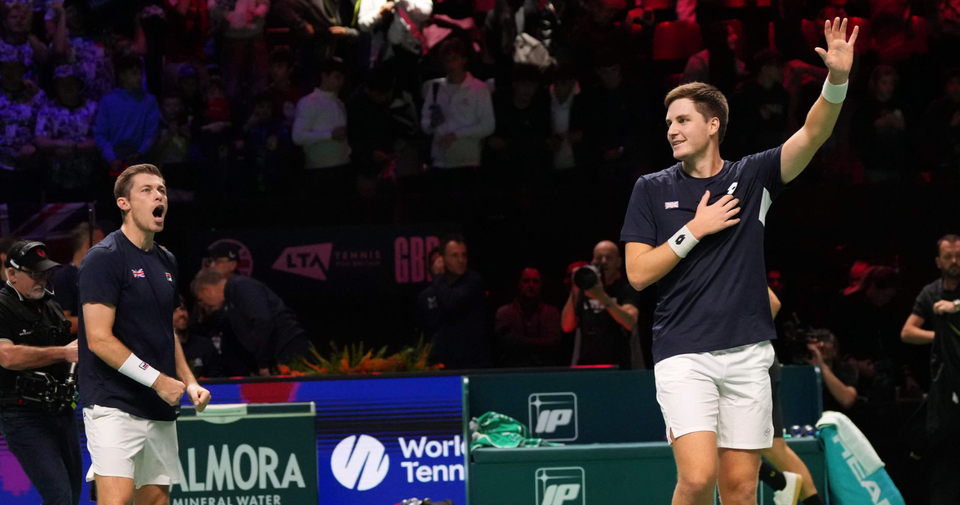
Britain are through to the Davis Cup semi-finals for the first time in seven years after defeating Germany 2-1 in Bologna. Henry Patten and Neal Skupski secured the decisive point with a 6-2, 7-6 victory over Kevin Krawietz and Tim Puetz, completing a tie that remained open until the final stages of the doubles contest.
The Britain Davis Cup semi-final appearance keeps alive the pursuit of a first title since 2015. The quarter-final required contributions across the team: Cameron Norrie won the opening singles match, Germany's Alexander Zverev levelled the tie, and the British doubles pair then delivered under pressure.
Cameron Norrie Gives Britain the Opening Point
Norrie defeated Jan-Lennard Struff 6-3, 3-6, 6-2 in one hour and 33 minutes. The match tested his ability to recover after losing the second set, particularly against an opponent capable of shortening points with a strong serve and direct groundstrokes.
The deciding set turned when Norrie broke for a 4-2 lead. He protected that advantage without allowing Struff a route back into the contest. The victory gave Britain tactical freedom because Germany then had to rely on its highest-ranked singles player to prevent an early elimination.
Alexander Zverev Forces the Deciding Doubles
Zverev responded with a controlled 6-3, 6-2 win over Arthur Fery. The world number one converted four of six break points and did not face a break point on his own serve. That efficiency limited Fery's chances to create scoreboard pressure.
Fery entered a difficult assignment against a player with major championship experience and one of the strongest first serves in the competition. Germany's win levelled the quarter-final at 1-1 and placed the outcome in the hands of two established doubles teams.
Patten and Skupski Take Control of the Decider
Patten and Skupski started the doubles with clarity, winning the opening set 6-2. A fast start is especially valuable in the Davis Cup format because it transfers pressure immediately to the pair attempting to keep a nation in the competition. Britain served with control and created opportunities through sharp returns and movement at the net.
The second set was much tighter. Krawietz and Puetz raised their level and pushed the contest to a tie-break, but the British pair closed it 8-6. Finishing in straight sets avoided the uncertainty of a deciding set, where a single loose service game can overturn the direction of an entire tie.
Why the Doubles Pairing Worked
Elite doubles depends on complementary positioning rather than two singles players sharing a court. Patten and Skupski managed the middle effectively, communicated on serve patterns and remained aggressive when Germany tried to change the pace. Their ability to close at the net stopped the opposition from settling into long baseline exchanges.
The pair also handled the emotional weight of a winner-takes-all match. Davis Cup doubles carries a different atmosphere from a regular tour event because every point affects teammates and national progression. Their response after the second set tightened showed why specialist doubles experience remains so valuable.
Britain's Route to the Davis Cup Final
Britain will face either Austria or Spain in the semi-final. Each possible opponent presents a different selection problem, particularly around singles match-ups and the balance between established names and current form. The British team can now prepare knowing that its doubles combination has already succeeded in the highest-pressure situation of the week.
Three-time defending champions Italy have also reached the last four and will meet the Czech Republic. That half of the draw reinforces the depth of the competition and the difficulty of turning a quarter-final breakthrough into a title.
A Milestone Without a Finished Mission
Reaching the semi-finals for the first time in seven years is a meaningful achievement, but Britain's players will not want it to define the campaign. The 2015 triumph remains the modern reference point, and two more ties separate this squad from matching it.
The victory over Germany offered a useful template. Norrie supplied resilience, Fery accepted a demanding role against the world's top-ranked player, and the doubles team delivered the deciding point. Future opponents will adjust, so Britain must remain flexible rather than expecting the same sequence of results.
Bologna now becomes the setting for a deeper run than Britain have managed in recent seasons. The quarter-final showed that the team can absorb a setback and still execute in the decisive match. That composure, more than any individual ranking, will shape whether the return to the semi-finals becomes the beginning of another title challenge.
PUBLISHED BY SUYASH PACHAURI, FOUNDER & OWNER, GLOBAL BOLLYWOOD | THE HOLLYWOOD SCOPE.