A Festival Verdict Rooted in the Mediterranean
The fifteenth Catania Film Fest concluded its competitive programme on 14 November 2026 in Sicily, with the awards subsequently detailed on 17 November. The prizes brought together a documentary made across geographical barriers, a film revisiting a figure in Sicilian cultural history, and a short work examining the streets of Palermo. Rather than treating the results as a simple roll call of trophies, the selection offers an unusually clear picture of the different ways independent filmmaking can approach place, history and human experience.
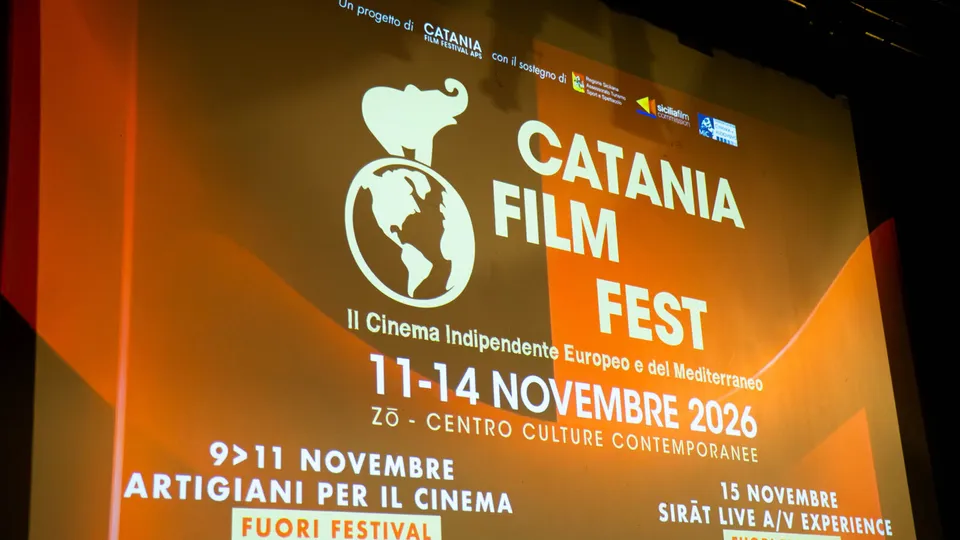
The event took place at Zō Centro Culture Contemporanee in Catania from 11 to 14 November. Its chosen theme was kindness, an organizing idea that helps explain the emphasis on observation, dialogue and cultural memory. Festival founder and artistic director Cateno Piazza worked with co-artistic director Emanuele Rauco on an edition that included screenings, filmmaker conversations and encounters across European and Mediterranean cinema. The results now form a historical record of what the festival recognized, not a new announcement about an upcoming ceremony.
From Gaza with Love Takes the Euromediterranean Film Prize
The award for Best Independent Euromediterranean Film went to From Gaza with Love, a 2026 documentary co-directed and co-written by French journalist and filmmaker Charles Villa and Palestinian reporter and photographer Suhail Nassar. Its premise connects two people who cannot work together in the conventional way. Nassar records the lives of children in Gaza while Villa, unable to enter the territory, participates from thousands of kilometres away. The production relationship itself becomes an important part of the documentary's subject.
The film focuses on children and young people whose daily existence cannot be reduced to the language of conflict. Its account of collaboration also raises questions familiar to documentary makers: who is able to record events, who has access to a location, and how can participants maintain agency when a production must cross political and practical barriers? Those questions are particularly relevant to international crews trying to tell stories with sensitivity while recognizing the limitations imposed on their working methods.
The jury's selection should not be taken as a judgment about every dimension of the film by a critic who has not screened it. What the result does establish is the festival's decision to reward a nonfiction project that combines local witnessing with cross-border authorship. That distinction matters for an archival report because it places the creators and their filmmaking approach at the centre of the story rather than using an ongoing humanitarian crisis merely as an attention-grabbing headline.
A Turkish Debut Receives a Special Mention
A special mention in the same broad competition went to The Name of the Song, the debut feature by Turkish filmmaker Oğuz Anbarlı. This separate acknowledgment is worth retaining because it distinguishes the festival's principal award from recognition of another work. A special mention does not make a film a co-winner of the main prize, and a precise festival archive should preserve that distinction. It also shows how the jury's attention extended beyond the documentary that took the top Euromediterranean honour.
Il caso Martoglio Wins the Italian Independent Film Award
The Best Italian Independent Film award went to Il caso Martoglio, directed by Fabio Fagone and featuring Luciano Mirone, who is also closely associated with the work's conception and presentation. Leo Gullotta and Loredana Marino are among its credited performers. The film returns attention to Nino Martoglio, an important name in Sicilian theatrical and cultural history, giving the local award an explicitly historical dimension. The choice links the contemporary festival to a regional artistic legacy rather than treating local identity as a decorative setting.
For producers and writers working with historical subjects, the result highlights a question that remains relevant long after a festival ends: how can a regional story become a substantial cinematic investigation? Awards do not answer that question automatically, and viewers will still need to judge the film on its own merits. Nevertheless, the recognition gives the project a durable point of reference for future distribution discussions, screenings and critical coverage. Vincenzo Marra's Era received a separate special mention, not the principal Italian feature prize.
A Short Film Finds a City Outside the Familiar Frame
Perigrafia. La città fuori fuoco di Francesco Faraci, directed by Stefano Zito, received the Best Euromediterranean Short Film award. The project draws on the research and photographic perspective of Palermo-based photographer Francesco Faraci. Its recognition brings an urban subject into the awards conversation, asking audiences to consider how images of a city can carry social meaning beyond picturesque architecture or recognizable landmarks.
Short filmmaking often has to establish a distinctive idea with far less running time than a feature. In this case, the award places attention on a collaboration between cinematic direction and a photographer's sustained way of looking at an urban environment. The verified festival result is a concrete achievement for that collaboration. Any detailed assessment of cinematography or editing, however, requires independent viewing, so this report separates the confirmed award from criticism it cannot yet substantiate.
The Jury and Its Range of Disciplines
The festival's judging process involved professionals representing filmmaking, editing, journalism, documentary practice and criticism. Members named in the event record included editor Cristiano Travaglioli, journalist and documentarian Laura Silvia Battaglia, filmmaker and educator Maria Arena, director Cristina Puccinelli and film-culture specialist Erfan Rashid. Filmmaker Elisa Amoruso also contributed to the selection process although other commitments prevented her attendance at the ceremony. The jury's cross-disciplinary composition provides useful context for understanding why the event recognized both feature-length work and formally different short cinema.
Óliver Laxe Receives a Special Award
Filmmaker Óliver Laxe, the honorary president of the jury, received the festival's Special Award 2026 in recognition of his artistic vision and contribution to contemporary cinema. He also took part in a conversation with co-artistic director Emanuele Rauco. This honour was distinct from the three competitive film awards and should not be presented as another category win. Its inclusion broadens the story beyond individual titles to the festival's role in creating opportunities for filmmakers to discuss their craft directly with audiences.
The programme continued on Sunday 15 November with Sirāt Live A/V Experience at Zō, featuring Laxe and electronic music producer Kangding Ray, also known as David Letellier. The event linked cinema with live audiovisual performance and the sound world associated with the film Sirāt. Because the performance took place after the competition's closing day, it is more accurate to describe it as a festival-related continuation than to move the awards ceremony itself to 15 November.
Young Critics Recognized Alongside Filmmakers
The festival also recognized two student writers for film reviews: Giorgia De Benedictis of Liceo Classico Statale Nicola Spedalieri and Asia Lazzaro of Liceo Statale G. Verga in Adrano. Their awards belonged to the event's educational and audience-engagement activity rather than to its film competition. Keeping those categories distinct matters for an accurate winners record, while acknowledging a wider principle: independent cinema benefits when people are encouraged not only to watch films but also to develop rigorous ways of writing and thinking about them.
What the 2026 Results Leave Behind
The awards reveal three different centers of attention: testimony across borders, the recovery of historical cultural memory, and a visual encounter with a modern city. That diversity is a stronger basis for assessing the festival's curatorial identity than a single claim that one film dominated the entire event. The broader programme also involved a focus on Syrian cinema and professional discussions, reinforcing the festival's interest in artistic work from more than one corner of the Mediterranean.
For readers following international independent films, the practical value of this report is the verified record of names, works and distinctions. From Gaza with Love received the Euromediterranean feature award, Il caso Martoglio received the Italian independent film award, and Perigrafia received the short-film prize. The Name of the Song and Era were special mentions, while Óliver Laxe received a separate personal honour. These results are preserved as developments of November 2026, not presented as fresh breaking announcements.
PUBLISHED BY SUYASH PACHAURI, FOUNDER & OWNER, GLOBAL BOLLYWOOD | THE HOLLYWOOD SCOPE.