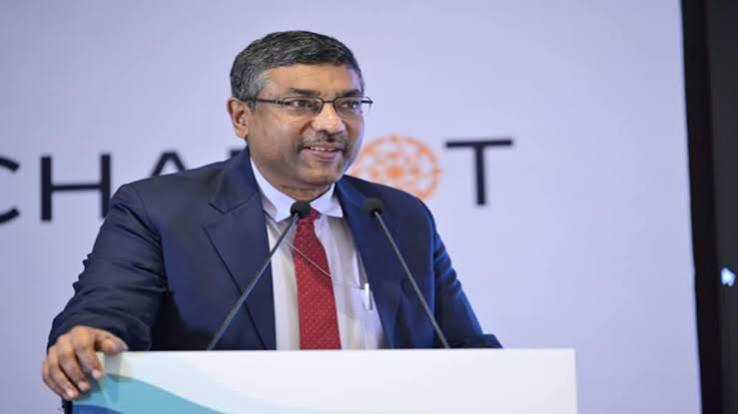
A Homegrown AI Model Suite Enters the Market
India's effort to build domestic artificial intelligence capacity has gained another model family with the launch of Chariot-1. Developed by Chariot Artificial Intelligence under the IndiaAI Mission, the suite combines a large language model with a text-to-speech system. Both were pretrained from scratch in India, placing the project within a national push to create foundation models that reflect the country's languages, technical priorities and deployment needs rather than relying entirely on systems developed elsewhere.
The launch matters because multilingual AI in India is not simply a matter of adding translated prompts to an English-first model. Indian scripts have different structures, shared linguistic roots and varied digital representation. A system designed around those realities can potentially use computing resources more efficiently while serving speakers who are often poorly represented in global training data. Chariot-1 therefore arrives as both a technology release and a test of whether local research can close long-standing language gaps.
IndicShift Reworks How Indian Scripts Are Tokenised
One of the model suite's central innovations is IndicShift, an open-source method that creates a shared alphabet for Indian scripts. The system covers 1,012 characters across 12 scripts through a set of 350 letters. Instead of treating every script as a completely isolated collection of symbols, the approach attempts to capture similarities across languages. That can reduce the number of tokens needed to represent Indian text, which affects training cost, context length and the speed at which a model processes language.
Reported testing showed up to 2.5 times fewer tokens on Indian text than OpenAI's tokenizer. The comparison is important, but it should be interpreted as a measured result for a specific representation method rather than proof that the entire model outperforms every global system. Token efficiency is one component of useful AI. Accuracy, reasoning, safety, latency, accessibility and performance across real dialects will determine whether the advantage becomes meaningful for users.
Language and Speech Models Address Different Needs
The Chariot-1 large language model is intended to improve language understanding across multilingual tasks, while the text-to-speech component focuses on generating spoken output. Speech technology is particularly significant in a market where many people are more comfortable speaking than typing and where literacy, keyboard availability and script familiarity vary widely. Reliable voice systems can support education, public services, customer assistance, accessibility tools and digital commerce in regional languages.
The developers reported a Hindi character error rate of 7.60 percent and an average error rate of 6.47 percent across nine other Indian languages in the evaluations presented at launch. Those figures offer a starting benchmark, but independent testing will be necessary across accents, noisy settings, mixed-language speech and specialist vocabulary. A model that performs well in a controlled test must still prove that it can handle the code-switching and local pronunciation common in everyday Indian conversations.
Sovereign AI Is Also an Infrastructure Question
Building an indigenous foundation model involves more than owning a brand or hosting a service inside the country. It requires access to high-quality data, computing capacity, skilled researchers, model evaluation, secure deployment and a sustainable commercial plan. Domestic intellectual property can reduce dependence on external vendors, but only if the model remains competitive, receives regular updates and earns enough adoption to support continued research.
Chariot is among the first four teams selected under the national programme to develop sovereign foundation models. That support gives the project visibility and access to a wider ecosystem, while also creating expectations around transparency and public value. Organisations considering the models will want clear information about licensing, data handling, supported languages, hardware requirements and safeguards against harmful or inaccurate output.
The Next Stage Will Be Measured Through Real Use
The launch establishes Chariot-1 as a new participant in India's rapidly expanding AI market, but adoption will decide its lasting importance. Developers, businesses and public institutions need models that solve practical problems at a reasonable cost. Useful early deployments could include voice interfaces for government services, multilingual search, document assistance, education platforms and customer support that understands Indian-language context without forcing users into English.
The strongest outcome would be an ecosystem in which local language support is a core capability rather than a late addition. Chariot-1's shared-script research and speech benchmarks show a deliberate attempt to address that goal. Its next challenge is to convert promising technical claims into dependable tools, publish enough evidence for independent evaluation and show that homegrown foundation models can serve India's linguistic diversity at scale.
PUBLISHED BY SUYASH PACHAURI, FOUNDER & OWNER, GLOBAL BOLLYWOOD | THE HOLLYWOOD SCOPE.