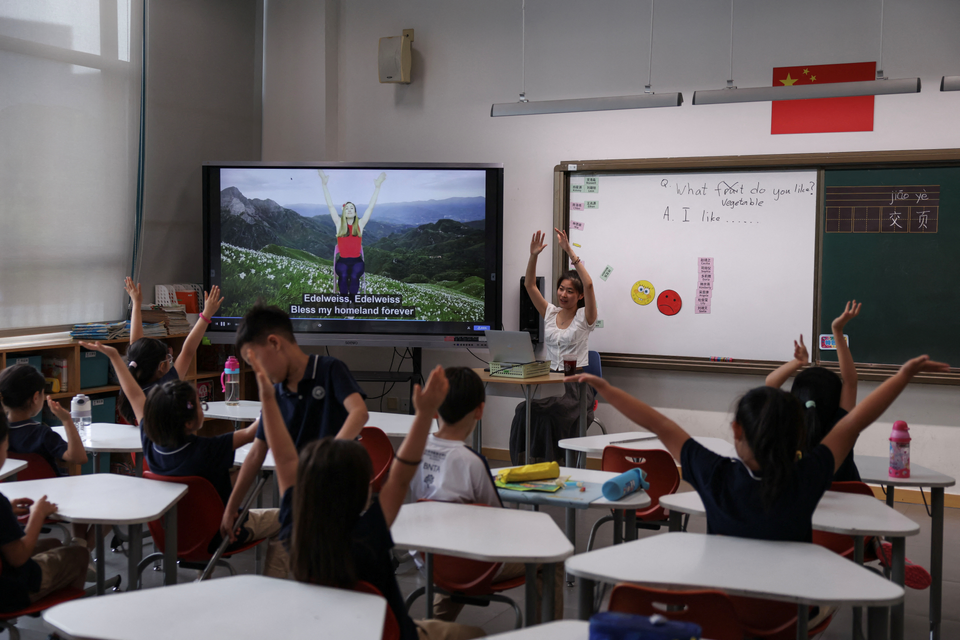
China's campaign to make artificial intelligence part of ordinary education is moving beyond isolated technology demonstrations. A detailed look at schools published on November 16, 2026 highlighted the scale of the effort, from pupils designing apps and programming robots to teachers using digital assistance in places where specialist resources are limited. The underlying national ambition is longer term: by 2030, policymakers want AI education to become a connected part of learning across age groups. This is a developing education strategy, not a newly announced nationwide requirement that every classroom has already fulfilled.
The scale matters because China's primary and secondary schools serve nearly 200 million learners. A successful programme could equip a large generation to understand systems that increasingly influence jobs, communication and public services. Yet broad access is not the same as effective instruction. The practical questions concern what students actually learn, whether teachers can assess understanding without technological shortcuts, and how a national strategy plays out across districts with very different budgets.
A 2030 Vision Built on Earlier School Policies
The present expansion has several stages. China's education authorities encouraged more AI-related instruction in primary and secondary schools in December 2024. Beijing subsequently introduced a plan calling for at least eight class hours of AI education per academic year starting with the autumn 2025 semester. The capital's model permits standalone lessons or integration with established subjects, and the expectations change with a student's age. Those earlier milestones help explain why the November 2026 classroom evidence should be read as an implementation story rather than the first announcement of the policy.
In April 2026, a broader AI Plus Education initiative outlined the goal of a comprehensive system by 2030. The plan connects school courses with university study, teacher support and practical digital tools. It also envisages using AI for routine educational tasks, including assistance with assignments, question answering and tutoring. These are stated policy aims, not proof that every suggested application is already operational or effective. The next challenge is translating a national framework into measurable classroom practice.
What AI Literacy Looks Like at Different Ages
An age-sensitive curriculum is one of the stronger features of the education plan. Younger pupils can begin with demonstrations and practical examples that explain what a machine can and cannot do. Older students can examine how systems respond to prompts, compare outputs, detect mistakes and apply the technology to projects. Senior students can move into building software, testing models and considering the ethical consequences of automated decisions. This progression makes more educational sense than presenting every child with a chatbot and assuming usage alone creates technical understanding.
From Experiments to Independent Projects
At Beijing's New Talent Academy, students have worked on applications and robotics projects, including humanoid-robot activities. Such examples demonstrate what may be possible in a well-resourced environment with equipment and mentoring. They should not be treated as representative of a typical Chinese school. The difference between using an existing AI tool and explaining how a project works is particularly important. A student who can examine an incorrect answer, trace its cause and improve a design is developing a deeper skill than someone who merely produces an attractive output quickly.
The most useful lessons also connect AI to subjects outside computing. A science class might compare a machine-generated explanation with observed results. A language lesson could analyze an automated translation for subtle meaning. In history, students might identify missing context or unsupported claims. These activities turn AI literacy into an exercise in evidence and judgment. They also provide opportunities to teach when technology should be set aside in favour of reading, discussion, experimentation or original writing.
The Cost and Geography of Implementation
The nationwide rollout faces a difficult resource question. Documentation examined during the November reporting identified at least 31 million US dollars in government procurement connected with AI education. That figure is a partial sample of identifiable spending, not an audited national budget or a reliable estimate of the programme's total cost. Hardware purchases, software services, curriculum preparation and teacher training are also different types of expenditure. A large procurement headline therefore tells readers less about classroom outcomes than it may initially appear to.
Regional variation is likely to shape the student experience. A private academy with robotics laboratories can offer experiences that a rural school may struggle to reproduce. In parts of Anhui, digitally generated lessons have been used as a response to shortages of teaching resources. Such tools may extend access, but they do not by themselves solve inadequate staffing, connectivity or equipment maintenance. The essential measure is whether the learner receives clearer explanations and sustained attention, not the number of devices visible during a school visit.
Why Teacher Support Must Come First
Teachers need time to understand how systems work before they can evaluate student use. Training should cover inaccurate responses, unsuitable content, unequal results across languages, student-data handling and the difference between a tool's confidence and its actual reliability. It also has to address classroom management: when should a student be permitted to ask a system for help, and when should the teacher require unaided work? Without practical guidance, the same tool can function as a valuable assistant in one classroom and an answer generator in another.
Measuring Learning Without Rewarding Shortcuts
One of the most persistent risks is mistaking polished work for mastery. An AI system can help organize a presentation or solve a homework question while leaving the student uncertain about the reasoning behind it. The ability to complete an assignment faster is not identical to improved understanding. Emerging research on educational use points to both possible gains and concerns involving independent thought, retention and exam performance, but individual studies do not establish a single causal verdict for every classroom or age group.
Assessment design is therefore central to the programme's credibility. Students can be asked to explain the steps behind an answer, complete some work without devices and discuss alternative solutions in person. Teachers can compare the quality of independent work with assisted work rather than banning assistance entirely. A classroom that teaches children to challenge machine output can strengthen judgment; one that rewards only the final answer may weaken the habit of checking how that answer was obtained.
Student privacy requires equal care. Digital tutoring and classroom-analysis tools may process questions, writing samples, behaviour patterns or other sensitive information. Schools need clear limits on what is collected, how long it is retained and who can inspect it. Parents also need understandable explanations about the purpose of such systems. The educational value of a service should be demonstrated without assuming that extensive monitoring is necessary. Protecting children's data is part of good instruction, not a separate technical afterthought.
An International Test of the Meaning of AI Literacy
China's approach has implications beyond its own education system. Governments elsewhere face the same tension between preparing students for an AI-shaped economy and protecting the foundations of learning. The Chinese programme's scale provides a test of whether national coordination can reduce uneven access, while local variation may reveal how hard implementation remains. Its outcome cannot be judged only by competition for future technology talent. The broader public interest is whether graduates can work with automated tools without accepting their decisions uncritically.
For families, the most practical questions are not geopolitical. Can a child describe how an AI-generated response was checked? Does the school provide a meaningful alternative for pupils with limited home internet? Are teachers confident enough to correct a machine's errors? Are students still encouraged to read full texts, conduct experiments and communicate with one another? Answers to these questions will show whether the programme increases educational opportunity or mainly expands access to software.
What to Watch Between Now and 2030
The coming years should bring greater clarity on curriculum standards, teacher preparation and the quality of learning assessments. It will be important to distinguish official targets from independently demonstrated progress, and pilot projects from widespread adoption. Evidence about differences between urban and rural schools will matter as much as examples from elite campuses. Public reporting on spending, student privacy and actual learning results could help determine whether the initiative is achieving its stated ambitions.
As of November 2026, the most defensible conclusion is that China is pursuing an unusually broad programme to normalize AI literacy while facing substantial questions about delivery. The November classroom accounts illuminate the opportunity, but they do not settle the debate about educational effectiveness. Success in 2030 would mean more than producing young people who can operate powerful tools. It would mean producing students who understand their limitations, can assess evidence independently and retain the confidence to think for themselves.
PUBLISHED BY SUYASH PACHAURI, FOUNDER & OWNER, GLOBAL BOLLYWOOD | THE HOLLYWOOD SCOPE.