The trailer for Daayra sets up a tense battle inside the justice system, with Kareena Kapoor Khan and Prithviraj Sukumaran playing senior police officers drawn into the same case from opposing directions.
Directed by Meghna Gulzar, the crime thriller is inspired by true events and begins in the aftermath of a crime that sparks public outrage. From there, the trailer points to two investigations, two competing readings of responsibility, and a conflict that appears less interested in easy answers than in the cost of pursuing the truth.
Daayra is scheduled to release in theaters on September 18, 2026.

The trailer places the conflict inside the system
The central hook of Daayra is not simply that two officers are investigating a case. It is that they appear to be investigating from sharply different moral and procedural positions.
Kareena Kapoor Khan and Prithviraj Sukumaran play senior police officers who move toward the same crime, but not with the same assumptions. The trailer frames their confrontation as a clash between duty, interpretation, and the pressure to act when public anger is already boiling.
That choice gives the film a more layered setup than a standard chase-driven police thriller. The tension does not seem to come from one righteous officer fighting one obvious villain. Instead, both characters operate within the justice system. Both seem to believe they are serving justice. The question is whether their definitions of justice can survive the facts of the case.
This is where the trailer’s title, Daayra, becomes interesting. The word suggests a boundary, a circle, or a defined space. In the context of this story, that could point toward the limits of law, duty, evidence, and personal conviction. The trailer suggests that the officers are not only working a case, they are testing the boundaries of what the system allows and what conscience demands.
Kareena Kapoor Khan and Prithviraj Sukumaran are positioned as equals
A face-off only works if both sides carry weight. The trailer appears to understand that.
Kareena Kapoor Khan’s presence gives Daayra a sharp emotional charge. She has often balanced star power with controlled, close-range intensity, and this material seems built for a performance that can hold back as much as it reveals. In a story about institutional pressure and moral certainty, restraint can matter more than volume.
Prithviraj Sukumaran brings a different kind of force. His screen image often carries intelligence, authority, and contained aggression. Casting him opposite Kareena gives the film a strong dramatic engine, especially if the conflict depends on conviction rather than simple opposition.
The trailer does not appear to frame their clash as a conventional hero-versus-villain story. That may be the most promising sign. A thriller becomes more interesting when the audience cannot reduce the conflict to one side being correct and the other being corrupt. If both officers are serious, capable, and flawed, the film has room to build real tension.
The strongest version of Daayra would let both performances challenge the audience’s instinctive loyalties. Viewers may enter expecting to choose a side. A more ambitious film would make that choice harder with every scene.

Meghna Gulzar’s direction makes the premise feel pointed
Meghna Gulzar’s involvement gives Daayra a distinct identity before the film even reaches theaters. Her work has often centered on people navigating institutions, trauma, public pressure, and difficult moral choices. That makes this premise feel like a natural fit.
The trailer’s setup, a crime followed by outrage and competing investigations, sits close to the kinds of questions Gulzar has returned to in different forms. What happens when institutions are expected to produce certainty before the evidence is fully understood? Who gets to define justice? How does public pressure shape official action?
Those questions can turn a crime thriller into something more uncomfortable. The mystery still matters, of course. A thriller must keep viewers invested in what happened and why. But the brief for Daayra suggests that the film may be just as concerned with how truth is processed once a society has already decided what it wants to believe.
That is fertile ground for Gulzar. Her strongest dramatic spaces are often those where procedure clashes with emotion. A police investigation is not just a sequence of clues. It is also a space shaped by hierarchy, media attention, witnesses, public trust, and institutional self-protection.
If Daayra uses that full field of pressure, the film could avoid the flatness that sometimes weakens crime dramas. The case would not exist in isolation. It would exist inside a charged public moment.
The true-events inspiration raises the stakes
The film is described as inspired by true events, a phrase that carries both power and responsibility.
For audiences, it signals that the story is rooted in recognizable social anxieties. Crimes that create public outrage often become larger than the incident itself. They expose fear, anger, mistrust, and competing demands for swift punishment or careful investigation.
For filmmakers, that inspiration carries a burden. A story drawn from real events must balance dramatic force with sensitivity. It should not turn pain into spectacle. It should not flatten people into symbols. The trailer’s focus on process, pressure, and conflicting interpretations suggests that Daayra may be aiming for a more careful register.
The most compelling true-events thrillers understand that facts and emotions do not always move at the same speed. Public anger can demand closure quickly. Investigations rarely work that way. Evidence has to be gathered, tested, challenged, and placed in context. When those timelines collide, institutions can bend.
That collision appears to sit at the center of Daayra. The crime ignites outrage. Two investigations unfold. Two senior officers arrive with different approaches. The drama comes from the gap between what people want to be true and what can be proved.
The trailer’s key promise is not just a mystery, but a fight over how a mystery should be solved.
The screenplay points to a procedural with moral weight
The screenplay for Daayra has been written by Yash Keswani, Sima Agarwal, and Meghna Gulzar. That writing team faces a demanding task because the film’s premise depends on balance.
If one officer is written as plainly right and the other as merely obstructive, the central conflict loses power. For the story to work at its highest level, both sides need credible reasoning. Their methods may differ. Their priorities may clash. Their blind spots may become dangerous. But the film needs to make the audience understand why each officer believes their path is necessary.
That kind of structure can make a procedural feel alive. It turns interviews, evidence trails, and internal disputes into character drama. A section of paperwork or a forensic update can matter because it changes not only the case, but also the moral position of the people working it.
The trailer’s emphasis on justice and responsibility suggests several possible pressure points:
Institutional urgency
The need to respond quickly when public outrage is intense.
Evidentiary uncertainty
The gap between suspicion, proof, and public belief.
Competing duties
The responsibility to victims, the law, and the truth.
Personal conviction
The danger of becoming too certain before the case is complete.
These are not decorative themes. In a thriller like this, they can shape the engine of the plot. Every new piece of information can force the characters to decide whether they are following evidence or defending a position they already hold.

Daayra could stand apart from routine police thrillers
Hindi cinema has a long relationship with police stories, from action-heavy entertainers to darker procedural dramas. The challenge for any new entry is finding a fresh angle. Daayra appears to have one because its main conflict is internal to the idea of justice itself.
A routine version of this story would focus only on catching the guilty party. A more layered version asks what happens when the path to guilt is contested. That distinction matters.
Public outrage can produce pressure for immediate action. Police institutions face pressure to show progress. Officers may face private doubts while projecting certainty. Evidence may confirm one theory, then complicate it later. These elements do not slow a thriller down when handled well. They make it more tense because the stakes keep shifting.
The film also has the advantage of scale without needing spectacle. Two senior officers disagreeing over a major case can create enough drama if the writing and performances carry the weight. A stare across a corridor, a withheld report, a procedural challenge, or a disagreement over witness testimony can become as charged as a chase scene.
That seems to be the space Daayra wants to occupy. It is a crime thriller, but the trailer suggests that the real battle may concern who gets to control the narrative of truth before truth is fully known.
The September 2026 release gives the film a clear theatrical window
Daayra is set to arrive in theaters on September 18, 2026. That date places it in a September window where a performance-driven thriller can stand out if the trailer conversation holds.
The film’s appeal is built around three clear points:
A high-tension premise
Strong lead pairing
A director suited to moral complexity
A crime, public outrage, and two investigations create immediate dramatic pressure.
Kareena Kapoor Khan and Prithviraj Sukumaran bring star value and serious acting weight.
Meghna Gulzar’s interest in institutions and difficult choices fits the material.
The trailer has done the essential first job. It has defined the conflict without reducing it. It has positioned the leads as opposing forces without making the story look simplistic. It has framed the investigation as both a case and a test of belief.
For a thriller inspired by true events, that is a promising foundation. The audience will expect suspense, but the film’s lasting impact may depend on how honestly it handles ambiguity.
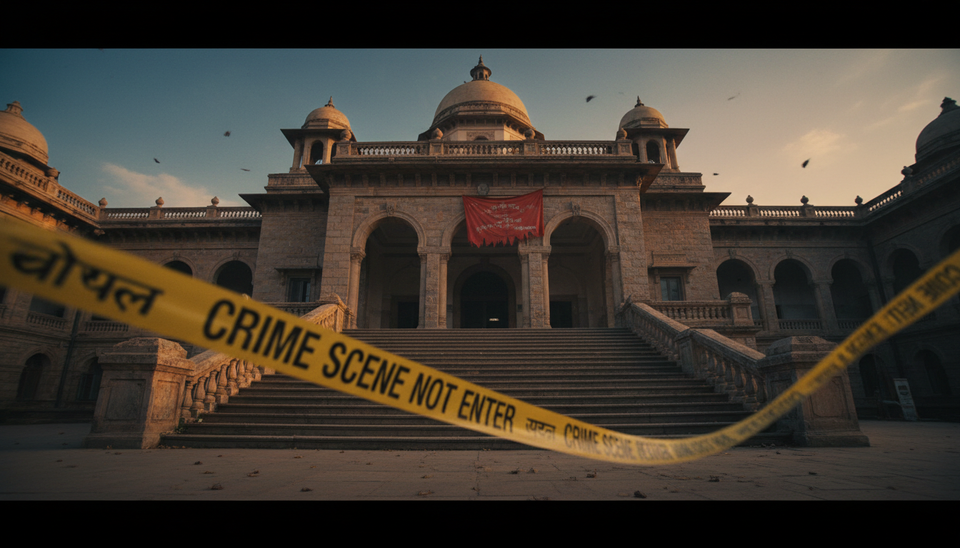
The trailer sets up a thriller driven by doubt
The most interesting thing about Daayra is the shape of its conflict. The trailer does not sell only a crime, a pursuit, or a reveal. It sells a disagreement over the meaning of justice.
That gives Kareena Kapoor Khan and Prithviraj Sukumaran room to play more than authority figures. They can play people under pressure, people with methods, people who may be right in one moment and dangerously wrong in another. With Meghna Gulzar directing from a screenplay by Yash Keswani, Sima Agarwal, and Gulzar, the film has the ingredients for a tense, morally charged procedural.
If Daayra follows through on the promise of its trailer, it could become one of the more substantial Hindi thrillers in the September 2026 theatrical calendar. Not because it asks who committed the crime, but because it asks how far people will go once they believe they already know the answer.
PUBLISHED BY SUYASH PACHAURI, FOUNDER & OWNER, GLOBAL BOLLYWOOD | THE HOLLYWOOD SCOPE