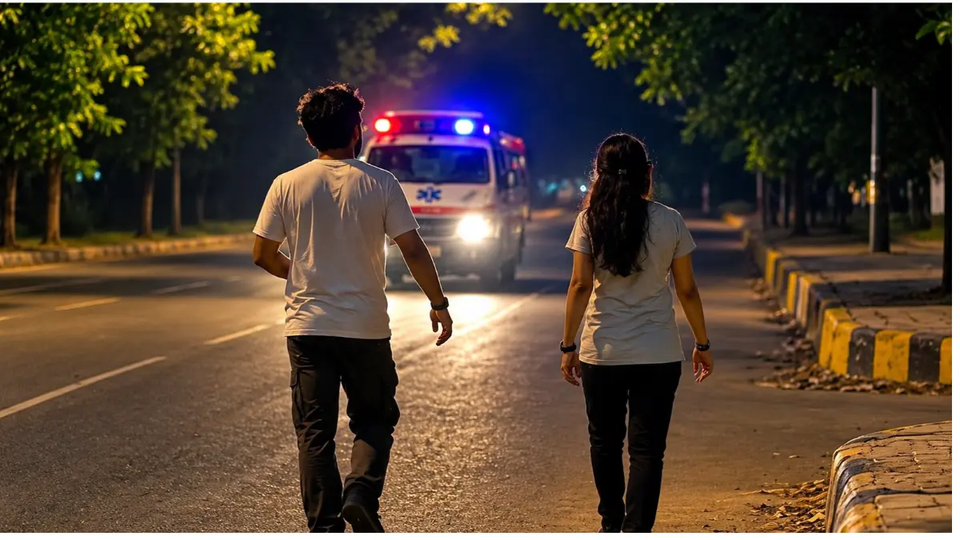
A new Delhi study has found that 87.5 percent of the women and girls surveyed feel unsafe while walking to their nearest metro station or bus stop. The finding shifts attention from security inside public transport to the journey people must make before they can board it. A train or bus cannot provide equal mobility if the street, footpath or park connecting a home to the stop feels threatening.
The study examined 1,588 valid responses from women, girls and LGBTQ+ people. Its findings point to a combination of poor infrastructure, harassment and unclear institutional responsibility. The result should not be presented as the experience of every Delhi resident, but the scale of concern within the sample makes it an important warning for transport and urban-planning authorities.
Safety begins before a passenger reaches the station
Public transport discussions often focus on cameras, guards, reserved spaces and emergency systems inside stations and vehicles. Those measures matter, but they address only part of a journey. A commuter may need to walk through dim streets, broken footpaths, isolated crossings or crowded areas where harassment is common before reaching the formal network.
The study's 87.5 percent figure captures that first-mile problem. If a person changes working hours, avoids education, pays for a more expensive ride or stays home because the route to a bus stop feels unsafe, the city has already limited access. Mobility is not only about whether a service exists. It is also about whether people can reach and use it without unreasonable fear.
Parks and footpaths shape everyday freedom
The research also examines neighbourhood parks and footpaths, spaces that are frequently treated as secondary to roads. For pedestrians, they are essential infrastructure. A damaged or obstructed footpath can force people into traffic. Poor lighting and inactive street edges can increase isolation after dark. Parks that feel unsafe reduce access to exercise, recreation and community life.
Nearly nine in ten respondents were also reported to feel unsafe in neighbourhood parks after dark. That finding connects transport access with the wider design of public space. The same lighting, maintenance and policing failures can affect a person walking to a station, returning from work or using a park near home.
What the survey sample tells us
The findings are based on 1,588 valid responses drawn from a broader set of submissions. Surveys of perception measure how people experience risk, which is different from counting reported crimes. Fear can be influenced by personal experience, stories from others, visibility, infrastructure and confidence in authorities. It can still have concrete effects even when no incident occurs on a particular journey.
The report also cites official crime data showing that Delhi recorded 13,396 crimes against women in 2024, the highest total among 19 major metropolitan cities. Crime totals and survey perceptions should not be merged into one statistic, but together they explain why routine travel decisions carry a heavy safety burden for many residents.
Infrastructure and accountability are linked
Better lighting, repaired footpaths and safer crossings are practical responses, but maintenance requires clear ownership. In a city with several civic and transport bodies, residents may not know which authority is responsible for a broken light, an encroached pavement or an unsafe access route. Complaints can move between departments without resolution.
The study's emphasis on institutional accountability is therefore important. Standards need responsible agencies, deadlines and public tracking. Safety audits should examine the complete walking route around transport hubs, not stop at the station gate. Evening patrols and visible help points can support that work, but policing cannot replace functional urban design.
A gender issue with wider public benefits
Improving these routes would benefit more than the groups surveyed. Older people, children, persons with disabilities and late-shift workers also depend on clear, well-lit and continuous pedestrian access. Measures designed around those facing the greatest barriers often make public space easier for everyone to use.
The gender dimension remains central because women and girls frequently carry a disproportionate burden of route planning, time restrictions and fear of harassment. Treating that burden as an individual problem asks people to adapt endlessly to unsafe conditions. A public-safety approach asks the city to change those conditions.
Turning a warning into measurable action
The study offers a clear starting point: inspect the everyday routes connecting homes, parks, metro stations and bus stops. Authorities can map poor lighting, damaged surfaces, isolated stretches and recurring harassment complaints. Progress can then be measured through repairs, response times and follow-up surveys rather than broad assurances.
The 87.5 percent finding is not a verdict on every Delhi journey. It is evidence that a large share of respondents do not experience access to public transport as safely as urban policy intends. Addressing that gap requires transport planning, civic maintenance and public safety to operate as one system. The journey begins at the front door, and so must the solution.
PUBLISHED BY SUYASH PACHAURI, FOUNDER & OWNER, GLOBAL BOLLYWOOD | THE HOLLYWOOD SCOPE.