A workplace comedy leaves the office for an excavation
Dig takes the familiar machinery of a workplace comedy and places it at an archaeological site in Greece, where professional rivalry, friendship and academic ambition collide with a discovery too important to remain routine. The ten-episode series is adapted from Kate Myers’s novel Excavations and reunites Amy Poehler with Michael Schur, who developed the project with a clear understanding of ensemble rhythm.
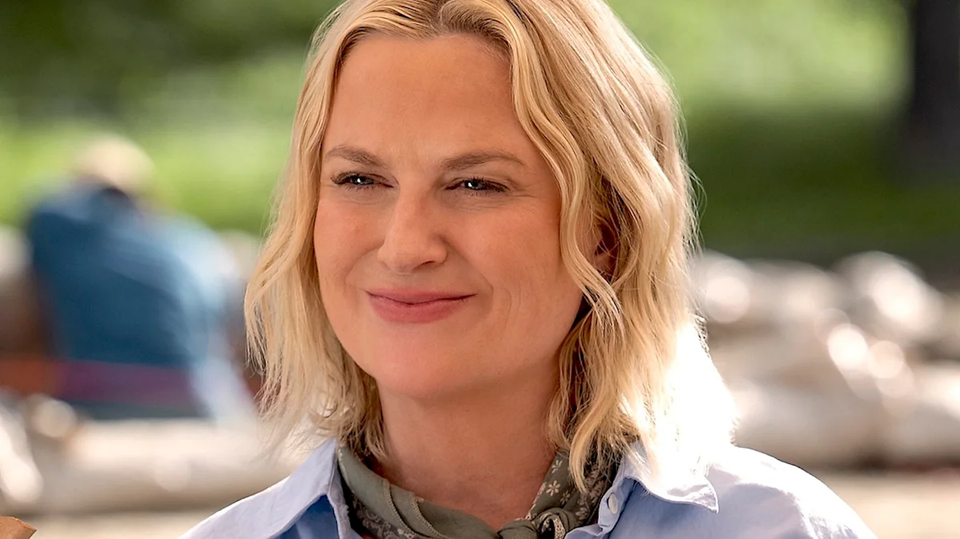
Poehler plays Elise, an archaeologist drawn into a rapidly expanding adventure after four women uncover a surprising artefact. Hugh Laurie portrays her mentor Neville, while Geraldine Viswanathan, Antonia Thomas and Fina Strazza complete the central group. The setting gives the comedy texture beyond ordinary office politics, allowing questions of ownership, history and professional recognition to operate alongside the jokes.
Amy Poehler gives the series its generous centre
Poehler’s strongest comic skill is her ability to play enthusiasm without making kindness look simple. Elise can be capable, competitive, insecure and genuinely supportive in the same sequence. That range prevents the character from becoming a cheerful guide through other people’s problems. She wants the discovery to matter, and the tension between professional desire and ethical responsibility gives her performance useful resistance.
The role also benefits from Poehler’s experience leading ensembles without absorbing every scene. She creates space for reactions, interruptions and shifting alliances, which allows the group to feel like colleagues with histories rather than supporting figures waiting for the star. When the series becomes too comfortable, her timing still keeps conversations alive, finding humour in hesitation and disappointment rather than relying entirely on punch lines.
Hugh Laurie and the ensemble sharpen the excavation
Laurie brings dry authority to Neville, a mentor whose knowledge does not free him from vanity or strategic self-interest. His scenes with Poehler work because affection and professional competition remain present together. Geraldine Viswanathan contributes restless intelligence, while Antonia Thomas and Fina Strazza give the group different relationships to the site, the discovery and the institutions waiting to claim it.
Guest appearances from Kayvan Novak, Jason Mantzoukas, Max Greenfield, Jon Pointing, Bonita Friedericy and Brennan Lee Mulligan add comic range without changing the show’s centre of gravity. Some characters arrive with more energy than narrative purpose, but the larger cast helps establish a professional world in which every discovery immediately attracts competing interpretations, careers and commercial interests.
The mystery is pleasant rather than urgent
The artefact gives the season a narrative spine, but Dig is less interested in building a relentless thriller than in observing how discovery changes relationships. That choice makes the series warm and accessible, though it can also reduce urgency. Episodes sometimes pause for character business that is enjoyable in isolation but weakens the feeling that the group has uncovered something capable of changing their lives.
The Greek setting supplies visual pleasure and thematic relevance. Archaeology asks who has the right to interpret, possess and display the past. The series touches those questions with a light hand, avoiding a lecture while still recognising that academic adventure is connected to institutions and national heritage. Greater dramatic pressure around those issues might have given the comedy more bite without damaging its optimistic tone.
A minor series with major collaborative ease
Dig may feel modest beside more ambitious streaming dramas, but modesty is not the same as emptiness. The series understands the pleasure of watching capable performers share a well-defined environment. J.J. Philbin and Michael Schur guide the season with confidence in character chemistry, allowing jokes to emerge from status, expertise and old frustration rather than constant escalation.
The downside is a tendency to protect the ensemble from consequences for too long. Conflicts resolve with familiar warmth, and the adventure rarely becomes dangerous enough to threaten the show’s comfortable identity. Viewers seeking a tightly engineered mystery may find the pace soft. Those drawn to character-based comedy will discover a pleasant, intelligent diversion whose best moments depend on people rather than plot machinery.
What comes next
All ten episodes begin streaming on November 23. The complete-season release may suit the show’s relaxed rhythm, since viewers can move through smaller cliffhangers without waiting a week for the mystery to resume. The ensemble’s chemistry is likely to be the main reason to continue rather than the answer attached to the artefact.
Dig does not completely transform the workplace-comedy formula, but its excavation setting and experienced cast give that formula fresh air. Poehler and Laurie create an appealing centre, while the supporting players keep the site lively. The result is enjoyable, occasionally slight and consistently humane, a series more interested in what colleagues uncover about one another than in making archaeology look like an action franchise.
A buried discovery gives a charming ensemble room to uncover comedy, rivalry and second chances.
PUBLISHED BY SUYASH PACHAURI, FOUNDER & OWNER, GLOBAL BOLLYWOOD | THE HOLLYWOOD SCOPE.