Fast-moving outbreak reaches a grim threshold
The Ebola outbreak in eastern Democratic Republic of Congo has surpassed 12,000 confirmed cases as armed conflict prevents health teams from reaching some communities. Government data recorded 12,021 infections, with nearly half of those patients reported dead. The outbreak is caused by the rare Bundibugyo virus, for which there is no approved vaccine or treatment. Its rapid growth has turned an already difficult health emergency into a crisis shaped equally by disease and insecurity.
Containing Ebola requires quick isolation of patients, monitoring of everyone who may have been exposed and safe burial of those who die. Each task depends on trusted workers being able to travel, communicate and remain in affected communities. Renewed fighting around Iga-Barriere, north of Bunia, displaced residents and interrupted contact tracing. Earlier clashes also trapped health personnel inside a hospital for three days before a group including international and Congolese responders could be evacuated.
Conflict breaks the chain of disease control
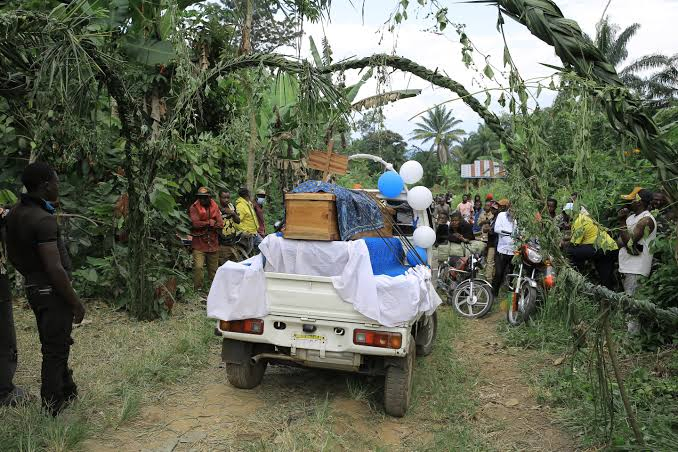
Ebola spreads through direct contact with bodily fluids of an infected person who is ill or has died. It does not move as easily as an airborne respiratory virus, which means disciplined public-health measures can stop transmission. Conflict undermines those measures. Families may flee before monitoring is complete, treatment centres can lose staff, laboratories may not receive samples and burial teams may be unable to reach villages safely.
Eastern Congo has more than one hundred armed groups and a long history of displacement. The current violence involves the army and the Convention pour la revolution populaire, a movement founded by former warlord Thomas Lubanga. Residents already face insecurity, weak roads and limited healthcare. Asking them to report symptoms or accept isolation is far harder when they also fear attack, lack transport and distrust authorities that have struggled to protect them.
A rare strain limits the medical toolbox
The Bundibugyo virus creates an additional challenge because approved vaccines and treatments developed for other Ebola species cannot simply be assumed to work. Clinical care can still improve survival through hydration, management of symptoms and treatment of secondary complications. Yet those services require trained staff, protective equipment, electricity and safe facilities. A treatment centre operating with reduced personnel may have to limit admissions precisely when cases are increasing.
Research teams and regulators face pressure to identify useful countermeasures, but emergency use must still follow ethical and scientific safeguards. Communities need honest information about what is known and what remains uncertain. Promising an unavailable cure can damage trust, while fatalistic messages may discourage patients from seeking care. Clear guidance on symptoms, exposure and safe caregiving remains one of the most important tools when biomedical options are limited.
Security and public health must be planned together
The response cannot succeed if security decisions are made separately from epidemiology. Humanitarian corridors, negotiated access and local mediation may be needed so health teams can reach high-risk areas. Community organisations can help identify contacts and counter misinformation, but they must not be exposed as perceived agents of one side in the conflict. Independent protection and transparent data are essential to preserving their credibility.
Passing 12,000 cases is not only a statistical milestone. It signals that ordinary containment systems are failing under extraordinary pressure. The priority is to protect treatment centres, restore contact tracing and support displaced families before new chains of transmission spread farther. International assistance can supply equipment and expertise, but safe access will determine whether those resources reach patients. In eastern Congo, ending the outbreak now depends on creating enough space amid the fighting for public health to function.
Trust will determine whether cases are found
Residents must believe that reporting symptoms will lead to care rather than abandonment or coercion. Local nurses, religious leaders and survivors can explain precautions in familiar languages and answer rumours more effectively than distant officials. Response teams should publish understandable case information while protecting patient identities. When people see that treatment centres communicate honestly and reunite recovered patients with families, cooperation can improve even in insecure areas.
Support for survivors is also essential. People who recover may face stigma, lost income and medical complications. Follow-up care and community education can reduce isolation while allowing health workers to monitor possible long-term effects. Funding should continue after the case curve falls, because weakened clinics and traumatised communities remain vulnerable. A durable response will leave stronger local systems instead of withdrawing as soon as international attention moves elsewhere.
PUBLISHED BY SUYASH PACHAURI, FOUNDER & OWNER, GLOBAL BOLLYWOOD | THE HOLLYWOOD SCOPE.