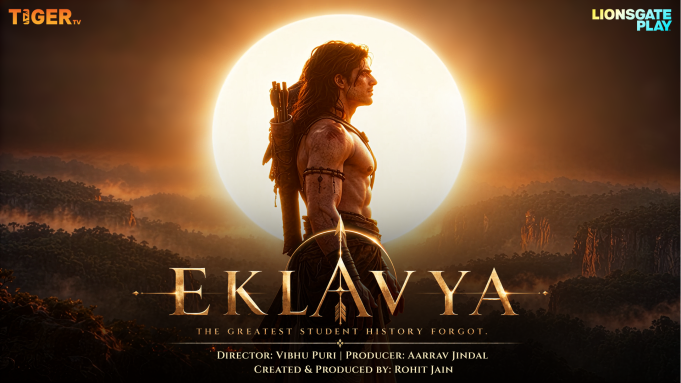
An Ancient Archer Becomes the Face of an AI Experiment
Lionsgate Play has announced Eklavya, an eight-episode series inspired by the self-taught archer from the Mahabharata and led by an AI-generated character named Yug R.Ai. The project is planned for a 2027 premiere on Tiger TV within the Lionsgate Play application and is being described as the platform's first AI-led original.
National Film Award-winning filmmaker Vibhu Puri is directing the first season. The production is intended to begin a multi-season franchise, placing the series at the centre of a wider attempt to use artificial intelligence in Indian screen storytelling at a scale that conventional television budgets can struggle to support.
The announcement is likely to generate interest and concern in equal measure. Eklavya is a culturally significant figure, while AI-generated performance remains one of the most contested developments in entertainment. The series will therefore be judged not only as mythology-based drama but also as a test of how technology changes authorship, labour and emotional connection.
Why Eklavya Is a Symbolically Charged Choice
Eklavya's story centres on exclusion, determination and self-directed learning. Denied formal instruction from the teacher he admired, he develops his ability through discipline and devotion. That narrative makes him an intriguing subject for a project built around technology trained through vast systems of existing information.
The comparison should not be stretched too far, but it gives the production a thematic responsibility. The series must treat Eklavya as more than a convenient mythological brand. His relationship with authority, knowledge and sacrifice is morally complicated, and a shallow action treatment would miss the reason his story continues to provoke debate.
Yug R.Ai Is a Character, Not a Human Performer
Yug R.Ai has been introduced as the AI actor character playing Eklavya. That wording is important. A digital character may appear to perform, but human writers, designers, animators, visual artists, directors, editors, sound teams and engineers remain involved in creating every scene.
The project should be assessed according to how transparently it acknowledges that labour. Audiences may accept digital performance when they understand the creative process behind it. Problems arise when technology is presented as if it has independently replaced the people whose decisions make the work possible.
Lionsgate Play and Google Cloud Build a Technology Partnership
Eklavya is connected to a longer-term partnership between Lionsgate Play and Google Cloud. The collaboration combines production knowledge with artificial intelligence infrastructure, and the first season is expected to be subtitled in several Indian and international languages.
Multilingual reach could be one of the clearest benefits. Indian mythology travels across regions, but language localisation can be expensive and slow. Technology may help a series prepare subtitles and production workflows more efficiently, provided qualified human review protects accuracy, cultural context and performance nuance.
A Larger Canvas Still Requires Strong Writing
Puri has described the appeal of using a broader visual canvas than ordinary schedules and budgets might permit. That ambition is understandable for a mythological world involving forests, kingdoms, warfare and feats of archery. Yet spectacle cannot solve a weak dramatic structure.
Eklavya needs a clear emotional point of view, meaningful relationships and consequences that feel human even if the title character is digitally rendered. Viewers will quickly notice if the production uses visual scale to avoid the harder work of character development.
The Labour and Ethics Questions Will Follow the Series
AI-led production raises questions about consent, training data, performer rights and the future of creative employment. The announcement does not by itself answer how every asset will be created or licensed. Those details should be disclosed as the project progresses, especially if digital likeness, voice or motion data are involved.
The industry will also watch whether the technology expands what creative teams can achieve or primarily reduces the number of people hired. A responsible production can use new tools while maintaining clear contracts, credits and human oversight. A careless one can damage trust before audiences engage with the story.
Eklavya Will Be Judged on More Than Novelty
By the planned 2027 premiere, an AI-generated lead may no longer feel as novel as it does at announcement. The series needs a reason to exist beyond being first. Its interpretation of Eklavya, the quality of its writing and the clarity of its production ethics will matter more than the initial technology headline.
The project has genuine potential to explore a timeless story through emerging methods, but it also carries unusual risk. Mythology invites strong cultural expectations, and artificial intelligence invites scrutiny about authenticity and labour. If Lionsgate Play wants Eklavya to grow into a franchise, it must show that technological ambition can serve human storytelling rather than treating human creativity as an obstacle to be engineered away.
PUBLISHED BY SUYASH PACHAURI, FOUNDER & OWNER, GLOBAL BOLLYWOOD | THE HOLLYWOOD SCOPE.