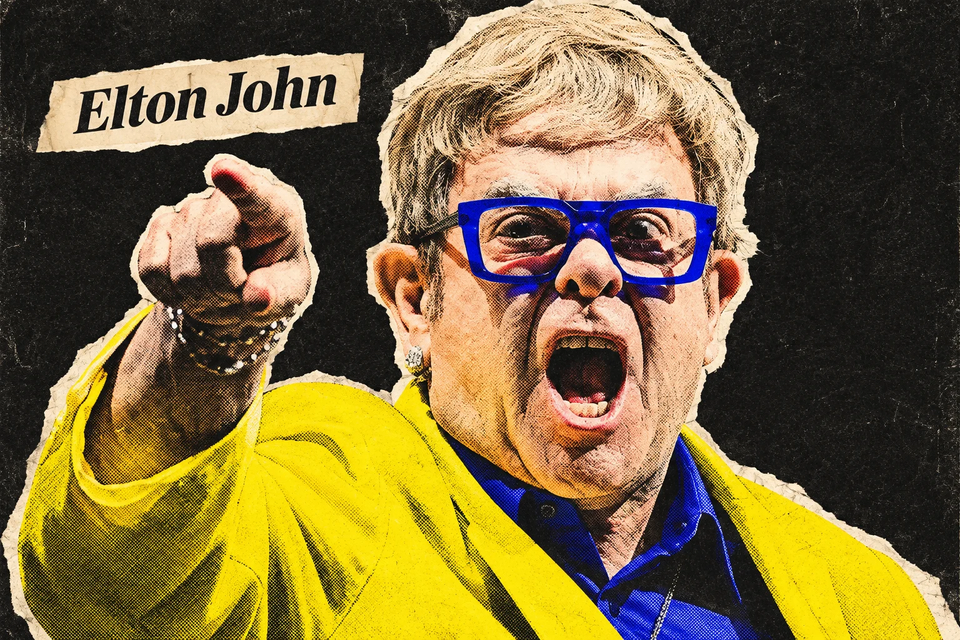
Elton John used a surprise appearance at the 2026 ARIA Awards to support Australian artists demanding stronger protection for their work in the age of artificial intelligence. In a pre-recorded message shown during the ceremony in Sydney, the British musician urged the Australian government to ensure that creators are consulted, compensated and able to decide whether their music, writing, images and other work can be used to train commercial AI systems.
His intervention gave the Not AI's To Take campaign one of its most recognizable international supporters. The movement brings together musicians, writers, publishers, broadcasters, filmmakers, visual artists and other creative workers who want copyright rules to remain based on permission and agreed payment. The debate reaches far beyond the awards stage because Australia is considering a wider policy package covering artificial intelligence, online safety, data infrastructure, productivity and copyright.
A Copyright Message at Australia's Biggest Music Night
The ARIA Awards provided a highly visible setting for the campaign. Elton John previously hosted the first edition of the ceremony in 1987, giving his return a historical connection as well as political weight. His message focused on the principle that artists should retain control over the use of their work. He asked policymakers to protect the next generation rather than creating a system in which technology companies can use creative material without prior agreement.
Australian performers also used the event to press the same case. Jack River, Dobby, Josh Pyke and KLP addressed the audience on behalf of the campaign, while other artists discussed the importance of human creativity and fair compensation. ARIA publicly backed the initiative, reinforcing the view that the issue is not limited to individual stars. It affects the people and businesses working behind recordings, concerts, television, film, publishing and visual art.
What Not AI's To Take Is Asking For
The campaign's central demand is straightforward: creative work should not be used for AI training without permission and agreed payment. Supporters reject a default opt-out model in which material could be collected unless a rights holder actively objects. They argue that consent must come first because once a work has been absorbed into a training system, the creator may have limited ability to reverse the use or trace its later influence.
The coalition is not presenting itself as opposed to artificial intelligence. Its position is that technology companies should follow the same copyright expectations as other commercial users of music, books, journalism, film, art and photography. Licensing already provides a framework for negotiating access. The argument is that the arrival of powerful generative systems should not automatically remove the rights that creators and companies depend upon.
Why the Economic Stakes Are Significant
Australia's cultural and creative sector contributes about A$70.3 billion to the economy each year and supports almost 600,000 workers, according to figures highlighted by the campaign. Those numbers include more than famous performers. Sound engineers, venue employees, production crews, designers, publishers, printers, local media workers and technology suppliers are part of the same network. A change in how creative rights are valued could therefore affect employment and investment across a broad supply chain.
The campaign's supporters fear that free or weakly controlled access to copyrighted material would shift value away from the people who produced it. AI developers argue that training rules need legal certainty and that individual licensing can be difficult at scale. Creators respond that administrative complexity does not justify taking work without agreement. The policy challenge is to support innovation while preserving an economic foundation that allows professional creative careers to exist.
Permission, Payment and Practical Enforcement
Any effective framework will need more than a broad promise to respect artists. It must define when training requires authorization, how rights holders can license material, what records developers should keep and how creators can challenge unauthorized use. Clear rules would also help responsible technology companies distinguish themselves from services that collect material without meaningful transparency.
Collective licensing may become part of the solution for sectors where one-to-one deals are impractical. Technical standards could also allow creators to express permissions in machine-readable form. Those systems must be designed carefully so that the burden does not fall entirely on individual artists. A consent framework is only useful if smaller creators can understand it, participate in it and enforce their choices without expensive litigation.
A Wider Test for Creative Policy
The Australian government is expected to present a broader AI legislative package in late 2026 or early 2027. Copyright will be one of the most closely watched elements because the decision could influence investment, cultural policy and the country's relationship with global technology companies. A balanced approach will have to protect creators while giving legitimate developers a workable route to licensed material.
Elton John's appearance transformed a technical policy argument into a public cultural question. The issue is ultimately about who has the authority to decide how creative work is reused and who receives the economic benefit. As generative systems expand into music, video, publishing and design, Australia's response may become an important reference point for other countries facing the same conflict between rapid innovation and established rights.
PUBLISHED BY SUYASH PACHAURI, FOUNDER & OWNER, GLOBAL BOLLYWOOD | THE HOLLYWOOD SCOPE.