A cult friendship returns with greater expectations
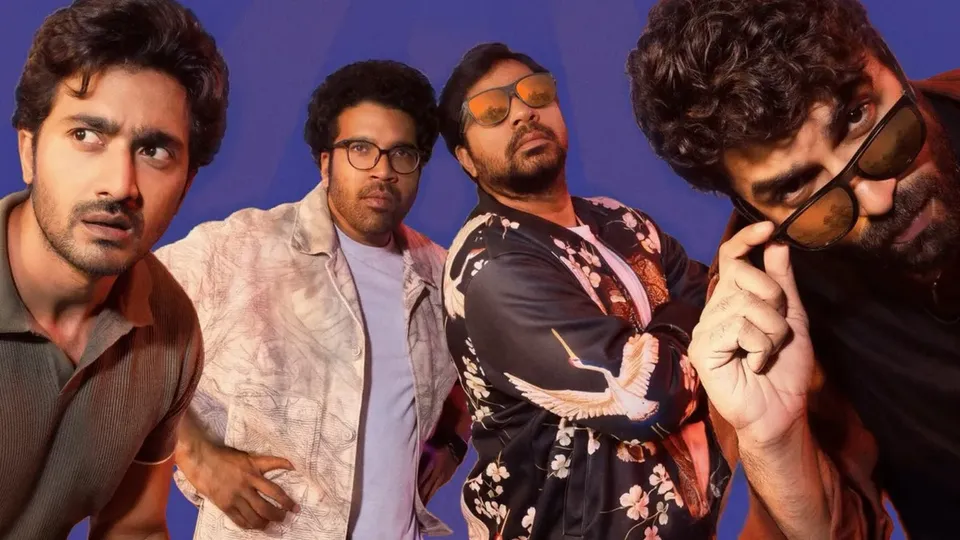
ENE Repeat brings back the world of Ee Nagaraniki Emaindi eight years after the original grew into a Telugu cult favourite. Tharun Bhascker again places friendship, filmmaking ambition and comic chaos inside the same frame. Vishwak Sen, Abhinav Gomatam and Venkatesh Kakumanu return, while Srinath Maganti takes over the role of Karthik and must enter a group whose chemistry audiences already know intimately.
That history is both the sequel’s greatest asset and its most demanding test. Viewers are not simply meeting four friends. They are returning to a rhythm built from throwaway jokes, bruised affection and the feeling that creative dreams can survive even when adulthood becomes less forgiving. ENE Repeat understands the value of that bond, but it takes too long to make the reunion feel lived-in rather than assembled for a new plot.
The first half struggles to reconnect the group
The opening movement spends considerable time placing the characters back together and establishing the new filmmaking adventure. The comedy arrives in bursts, yet the emotional foundation feels assumed. Instead of showing why these men still need one another, the screenplay often depends on the audience’s affection for the earlier film to carry scenes that should rebuild trust in the present.
This produces a scattered first half. Situations become noisy before they become meaningful, and the survival-film premise takes time to create momentum. The characters perform familiar versions of themselves without always revealing how success, disappointment and distance have changed them. The sequel is funniest when reactions emerge naturally, particularly through Abhinav Gomatam’s ability to underplay a joke rather than announce it.
Performances preserve the group’s appeal
Abhinav Gomatam gives Kaushik the most textured comic presence. His character now carries minor celebrity, allowing the actor to explore the tension between public recognition and old friendships. Small pauses and defensive expressions often land better than the broader set pieces. Vishwak Sen remains a dependable centre as Vivek, although the writing gives him more narrative function than interior detail.
Venkatesh Kakumanu retains Uppu’s warmth, while Srinath Maganti wisely avoids imitating the earlier performance of Karthik. The recasting will inevitably be noticed, but Maganti builds his own timing. Shivathmika Rajasekhar brings sincerity, though her character’s movement into a central emotional role could have used more patient development. Anisha Ambrose and Karuna Kumar contribute to the ensemble without receiving enough space to become essential.
The Thailand stretch finds the missing rhythm
The film improves markedly during its later movement in Thailand. Once the plot stops labouring over the reunion, the friends begin to sound and behave like people with a shared history. The banter becomes less mechanical, the comedy gains pace and the filmmaking theme connects more directly with their personal frustrations.
Bhascker’s sharpest writing appears in observations about creative ego, changing friendships and the embarrassment of caring deeply about work that others dismiss. Those lines give the sequel purpose beyond nostalgia. The underlying idea is that art is not an optional hobby for these characters. It is the language through which they understand themselves, even when pursuing it damages their confidence and relationships.
An uneven sequel with a genuine payoff
Vivek Sagar’s music does not achieve the inseparable relationship with the story that defined the original. The songs are functional rather than identity-forming, which matters because the earlier soundtrack carried an entire phase of the characters’ lives. That absence contributes to the sense that ENE Repeat reaches for familiar feeling without always recreating its texture.
Still, the final stretch contains enough warmth and comic momentum to justify the return. ENE Repeat is divided between a laborious setup and a far more confident payoff. It cannot consistently match the effortless intimacy of Ee Nagaraniki Emaindi, but when the group finally stops presenting friendship and starts inhabiting it, the sequel becomes lively, affectionate and recognisably its own film.
What comes next
ENE Repeat runs for approximately two hours and 46 minutes, making pacing a significant part of the viewing experience. The delayed payoff asks for patience that some audiences will not grant, particularly when the original is remembered for feeling spontaneous. The later improvement is real, but the route to it remains longer than necessary.
The sequel’s reception may ultimately divide between viewers attached to the gang and those approaching it as a standalone comedy-drama. Familiarity adds emotional credit to early scenes, while newcomers receive less reason to care. That difference explains why the same jokes and reunions can feel affectionate to one audience and underdeveloped to another.
A messy reunion that discovers its old rhythm only after taking the long road back.
PUBLISHED BY SUYASH PACHAURI, FOUNDER & OWNER, GLOBAL BOLLYWOOD | THE HOLLYWOOD SCOPE.