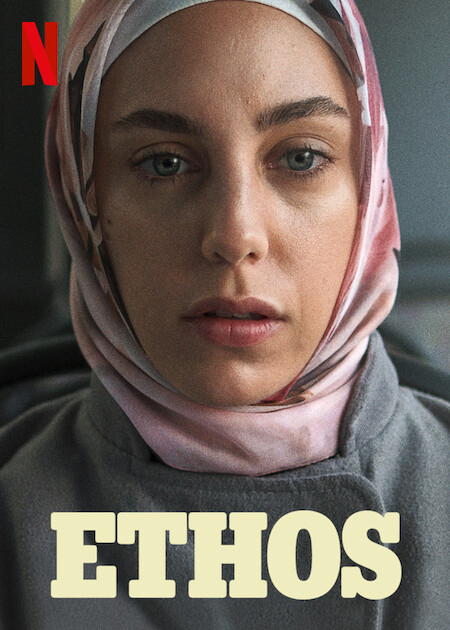
Six years after its first season, the Turkish ensemble drama Ethos returned to Netflix on 12 November 2026. The second season of the series, also known in Türkiye as Bir Başkadır, consists of four episodes. For viewers catching up in late November, the significant point is that the continuation is now part of the catalogue rather than a project awaiting a premiere. It brings back a drama whose appeal lies in the difficult conversations people have when their private expectations meet the realities of other lives.
The return of a distinctive Turkish drama
Berkun Oya again takes responsibility for both writing and directing the series. KREK Film is the production company, with Evrim Zeybek, Ali Farkhonde and Oya credited as producers. The date was announced on 20 October, but the release itself took place on 12 November. That distinction matters to viewers who have been following the project since its original run and want to know whether they can start watching rather than simply revisit its promotional material.
A six-year gap is an unusual challenge for serialized storytelling. The audience may remember the emotional atmosphere of the original more clearly than the exact sequence of events. A continuation has to restore the relationships that matter without treating every returning character as a vehicle for exposition. A four-part format also suggests a different scale of narrative commitment from the first season's eight installments. The smaller episode count is a confirmed production detail, not a judgment about the quality or completeness of the new story.
What the first season establishes
The original series follows people in Istanbul whose lives intersect across social and economic boundaries. Meryem, a cleaner who experiences episodes of fainting, seeks professional help from Peri. Their encounters create a framework for examining assumptions about class, belief, privilege and emotional distress. Other characters bring their own family histories and conflicting loyalties into this network. Anyone who has not seen the original should consider starting there before moving to the new episodes.
Why the ensemble structure matters
Rather than expecting a single protagonist to supply every answer, a series of this kind asks the audience to reconsider its sympathies as perspectives change. A character who appears confident in one setting may reveal uncertainty in another. Conversation becomes a form of dramatic action, and silence can communicate as much as a direct confrontation. This is particularly relevant to viewers who enjoy character studies more than stories driven by a succession of physical threats or spectacular events.
Who appears in the second season?
The announced cast includes Öykü Karayel, Defne Kayalar, Fatih Artman, Funda Eryiğit, Onur Saylak and Berkun Oya. Also named for the new season are Cihat Süvarioğlu, Gökhan Yıkılkan, Oğulcan Arman Uslu, Eda Akalın, İdil Çelik, Cemre Zişan Sağbır, Göktuğ Yıldırım and Nur Sürer. The official cast list establishes their participation, but it does not by itself reveal the precise trajectory of each character. The guide therefore avoids assigning new roles or inventing plot outcomes.
For filmmakers, an ensemble of this size raises an interesting question about casting continuity. Actors must preserve a sense of personal history while responding to new circumstances on screen. The passage of real time between productions may offer opportunities to explore changed behaviour, but age or appearance alone cannot create a convincing arc. Writing, performance and editorial choices all contribute to making returning relationships feel inhabited rather than mechanically restored.
Four episodes and regional viewing information
The current United States catalogue displays two seasons and a TV-MA classification. The United Kingdom listing displays a 15 rating. These are local classifications, not contradictory statements about the underlying series. Turkish is the original audio language. English audio and subtitles are listed on both of those regional pages, while the British catalogue also lists Hindi audio. Language options and classifications should be checked in the viewer's own region rather than assumed to be identical everywhere.
A practical way to revisit the story
The first season is listed with eight episodes. Viewers who remember its major relationships may prefer to revisit selected episodes before beginning the new four-part run, whereas newcomers will benefit from following the original order. The public catalogue's default episode descriptions refer to the first season, so they should not be mistaken for summaries of the four new installments. Individual second-season running times have not been independently confirmed for this guide.
A screenwriting lesson in perspective
Ethos offers a useful point of discussion for creators developing stories set in socially diverse communities. It is tempting to write contrasting characters as representatives of competing ideas, especially when the drama concerns cultural identity. The stronger approach is to give those characters contradictory impulses and private concerns that do not fit a simple label. The resulting conflict can emerge from what someone chooses to disclose, how another person listens and what each assumes about the other.
The Turkish setting is integral to the series, but the underlying storytelling challenge is familiar to writers in many countries. Audiences can recognize the discomfort of being misread even when the specific cultural references are unfamiliar. Watching in the original language with subtitles is one way to experience the cadence and pauses of the performances, although dubbed versions can make the series more accessible to other viewers.
Where the new season fits
Ethos Season 2 is a continuation available after its November premiere, not a forthcoming release. Its compact format, returning creative leadership and focus on interpersonal drama provide a clear reason to revisit the series now. This is a viewing and production guide rather than a review of the four episodes; it makes no claim to have assessed their performances, individual endings or critical reception.
PUBLISHED BY SUYASH PACHAURI, FOUNDER & OWNER, GLOBAL BOLLYWOOD | THE HOLLYWOOD SCOPE.