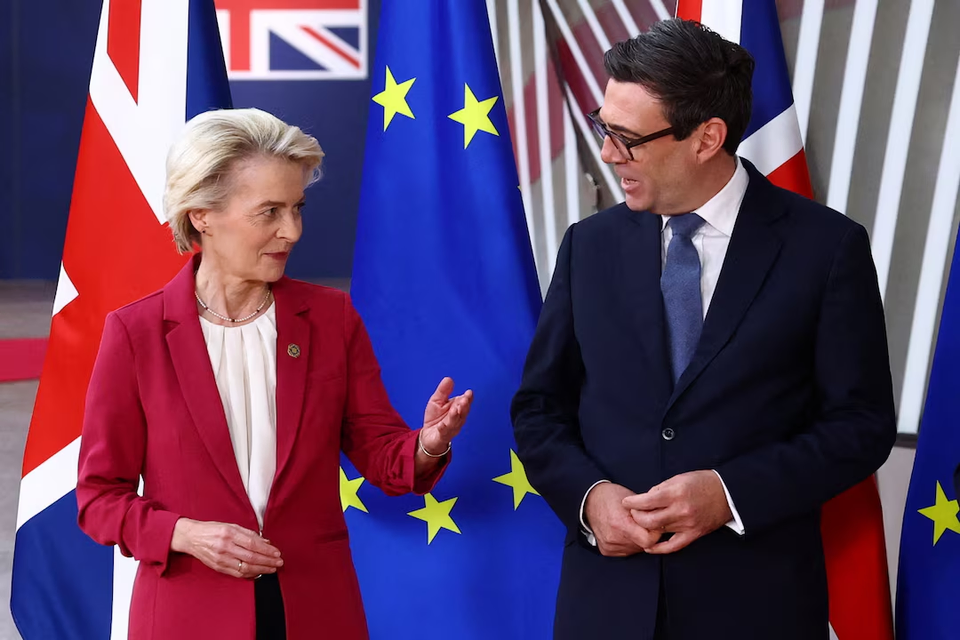
Brussels summit pushes the post-Brexit relationship into a new phase
The European Union and the United Kingdom have moved their post-Brexit relationship toward a broader strategic partnership after leaders met in Brussels for their second formal summit. The gathering was designed to deepen the reset that began in 2025 and place cooperation on a more predictable footing at a time when war, economic pressure and political uncertainty are testing European institutions.
The joint approach treats the two sides as strategically important neighbours with shared interests in democracy, human rights, the rule of law and a rules-based international order. That language is significant because it shifts the emphasis away from the disputes that dominated the years following Britain's departure from the bloc. The summit instead concentrated on what London and Brussels can achieve together without reopening the basic constitutional settlement of Brexit.
Security and Ukraine provide the strongest common ground
European security formed the central pillar of the renewed relationship. Both sides face the consequences of Russia's war against Ukraine, pressure on defence budgets, cyber threats and instability around critical infrastructure. The United Kingdom remains one of Europe's largest military powers, while the European Union has expanded its work on defence investment, procurement and industrial capacity. Closer coordination can therefore produce practical benefits even though Britain is no longer part of the bloc's decision-making structure.
Support for Ukraine offers an immediate test. London and Brussels have broadly aligned on sanctions, military assistance and the principle that Kyiv must determine the terms of any settlement. A stronger framework could make it easier to coordinate training, financing, reconstruction planning and action against attempts to evade restrictions. It may also improve communication during emergencies affecting energy networks, transport systems or European borders.
Economic cooperation must work within post-Brexit limits
The economic relationship remains vast, but trade has become more administratively demanding since the United Kingdom left the single market and customs union. Businesses on both sides continue to face paperwork, border delays and uncertainty in regulated sectors. The strategic reset creates room for targeted improvements, especially where common standards or information sharing can reduce unnecessary friction without restoring full membership obligations.
European leaders nevertheless stressed that the single market's four freedoms remain indivisible and that access must reflect a balance of rights and responsibilities. That boundary is likely to shape negotiations on food standards, professional mobility, energy trading and youth opportunities. Progress will depend on whether practical agreements can be reached without either side appearing to dilute the political choices made during and after the Brexit process.
A more structured relationship could reduce recurring disputes
Regular summits and formal work programmes can prevent every disagreement from becoming a crisis. Officials can identify problems earlier, monitor existing agreements and create technical channels for areas such as research, policing, migration and sanctions enforcement. The value of the new framework may therefore be measured less by one dramatic announcement than by whether it produces steady cooperation across several years.
Political durability will be equally important. Governments change, and both London and Brussels face domestic pressure from voters concerned about sovereignty, migration and economic performance. A successful reset must deliver visible benefits while respecting those sensitivities. If the partnership becomes associated only with elite diplomacy, it could face renewed resistance. If it improves security and reduces costs for citizens and companies, it will be harder for future leaders to reverse.
What comes next
Attention now turns to the detailed implementation calendar. Negotiators will need to convert broad commitments into workable arrangements with clear legal bases, deadlines and review mechanisms. Security cooperation may advance faster than trade because the political consensus is stronger and the external risks are more immediate.
The Brussels summit does not erase Brexit or return the United Kingdom to European Union structures. It does, however, show that separation and strategic cooperation can exist at the same time. The durability of that model will depend on tangible results rather than the language of reset alone.
Businesses will watch whether the new political tone shortens customs delays, clarifies regulatory requirements and improves access to specialised workers. Universities and research institutions will look for stable rules governing cooperation and funding. Those practical constituencies can become strong supporters of the reset if they see measurable improvements rather than another cycle of ambitious declarations.
The partnership will also be judged during the next major European crisis. A framework created in calm diplomatic conditions must still function when sanctions, migration pressures or security emergencies demand rapid decisions. Reliable consultation during such moments would demonstrate that the relationship has developed institutional depth beyond the goodwill of the current leadership.
PUBLISHED BY SUYASH PACHAURI, FOUNDER & OWNER, GLOBAL BOLLYWOOD | THE HOLLYWOOD SCOPE.