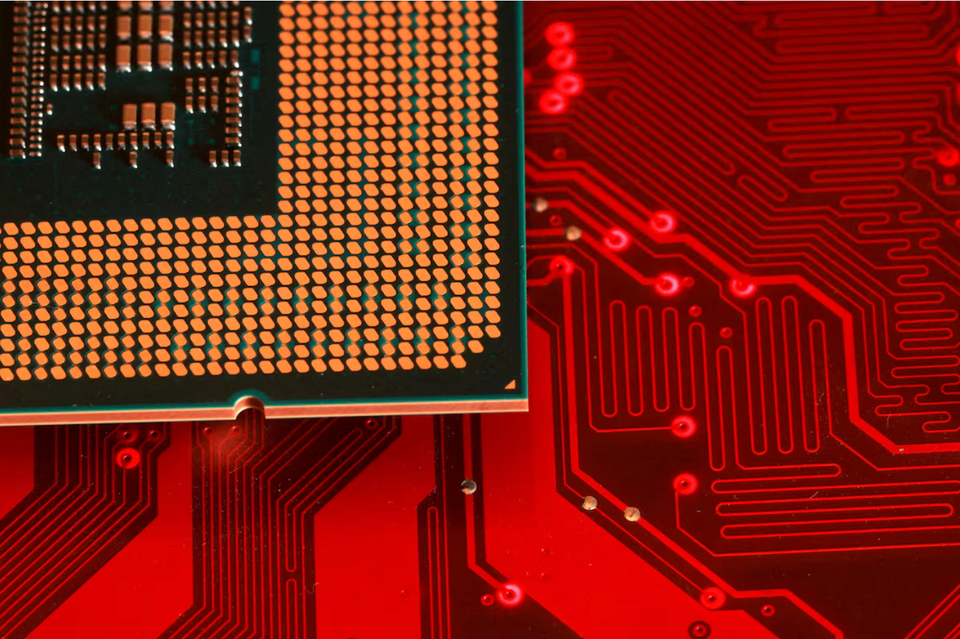
Germany and the Netherlands are deepening cooperation on artificial intelligence chip design, bringing their strategic innovation agencies together in an effort to strengthen Europe's position in one of the world's most consequential technology industries. The Europe AI chip design initiative comes as governments increasingly treat semiconductors as strategic infrastructure rather than ordinary commercial components. Advanced chips determine how quickly AI systems can be trained, how efficiently they can run and how much control countries have over the computing foundations of their digital economies.
Europe AI chip design becomes a sovereignty priority
Europe has world-class semiconductor strengths, including critical equipment, automotive chips, research institutions and specialized engineering. Yet the continent remains heavily dependent on foreign companies for many of the processors and software ecosystems that power frontier AI. That dependence has become more visible as generative AI demand has exploded and access to high-performance accelerators has turned into a strategic issue.
The German-Dutch collaboration aims at the design layer, where architecture choices can determine performance, energy efficiency and compatibility with AI workloads. Europe does not need to reproduce every part of the global semiconductor supply chain domestically to gain strategic leverage. It can instead focus on areas where its research base, industrial companies and equipment expertise create realistic opportunities for differentiation.
Why Germany and the Netherlands are natural partners
The Netherlands occupies an unusually important place in global chipmaking because of its semiconductor equipment ecosystem and technical expertise. Germany has a large industrial base, major automotive demand, advanced manufacturing and a growing network of semiconductor investments. Linking innovation agencies can help researchers and companies move ideas from laboratories toward prototypes and commercial products.
Public-sector involvement also reflects the economics of semiconductor development. Designing competitive chips is expensive, technically risky and dependent on long development cycles. Private investors may hesitate to fund projects that require years of work before revenue appears. Strategic agencies can absorb some early risk, coordinate research programmes and help connect startups with larger industrial customers.
AI changes what Europe needs from semiconductors
Traditional computing demand rewarded general-purpose processors, but modern AI has created a market for specialized accelerators. Training large models requires enormous parallel computing capacity, while running AI on phones, vehicles, factories and edge devices creates different requirements for power efficiency and latency. Europe can pursue opportunities across this spectrum rather than competing only for the largest data-centre chips.
Industrial AI may be particularly relevant. German manufacturers, European automakers and advanced engineering companies generate large amounts of operational data and need computing that can function securely in factories, vehicles and machines. Chips designed around those workloads could create a market where European industrial knowledge becomes an advantage instead of a limitation.
The challenge is turning research into scale
Europe has often produced strong scientific research but struggled to build technology companies at the scale of US and Asian leaders. AI chip policy will therefore be judged by commercialization, not announcements. Designers need access to fabrication, packaging, software tools, customers and capital. A brilliant architecture has little strategic value if it cannot be manufactured economically or if developers cannot easily write software for it.
Software is especially important because successful AI chips depend on developer ecosystems. Hardware performance alone does not guarantee adoption. Engineers want mature libraries, tools and frameworks that allow existing models to run without extensive rewriting. Building that layer requires sustained investment and cooperation with universities, cloud providers and AI companies.
Semiconductor competition is now geopolitical
The global chip industry is shaped by export controls, subsidies, national-security reviews and industrial policy. The United States, China, Japan, South Korea, Taiwan and European countries are all trying to protect or expand strategic capabilities. This can create opportunities for Europe but also risks fragmenting supply chains that have historically depended on deep international specialization.
A German-Dutch partnership cannot eliminate Europe's external dependencies by itself. It can, however, strengthen the continent's ability to make choices rather than simply accept technology roadmaps determined elsewhere. That matters as AI becomes integrated into defence, healthcare, transportation, energy and government services. The collaboration represents a practical test of whether European sovereignty can be built through focused partnerships rather than broad slogans. Success would mean creating intellectual property, companies and products that remain globally competitive while serving European strategic needs.
PUBLISHED BY SUYASH PACHAURI, FOUNDER & OWNER, GLOBAL BOLLYWOOD | THE HOLLYWOOD SCOPE.