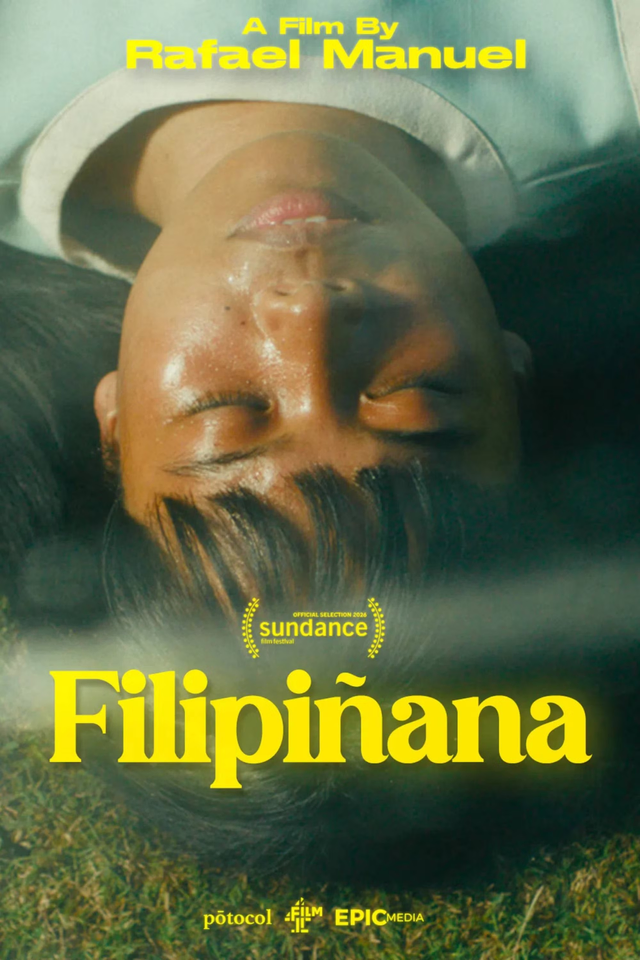
Filipiñana reached British and Irish cinemas on 20 November 2026, carrying a striking question beneath its carefully maintained golf-course setting: who pays the real cost of an apparently peaceful world of wealth and leisure? The debut feature by Filipino writer and director Rafael Manuel was the subject of renewed discussion on 16 November, just before its local release. This guide examines the film's themes, craftsmanship, principal cast, and continuing screening options without treating that earlier discussion as breaking news.
The film runs for approximately 100 minutes and follows a teenage worker named Isabel through an exclusive club outside Manila. Its measured pace, surreal details, and controlled visual compositions make it an unusual entry in the year's international cinema conversation. It is not a conventional sports drama or a story of an athlete's rise. Golf provides the social setting, while the relationship between privilege, work, land, and inherited authority supplies the drama.
The premise: a young worker enters an unequal world
Isabel, played by Jorrybell Agoto, is 17 and comes from the rural north of the Philippines. She begins working as a tee girl, placing golf balls for powerful players and navigating routines that underline her limited position. The club's immaculate scenery is experienced differently by those who enjoy it and those who must maintain it. Its manicured lawns, carefully ordered services, and restricted spaces create a striking contrast with life beyond the boundaries of the course.
When Isabel tries to return a misplaced golf club, her movements take her closer to private areas and to Dr. Palanca, a prominent figure in the institution's hierarchy. A simple duty becomes a route toward unsettling discoveries. Describing the premise this way preserves the mystery rather than turning the guide into an account of its final revelations. The film's central dramatic tension lies in what Isabel is allowed to see, what she notices, and the dangers of asking questions in an environment governed by unequal power.
Why Isabel's viewpoint is important
The narrative is arranged around someone who is physically present within an elite space but socially excluded from its authority. That position allows the camera to expose contradictions without relying entirely on direct speeches. The protagonist does not need to deliver a grand declaration for an audience to understand what is wrong. Every courteous instruction and seemingly harmless convention can reveal how an institution treats those who work for it. Her observations become the viewer's means of reading the club.
Class, land, and the cost of a beautiful landscape
The golf course functions as more than an attractive background. Its lush green appearance depends upon labour, water, land and an elaborate division of roles. The film uses that abundance to raise questions about whose comfort receives priority and whose needs can be overlooked. Instead of presenting inequality as a single argument, the storytelling allows it to emerge through access to space, service relationships, and the repeated rituals of privilege. The result is a social satire with a deliberately unsettling atmosphere.
Manuel's approach also draws attention to the historical pressures underlying modern status and ownership. The clubhouse's refined habits can look ordinary to the people at its centre, yet they appear deeply strange when observed from the edge. The contrast invites a wider reflection on the relationship between institutions and communities around them. The film locates those ideas within the Philippines, but the structures it examines are recognizable in many countries where exclusive leisure is supported by insecure or poorly rewarded work.
A visual language built on patience and precision
The film's images favour deliberate framing and extended observation. Cinematographer Xenia Patricia helps create a world in which bright greenery can feel both inviting and threatening. Broad views of fairways establish the club's physical scale, while tighter compositions emphasize the restricted perspective of a young worker. The deliberate visual order encourages audiences to study gestures, glances and arrangements rather than expecting every dramatic point to be explained through dialogue.
That controlled style makes duration part of the experience. A viewer accustomed to rapid cuts may initially find the film unusually patient. Yet the pauses are not necessarily empty. They ask the audience to notice who commands attention, who remains in the background, and who can move freely. The beauty of an image is never proof that the situation within it is harmless. Indeed, visual elegance becomes one of the ways the film makes a system of exploitation appear disturbingly normal.
Sound and performance within the setting
Its sound design and staged social interactions add a further layer of unease. In a place devoted to relaxation, the people serving guests must constantly anticipate demands and respond with composure. The contrast between service routines and private discomfort creates an atmosphere that cannot be reduced to plot alone. Music, ambient sound, and the rhythms of conversation can expose the gap between the club's public harmony and its underlying divisions.
From an acclaimed short film to a feature debut
Filipiñana extends a short film made by Manuel in 2020. Reworking a short into a feature is not simply a matter of making scenes longer; it demands new dramatic architecture and a stronger sense of sustained perspective. Here the original idea becomes the basis of a more expansive examination of class and institutional control. Manuel wrote and directed the feature, bringing together an international production involving the Philippines, Singapore, the United Kingdom, France and the Netherlands.
The feature premiered in competition at the 2026 Sundance Film Festival and received the World Cinema Dramatic Special Jury Award for Creative Vision. It subsequently screened in the Perspectives section at the Berlin International Film Festival. These achievements helped establish the film's international profile before its November cinema engagement. Awards recognition should not be confused with universal audience approval, however. Its deliberate tone remains a meaningful part of deciding whether the film will suit individual viewing preferences.
The cast and the contribution of Jorrybell Agoto
Agoto anchors the film as Isabel, supported by performers including Carmen Castellanos and Teroy Guzman. Other credited cast members include Angeli Bayani and Carlos Siguion-Reyna. Their characters inhabit different levels of the club's social structure, allowing the ensemble to suggest an entire community rather than a single household or workplace dispute. The film depends on the difference between outward politeness and the consequences of authority, and its performances are central to that contrast.
A sad development followed the November 16 discussion: Agoto died on 17 November 2026, a loss subsequently confirmed in reporting after that date. She also played Isabel in the earlier short-film version, giving her contribution to the project unusual continuity across its development. Her work deserves to be discussed with care, as a performance in its own right rather than reduced to the circumstances of her death. The film now also preserves a significant part of her creative legacy.
Where the film fits in the release calendar
The United Kingdom and Ireland theatrical opening took place on 20 November 2026. Screenings have been listed across London and cities including Bristol, Cardiff, Birmingham and Newcastle during the subsequent weeks, though individual cinema schedules and tickets should always be confirmed directly before a visit. A United Kingdom home-viewing date of 4 January 2027 has also been advertised for a dedicated streaming service. That release plan gives audiences more than one route to discover the film.
Different territories have followed different distribution calendars. The American theatrical launch and Philippine engagements occurred earlier in 2026, so dates from those releases should not be confused with the November United Kingdom opening. The film's one-hundred-minute runtime is consistent across the principal listings consulted. Its language and cultural setting are fundamental to the experience; viewers should check the specific screening details for subtitles and accessibility options.
Who may connect with its unusual storytelling
Audiences who value formal experimentation, slow-building tension, and political observations embedded in everyday behaviour may find plenty to discuss. Viewers looking for a conventional thriller or straightforward sports drama should adjust their expectations. The story's impact comes from gradual discovery and a network of small signs, not from frequent action sequences. Its imagery may be exquisite, but the emotional terrain is often uncomfortable because it refuses to separate beauty from the systems that support it.
The film also provides a useful example for emerging directors and cinematographers considering how mise-en-scène can carry an argument. Objects, clothing, physical distances, eyelines and architecture help establish status before any character explains it. Restrained editing can turn seemingly neutral spaces into sources of tension. In that respect, Filipiñana is valuable for a filmmaking conversation as well as for ordinary cinema viewing, demonstrating how visual form can deepen rather than decorate a social theme.
The continuing significance of a November film conversation
The discussion that circulated on 16 November was tied to an impending theatrical opening, not a surprise event discovered later. Its continuing relevance comes from the ongoing release schedule, the director's approach to the material, and the attention the feature has brought to contemporary Filipino cinema. The film's festival recognition and carefully crafted aesthetic offer context for readers exploring international releases beyond the most widely advertised studio titles.
For a viewer considering the film today, the most useful facts are straightforward: it is Rafael Manuel's debut feature, it centres on Isabel's experience in an exclusive golf club, it runs about 100 minutes, its United Kingdom and Ireland cinema release began on 20 November, and a January home-viewing window has been announced. The achievement of its cast, especially Jorrybell Agoto, should remain at the heart of any discussion. The film merits attention as a work of cinema rather than as a recycled viral headline.
PUBLISHED BY SUYASH PACHAURI, FOUNDER & OWNER, GLOBAL BOLLYWOOD | THE HOLLYWOOD SCOPE.