Film Review by Suyash Pachauri
Founder & Owner
Global Bollywood | Director's Daily Clapboard
One Liner:
"A stylish concept with flashes of originality, but a confused screenplay and underwhelming thrills prevent Baby Do Die Do from becoming the dark comedy it aspires to be."
Introduction
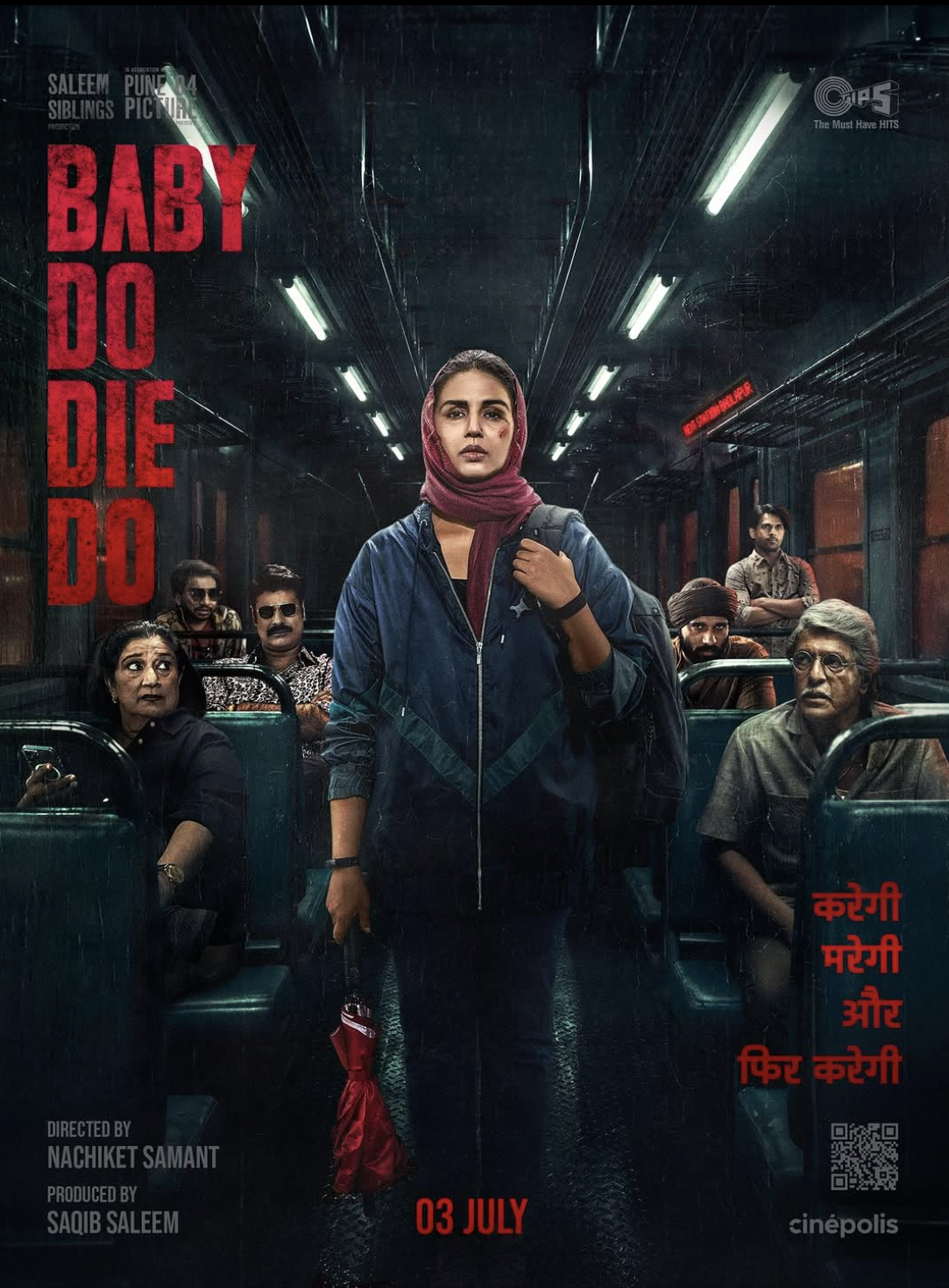
Dark crime comedies are among the most difficult genres to execute successfully. They demand a careful balance between tension, humour, eccentric characters and emotional engagement. Baby Do Die Do, directed by Nachiket Samant, attempts to combine all these ingredients into a quirky gangster tale set in the chaotic underbelly of Mumbai. At its heart is Baby Karmarkar, India's first deaf-mute female contract killer, a fascinating protagonist whose silence speaks louder than words.
The film blends crime, mystery, action and black humour while exploring themes of trauma, revenge and identity. On paper, the premise is intriguing. A contract killer haunted by the murder of her twin sister, a corrupt builder nexus, police investigations, missing gangsters and a series of mysterious murders promise an entertaining ride.
Unfortunately, while the concept remains fresh, the execution struggles to maintain consistency. Instead of delivering a gripping crime thriller packed with shocking twists and razor-sharp humour, the film often gets trapped in its own confusing narrative. The screenplay frequently sacrifices logic for surprise, leaving the audience more puzzled than intrigued.
Despite its shortcomings, Baby Do Die Do has moments where its unusual characters and stylish presentation hint at the better film hidden beneath the surface.
Screenplay & Script Sense
The biggest strength of Baby Do Die Do lies in its central idea. A deaf-mute female assassin navigating Mumbai's criminal world is an original premise that immediately grabs attention. Baby's emotional baggage, stemming from the childhood murder of her twin sister, provides enough psychological depth to build an engaging revenge drama.
However, the screenplay never fully capitalizes on this potential.
The narrative keeps introducing murders, betrayals and new suspects, but very few of these developments carry genuine emotional or dramatic weight. Instead of creating suspense, the film often creates confusion. Characters appear and disappear abruptly, motivations remain sketchy and several twists feel designed merely to surprise rather than naturally emerge from the story.
The screenplay also struggles with tonal consistency. One moment the film wants to be an intense gangster thriller; the next it shifts toward absurd comedy before returning to emotional drama. These transitions rarely feel seamless.
One noticeable weakness is the predictability surrounding Baby's personal revenge. The audience understands several important revelations long before the protagonist does, reducing the emotional impact when those truths are finally revealed.
The investigation led by Inspector Anjum Khan initially appears promising but never develops into a compelling cat-and-mouse game. The police remain surprisingly ineffective despite multiple murders occurring in broad daylight, making several situations difficult to believe.
The comedy, another major pillar of the film, remains inconsistent. While a handful of quirky interactions generate mild smiles, most humorous sequences fail to land with the intended impact. As a result, the film neither becomes a thrilling crime saga nor an outrageously funny dark comedy.
Still, the screenplay deserves credit for attempting something unconventional instead of relying on formulaic storytelling. The ambition is evident, even if the execution falls short.
Direction
Director Nachiket Samant deserves appreciation for attempting an offbeat genre rarely explored in mainstream Hindi cinema. His vision clearly aims to create a stylized universe populated by eccentric criminals, morally grey characters and unpredictable situations.
Visually, the director creates an atmosphere that complements the film's noir setting.
The underworld feels grimy without becoming excessively bleak, and the action sequences are staged with reasonable competence.
However, Samant's storytelling lacks narrative grip. The pacing fluctuates considerably, and several scenes stretch beyond their natural duration. Instead of building tension, they slow the momentum.
The emotional portions involving Baby's childhood trauma are sincere but not explored deeply enough to create lasting impact. Likewise, the thriller elements never generate sustained suspense because the screenplay reveals too much too early.
The director also struggles to extract maximum entertainment from the comic situations. A film marketed as a crime comedy should consistently balance laughter with danger, but here both elements remain only partially effective.
Overall, Nachiket Samant presents an interesting vision, but the storytelling lacks the precision required to elevate the material.
Acting
Huma Qureshi
Huma Qureshi shoulders the film with complete commitment. Playing a deaf-mute assassin is no easy task, and she relies heavily on expressions, body language and physical presence rather than dialogue. She convincingly portrays Baby's emotional scars and silent determination.
However, the screenplay doesn't allow her character to evolve significantly.
While Huma remains sincere throughout, the writing prevents the performance from becoming truly memorable.
Sikander Kher
Sikander Kher is among the strongest performers in the film. As Zafar Katkar, he brings controlled menace and confidence. His screen presence immediately commands attention, making him one of the film's more effective antagonists.
Chunky Panday
Chunky Panday delivers an entertaining performance as P.M. Jain. His eccentric personality suits the film's quirky tone, and he provides several enjoyable moments despite limited screen time.
Seema Pahwa
Seema Pahwa once again proves why she remains one of Hindi cinema's most dependable performers. As Inspector Anjum Khan, she brings authority, humour and realism. Even when the screenplay weakens her investigation, she keeps the character engaging.
Vidya Malavade
Vidya Malavade performs adequately as Manju Morjhani. She delivers an emotionally balanced performance but receives limited scope to leave a stronger impact.
Himanshu Malik
Himanshu Malik performs convincingly as Mickey Morjhani. Although his role is relatively brief, he contributes effectively to the narrative.
Rachit Singh
Rachit Singh is natural as Baby's husband Siddhu. His innocence provides a welcome contrast to the dark world surrounding Baby.
Supporting Cast
The supporting ensemble contributes positively to maintaining the film's quirky atmosphere.
Marudhar Shekhawat performs competently as Manu, while Rupesh Bane leaves an impression as Faizu. Mangal Kenkre delivers emotional warmth as Baby's mother, adding sincerity whenever she appears.
Ashish Warang is dependable as Constable Tawde, and Pradeep Kabra makes his presence felt as Maruti. Karan Dave, Nishad Vaidya, Krishna Kumar Jaiswal, Gavin Chubby Methalaka, Juber Mohammad Shaikh, Samaira Vijay, Shanaya Vijay, Kunal Wamanrao Rathod and Tushar Tengale perform according to the demands of their respective roles.
Although the supporting cast remains competent overall, very few characters receive enough depth to become memorable.
Cinematography
Tojo Xavier's cinematography is one of the better technical aspects of the film.
The visual presentation effectively captures Mumbai's crime-ridden landscape through muted colours, atmospheric lighting and carefully framed interiors. Several night sequences enhance the film's noir flavour.
The camera movement remains fluid during action scenes while maintaining clarity during dialogue-heavy moments. Although the visuals cannot compensate for the screenplay's shortcomings, they certainly enhance the overall viewing experience.
Music & Background Score
Arjun Iyer's songs leave only a modest impression. None of the tracks emerge as memorable enough to stay with the audience after the film ends.
The background score performs its primary function of supporting suspense and emotional moments but rarely elevates the drama. In a genre where music can significantly amplify tension, the score remains surprisingly restrained.
Editing
The editing by Nikhil Parihar and Ashish Tripathi is inconsistent.
Several scenes could have been trimmed considerably, particularly during the investigation and subplot transitions. The film occasionally loses momentum because of repetitive conversations and prolonged sequences.
Sharper editing could have made the thriller more engaging and significantly improved the overall pacing.
Final Verdict
Baby Do Die Do deserves recognition for attempting something different. A deaf-mute female contract killer leading a dark crime comedy is an exciting concept that instantly sparks curiosity.
Unfortunately, the film never fully realises its own potential. The screenplay remains confused, the humour is inconsistent, and the thriller elements lack genuine suspense. Although the performances, particularly by Huma Qureshi, Sikander Kher, Chunky Panday and Seema Pahwa, provide moments of entertainment, they cannot completely overcome the narrative's structural weaknesses.
The film has style, ambition and originality, but not enough emotional depth or gripping storytelling to leave a lasting impression. Viewers looking for a tightly written crime thriller or a laugh-out-loud black comedy may find themselves underwhelmed.
Still, for audiences who appreciate experimental storytelling and unconventional characters, Baby Do Die Do offers occasional moments worth watching.
On the Plus Side
Fresh and unconventional central concept.
Huma Qureshi delivers a committed performance.
Sikander Kher and Seema Pahwa impress.
Stylish cinematography captures the noir atmosphere well.
Attempts to blend multiple genres with originality.
On the Minus Side
Confusing and uneven screenplay.
Thriller lacks edge-of-the-seat suspense.
Comedy rarely generates genuine laughter.
Weak character development.
Slow pacing and inconsistent editing reduce overall impact.
One-Liner
"An assassin's silence is intriguing but the screenplay leaves too many questions louder than the answers."
Film Review by Suyash Pachauri
Founder & Owner
Global Bollywood | Director's Daily Clapboard