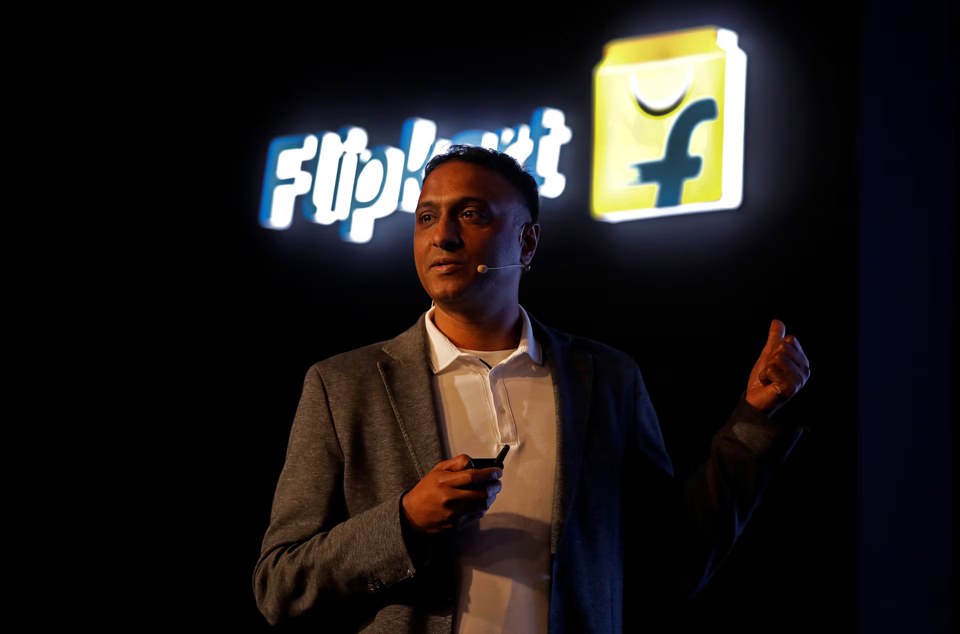
A leadership transition at a pivotal moment
Kalyan Krishnamurthy will step down as chief executive of Flipkart after nearly a decade at the centre of India's e-commerce expansion. Chief product and technology officer Balaji Thiagarajan will lead the company on an interim basis while a permanent successor is selected. The change comes as the Walmart-owned group faces intense competition, fast-changing consumer habits and continuing speculation about a future stock-market listing. It is therefore more than a routine executive move, even though the company has not linked the departure to a specific transaction.
Krishnamurthy joined Flipkart in 2016 and became chief executive in January 2017, before taking the group CEO role in 2018. His tenure covered the $16 billion Walmart transaction that gave the American retailer a roughly 77 percent stake. It also included the expansion of logistics, payments, advertising and marketplace operations beyond India's largest cities. Flipkart says it now has more than 500 million registered users, a scale that makes leadership continuity important for sellers, employees and strategic partners.
Competition has changed around Flipkart
The market Krishnamurthy leaves is different from the one he inherited. Conventional e-commerce remains important, but quick-commerce platforms have trained urban customers to expect delivery within minutes for groceries and an expanding range of products. Large rivals continue to invest in fulfilment, subscription services and advertising. Brands are also building direct relationships with consumers through their own apps and social channels. Flipkart's next leader must defend the core marketplace while deciding how aggressively to fund faster delivery and newer retail formats.
Technology will be central to that decision, which makes Thiagarajan's interim appointment notable. Product discovery, pricing, fraud prevention, seller tools and warehouse efficiency increasingly depend on data systems and artificial intelligence. At the same time, Indian regulators are scrutinising marketplace practices, consumer protection and relationships between platforms and preferred sellers. A technology-led strategy cannot be separated from compliance, trust and the economics of serving customers across a country with major differences in income, language and infrastructure.
A possible listing raises the stakes
Flipkart has long been viewed as a potential public-market candidate. A listing would require transparent financial reporting, a convincing path to durable profitability and a management team able to communicate with investors. The company has not announced a final timetable in connection with this leadership change, so it would be wrong to treat the departure as confirmation that an offering is imminent. Still, succession planning is especially sensitive when a business may eventually seek capital from public shareholders.
Walmart must also decide what qualities the permanent chief executive needs most. An internal appointment could preserve institutional knowledge and execution speed. An external candidate might bring experience in public markets, consumer brands or high-frequency delivery. The ideal choice would need to manage all three while maintaining relationships with regulators and thousands of sellers. The search will be watched for clues about whether Flipkart prioritises profitability, market share, technology expansion or preparation for an eventual listing.
What the transition means for India's digital economy
Flipkart helped widen access to branded goods and digital payments beyond major metropolitan areas. Its logistics investments supported a network of warehouses, delivery partners and small merchants that now forms part of India's broader digital-commerce infrastructure. A leadership transition at this scale can influence hiring, vendor strategy and investment across that network. It may also affect competitive spending if rivals interpret the change as an opportunity to win customers, employees or sellers.
For now, the confirmed position is straightforward: Krishnamurthy is leaving, Thiagarajan will lead on an interim basis and a successor will be named in the coming weeks. No new owner, listing date or restructuring has been announced. The next phase will be defined by the permanent appointment and the strategy presented with it. Flipkart's challenge is to make the transition without losing momentum in a market where delivery speed, price, product range and customer trust can shift competitive advantage quickly.
The transition will also test how well Flipkart has institutionalised decision-making beyond one long-serving executive. Strong succession planning should preserve relationships with sellers, logistics partners and regulators while giving the interim leader authority to act. Employees will look for clarity on investment priorities and organisational structure, particularly after the earlier departure announcement of group finance chief Sriram Venkataraman. Customers are unlikely to notice the leadership change directly, but service quality during major sale periods will provide an early operational measure. A smooth handover would reassure potential investors that the business can maintain execution through senior changes. Any major strategic shift, however, should be judged only after the permanent chief executive is named and presents a documented plan.
PUBLISHED BY SUYASH PACHAURI, FOUNDER & OWNER, GLOBAL BOLLYWOOD | THE HOLLYWOOD SCOPE.