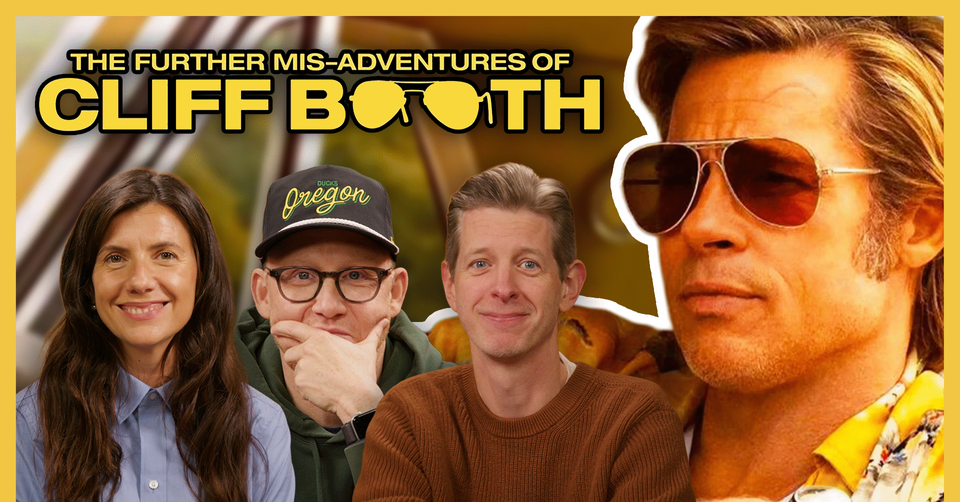
Cliff Booth Steps Out of the Sidekick Position
The Further Mis-Adventures of Cliff Booth returns to the stuntman, driver and occasional fixer introduced in Once Upon a Time in Hollywood. Brad Pitt again plays Cliff, now moving through 1977 Los Angeles under the direction of David Fincher and from a screenplay by Quentin Tarantino.
The pairing creates immediate fascination. Tarantino wrote the character and the period detail, while Fincher brings a cooler visual intelligence and longstanding creative history with Pitt. Fresh criticism describes the result as loose, indulgent and more interested in the pleasure of Cliff's strange daily life than in forcing him through a conventional arc.
This review is an original synthesis of current critical coverage and confirmed release information. It does not present itself as firsthand viewing.
A Plot Built From Jobs, Favours and Detours
Cliff has become a professional moonlighter, drifting between work as a projectionist, bartender and unofficial problem solver for Hollywood figures. The central trouble involves television actor Charlie Peters, played by Scott Caan, who needs help after a violent arrangement produces dangerous consequences.
A more conventional film might turn that problem into a tightly wound noir. The reported structure keeps wandering into other assignments, relationships and pieces of Los Angeles life. Cliff's competence becomes the running joke and the source of his appeal. He can mix a drink, run a projection booth or confront a threat with the same relaxed confidence.
The Character Remains a Collection of Contradictions
Cliff works because he is not easily reduced to a moral lesson. He can be loyal, violent, charming and deeply troubling. The new film reportedly avoids transforming him into a healthier or more self-aware man. Instead, it treats him as an unstable bundle of masculine fantasies.
That choice preserves the character's mystery, though it also risks celebrating behaviour that deserves scrutiny. Fincher's distance may be crucial. His earlier work with Pitt has often examined men who become aspirational symbols for the wrong reasons, and Cliff can be read within that tradition.
Elizabeth Debicki Brings Force to the Film
Elizabeth Debicki plays Karen Crosby, Charlie's agent and the figure who forms the movie's most compelling relationship with Cliff. Fresh criticism highlights the way the film allows Debicki's physical presence and authority to dominate the frame rather than asking her to diminish herself.
Karen recognises the danger and attraction in Cliff, creating a connection based less on reform than on mutual fascination. Their scenes appear to provide the film with an emotional and comic counterweight to the violent side plot.
Scott Caan and Peter Weller Expand Cliff's Orbit
Caan's Charlie embodies the absurdity and entitlement of Hollywood crisis, while Peter Weller appears as Gus, a pawn-shop owner who shares a home with Cliff. These relationships define the different versions of the protagonist seen by people around him: killer, caretaker, employee, friend and local legend.
The film's episodic design reportedly lets those identities overlap without selecting one as the truth. Cliff is less a secret hero than a person onto whom others project what they need.
Fincher and Tarantino Create Productive Tension
Tarantino is devoted to analogue objects, old entertainment and the tactile details of movie culture. Fincher is known for digital precision and has shown little interest in technological nostalgia. Their competing instincts can be felt in a story filled with celluloid, Polaroids, period magazines and modern visual manipulation.
Some reported effects raise questions about where traditional visual work ends and generative methods begin. The credits apparently include generative artists, but the available information does not establish which images or sequences used those tools. Any detailed claim would require confirmation from the filmmakers.
Release Strategy and Audience Expectations
The film began an IMAX-only theatrical run on November 25 and is scheduled to stream on Netflix on December 23. That approach gives Fincher's images a limited large-format showcase before the film reaches a much wider home audience.
Viewers expecting a direct continuation of the earlier film's plot may find the structure unusually relaxed. Those interested in Pitt's charisma, period Hollywood and the clash between Fincher and Tarantino are more likely to appreciate its detours.
Final Verdict
The Further Mis-Adventures of Cliff Booth appears to understand that its protagonist becomes less interesting when explained too neatly. The film lets him remain a mirage, impressive from one angle and alarming from another. Pitt's performance supplies the ease required to hold together a story that prefers wandering to resolution.
That looseness will frustrate viewers who want narrative urgency or moral clarity. It is also the quality that allows the collaboration to feel distinctive. Tarantino provides the mythology, Fincher introduces scepticism, and Pitt lives comfortably in the space between them. The result is a Hollywood character piece that treats misadventure not as interruption but as Cliff Booth's natural way of moving through the world.
Fincher gives Tarantino’s Hollywood drifter room to wander, and Brad Pitt turns that looseness into the film’s most persuasive pleasure.
Fincher gives Tarantino’s Hollywood drifter room to wander, and Brad Pitt turns that looseness into the film’s most persuasive pleasure.
PUBLISHED BY SUYASH PACHAURI, FOUNDER & OWNER, GLOBAL BOLLYWOOD | THE HOLLYWOOD SCOPE.