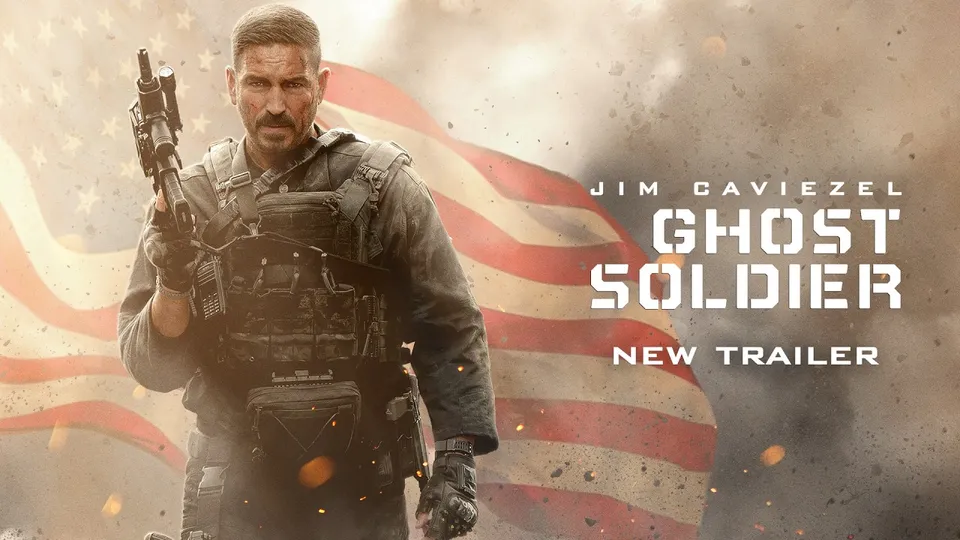
From physically demanding underwater combat to advanced tactical weapons training, stunt coordinator Daniel Hernandez and director William Eubank reveal how Jim Caviezel’s action-thriller Ghost Soldier brings military precision, innovative technology and realistic combat to the big screen.
Mumbai, 14 November 2026: Hollywood action cinema has continually evolved through increasingly sophisticated stunt choreography, realistic combat techniques and technological innovation. Yet behind every breathtaking action sequence lies an extraordinary amount of physical preparation, creative planning and technical precision.
The action-thriller Ghost Soldier, starring Jim Caviezel, brings these elements together in a story that combines military expertise, advanced weaponry and an intense struggle for survival.
With the film scheduled for release in Indian cinemas on 13 November 2026, stunt coordinator Daniel Hernandez has offered fascinating insights into the demanding action sequences, innovative combat choreography and extensive preparation that shaped the production.
Directed by William Eubank, Ghost Soldier follows a former Special Forces soldier whose attempt to escape his violent past is shattered when powerful corporate interests threaten the land and community he has chosen to protect.
At the centre of the film is Caviezel's character, Henry “Fitz” Fitzgerald, a highly trained former military operative whose exceptional combat abilities and specialised technology make him an unpredictable opponent.
While the film's premise promises explosive confrontations and high-stakes action, its creative team has placed particular emphasis on the physical authenticity and technical execution of its combat sequences.
Jim Caviezel Plays a Mysterious Former Special Forces Soldier
In Ghost Soldier, Jim Caviezel portrays Henry “Fitz” Fitzgerald, a solitary man living quietly off the grid in his hometown.
Having distanced himself from his former life, Fitz appears determined to avoid conflict and remain unnoticed.
However, his peaceful existence comes under threat when a powerful foreign corporation attempts to take control of his property and the surrounding land for substantial financial gain.
The corporation's ambitions threaten not only Fitz's home but also the livelihoods and security of his neighbours.
Faced with an increasingly dangerous situation, Fitz is forced to confront the skills and experiences he had hoped to leave behind.
A former Special Forces soldier and advanced weapons developer, he possesses extensive knowledge of tactical combat, specialised military equipment and unconventional warfare.
His ability to remain undetected allows him to operate almost like a ghost, turning stealth and precision into powerful weapons against his adversaries.
As the conflict escalates, Fitz uses his military training and technological expertise to challenge opponents who possess considerable resources and influence.
The narrative combines the familiar appeal of a lone protector defending his community with the additional intrigue of advanced weapons technology and tactical warfare.
Rather than relying exclusively on brute force, the character's effectiveness depends on intelligence, preparation, adaptability and the ability to exploit his surroundings.
Daniel Hernandez Explains the Film's Innovative Action Design
Stunt coordinator Daniel Hernandez has described the action sequences in Ghost Soldier as distinctive and innovative, highlighting the importance of integrating combat choreography with the film's central character and technology.
For Hernandez, the challenge was not simply to create visually impressive confrontations.
The action needed to reflect Fitz's professional background, his specialised equipment and his ability to move through dangerous environments without being detected.
This approach gives the film's combat sequences a particular identity.
Instead of presenting action as a series of disconnected spectacles, the choreography is designed to support the narrative and demonstrate the protagonist's exceptional capabilities.
Fitz's military experience influences how he approaches threats, while his advanced technology expands the possibilities of what he can accomplish during combat.
The combination of stealth, specialised weapons and physical confrontation creates opportunities for action sequences that distinguish themselves from more conventional cinematic gunfights.
Hernandez's involvement underscores the importance of stunt coordination in contemporary action filmmaking, where the most effective sequences often require close collaboration between performers, directors, cinematographers and technical departments.
The Water Pump Facility Battle: One of the Film's Toughest Sequences
Among the film's most demanding action scenes, the battle at a water pump facility presented particularly difficult challenges for the stunt team and performers.
The sequence required actors to execute physically intensive combat choreography while fighting in water.
Although such sequences can appear visually spectacular, they introduce significant complications during production.
Water creates additional resistance, restricts movement and makes even relatively straightforward physical actions considerably more exhausting.
Performers must maintain precise choreography while coping with slippery surfaces, reduced stability and the additional effort required to move through water.
For the stunt department, these conditions require careful coordination to ensure that each movement can be performed effectively and safely.
Hernandez acknowledged the difficulty of executing the sequence, explaining that the actors were required to undertake exceptional physical work under demanding conditions.
The scene demonstrates how environmental challenges can become an integral part of action storytelling.
Rather than treating the location as a simple backdrop, the water pump facility becomes an active element in the confrontation, influencing movement, combat techniques and the overall intensity of the sequence.
Knapp Describes the Experience as His Most Intense Action Work
The physical demands of the water-based battle also left a strong impression on cast member Knapp.
The actor described the sequence as among the most challenging stunt experiences of his career.
The confrontation involved fighting in water while handling knives, firearms and unfamiliar specialised weapons.
Combining these elements required sustained concentration, physical endurance and the ability to execute carefully rehearsed movements under difficult conditions.
For performers, such sequences involve considerably more than appearing convincing on camera.
They must understand the choreography, coordinate their actions with fellow actors and stunt professionals, and maintain consistency across repeated takes.
The introduction of unusual weapons and water-based combat further increases the complexity.
Knapp expressed enthusiasm about how the sequence would translate to the cinema screen, emphasising its demanding nature and the unusual combination of physical combat and advanced weaponry.
His account reinforces the production's emphasis on practical physical performance as an essential part of the film's action identity.
Jim Caviezel Undergoes Extensive Tactical Training
A major component of Ghost Soldier's preparation involved transforming Jim Caviezel into a convincing former Special Forces operative.
Rather than relying solely on editing techniques or the assistance of stunt doubles, Caviezel invested considerable time in developing the physical skills required for his character.
His preparation included firearms handling, tactical movement, shooting techniques and repeated combat drills.
The actor approached the training with the belief that every physically demanding role presents an opportunity to learn.
Even with previous experience in action-oriented productions, Caviezel preferred to begin with fundamental techniques before progressing to more complex exercises.
This philosophy reflects the importance of building believable physical behaviour rather than simply memorising choreographed movements.
For a character such as Fitz, whose military background forms an essential part of his identity, convincing weapon handling and controlled movement are particularly important.
Audiences familiar with contemporary action cinema increasingly recognise the difference between a performer who appears comfortable with tactical equipment and one whose movements lack the necessary confidence.
Caviezel's preparation aimed to ensure that his portrayal reflected the discipline and experience expected of an elite military professional.
Inspired by Keanu Reeves and the John Wick Training Approach
One of the interesting influences on Caviezel's preparation was Keanu Reeves' widely recognised commitment to training for the John Wick franchise.
Reeves' extensive firearms practice, martial arts preparation and physically disciplined performances have helped establish a demanding standard for contemporary action filmmaking.
Caviezel drew inspiration from that approach while preparing for Ghost Soldier.
Beginning with the fundamentals of gunmanship, he progressed towards more advanced tactical exercises involving movement, shooting and coordinated drills.
The training process focused on repetition, allowing the actor to become increasingly comfortable with techniques that needed to appear instinctive on screen.
This type of preparation is especially valuable when portraying a character whose survival depends on making rapid decisions under pressure.
For Fitz, tactical knowledge is not simply an additional character trait.
It is central to how he navigates threats, confronts opponents and protects those around him.
By incorporating specialised training into his performance, Caviezel sought to bring greater authenticity to the character's military background.
Inside Taran Tactical: The Training Behind the Performance
A significant portion of Caviezel's preparation took place at Taran Tactical, a firearms training facility recognised for its involvement in preparing performers for action productions.
The actor spent extensive hours practising weapon handling, movement and tactical exercises.
Training at this level requires considerable patience and consistency.
Seemingly effortless actions on screen, such as drawing a weapon, transitioning between positions or moving while maintaining control of equipment, often require repeated practice before they become convincing.
The objective is not merely speed.
Precision, coordination and consistency are equally important when performers must execute complex sequences within a controlled filming environment.
For Caviezel, the training helped develop the physical vocabulary necessary to portray Fitz as an experienced soldier rather than an ordinary individual suddenly placed in combat.
The preparation also allowed the production to build action scenes around the actor's developing abilities.
This approach can create a stronger connection between performance and choreography, particularly when the camera captures the actor executing demanding movements.
Director William Eubank Praises Caviezel's Dedication
Director William Eubank has acknowledged the substantial effort Caviezel invested in preparing for the role.
According to Eubank, the actor approached his training with exceptional commitment, spending long hours practising drills and refining his physical technique.
The director emphasised that the apparent ease of Caviezel's performance should not be mistaken for a lack of difficulty.
Behind the finished
PUBLISHED BY SUYASH PACHAURI, FOUNDER & OWNER, GLOBAL BOLLYWOOD | THE HOLLYWOOD SCOPE.