Introduction
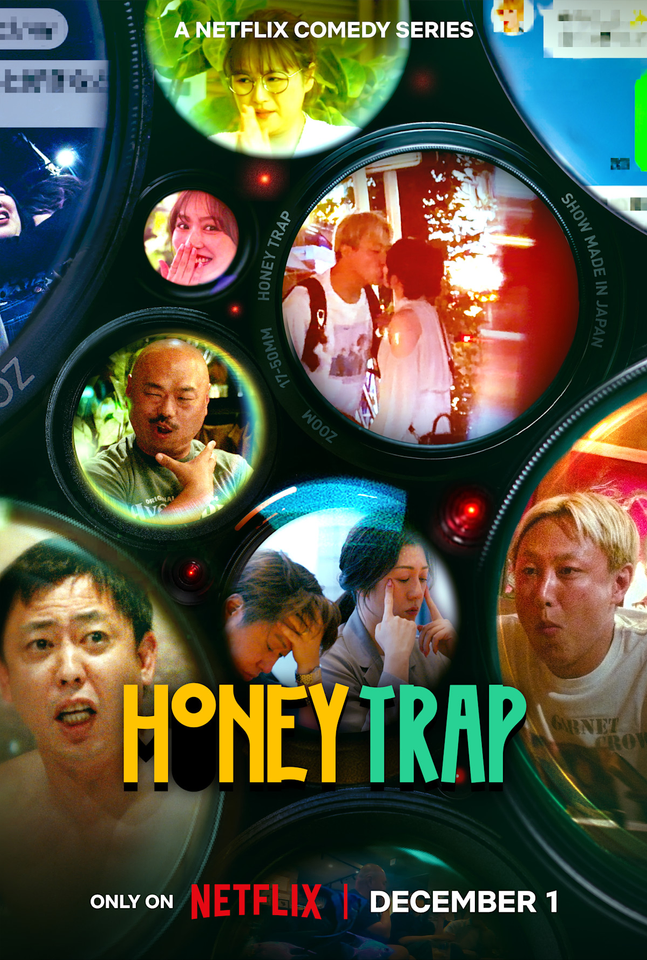
A new Japanese reality production is joining the December streaming calendar with a twist on the hidden-camera formula. Honey Trap, created and directed by Kentaro Fujii, is set to premiere globally on Netflix on December 1, 2026. Its November 17 announcement remains useful because viewers still have time to understand what is confirmed about the programme. This is a preview of an upcoming series, not a review or an account of episodes that have already aired.
Rather than placing one target in an isolated practical joke, the show follows several romantic setups at once. Friends, colleagues and people with seemingly unattainable crushes arrange situations involving someone close to them. Hidden cameras capture what happens when these encounters take an unexpected direction and the targets discover their surroundings have been staged. The separate narratives are designed to intersect, making the wider arrangement as important as any individual surprise.
When Honey Trap Arrives
The worldwide release is scheduled for Tuesday, December 1, 2026. Five episodes have been announced, and the entire season is slated to become available on the premiere date instead of being distributed over several weeks. A single-day rollout makes the structure particularly relevant: viewers may want to watch the episodes in order to follow how different encounters begin to overlap. The exact availability hour in every region has not been officially established by the announcement.
The series has an official programme page and trailer, and it is classified as Japanese reality and variety entertainment. Its promotional descriptions highlight romantic deception, unusual encounters and participants whose situations eventually collide. Such descriptions introduce the format but do not confirm what happens to a particular target after filming. Readers should be careful not to treat an edited trailer as proof of a person's private choices or relationships outside the programme.
What the title describes
The phrase honey trap ordinarily suggests a romantic situation designed to influence someone's behaviour. In this context it is part of an entertainment format built around arranged encounters and concealed cameras. That does not make the people featured responsible for any real-world wrongdoing. Coverage should distinguish staged television scenarios from accusations about personal conduct. The production's unusual premise may generate curiosity, but speculation about off-screen relationships would be neither necessary nor fair.
Kentaro Fujii's New Creative Experiment
Honey Trap is Fujii's first project with Netflix. His earlier credits include Wednesday Downtown and Quiz: The Answer Is One Year Later, which place him within a tradition of Japanese variety and carefully constructed comic situations. The new series is presented as a distinct ensemble format rather than a straightforward continuation of either programme. That background offers useful context for the creative team while leaving room to judge the finished episodes individually.
A production with several concurrent pranks faces different challenges from one centred on a single reveal. Each target has a separate relationship to the person arranging the encounter, and editors must preserve enough information for viewers to understand the stakes. If one strand changes course unexpectedly, the programme still needs to communicate its connection with the others. These are structural questions raised by the announced format, not claims about how its production team solved every problem.
How the Multiple Storylines Work
The central premise places a collection of romantic setups into motion simultaneously. Some targets may feel the excitement of an unexpected personal connection; others may be pulled into circumstances far removed from what they anticipated after a night out. Cameras record the unfolding reactions as the separate stories move toward each other. The precise events and final resolutions have not been established publicly, so it would be premature to describe who succeeds, who is embarrassed or who changes their mind.
What makes the idea potentially interesting is the difference between what each participant knows and what viewers gradually learn. A familiar scene can take on a different meaning when information from another setup is revealed. A five-episode structure could give those connections more time to develop than a short television segment. Whether the suspense remains engaging without becoming confusing will depend on the clarity of the eventual edit.
Surprise needs context
Hidden-camera entertainment depends on timing, but shock alone is not a substitute for storytelling. Viewers need enough context to appreciate why an encounter matters and sufficient uncertainty to remain curious. An ensemble of simultaneous setups gives a filmmaker more possibilities, yet it also risks distracting the audience if the relationships are not clearly introduced. The finished series can be assessed for balance, tone and pacing only after December 1.
The Studio Panel and Its Role
The announced studio commentators are Akira Kawashima of Kirin, Seiya of Shimofuri Myojo, Hiromasa Yashiki of New York, Ano and Kayo Noro. They react to the footage as the situations unfold. Their job is distinct from that of the individuals subjected to the staged encounters. The panel offers viewers an additional perspective on the actions and surprises, potentially helping an international audience follow a format with several moving parts.
A studio reaction format can add another comic rhythm to pre-recorded footage. Different performers may interpret the same exchange in very different ways, giving the audience an opportunity to question its first impressions. Yet the names alone do not establish how much screen time each commentator receives, which scenes they discuss or the precise sequence of their appearances. Those editorial details remain unknown until the series becomes available.
A Growing Japanese Unscripted Portfolio
The series belongs to a wider collection of Japanese unscripted programming that includes The Boyfriend, Badly in Love, Love Village and Last One Standing. Those projects span dating, social dynamics and comedy, demonstrating that the label unscripted covers more than one production style. Honey Trap combines the interpersonal element with hidden-camera mechanics and linked prank narratives. It is a separate title rather than a crossover with any of the other shows.
The wider 2026 and 2027 programming slate also includes AK-69 presents HIP HOP SURVIVAL AUDITION, expected in 2027, and a later announcement of Summer Replay for the following year. Their existence demonstrates further interest in Japanese reality formats without confirming any direct connection to Fujii's project. Distinguishing individual release dates is essential when promotional campaigns introduce several programmes close together and audiences may otherwise confuse a planned title with one about to arrive.
Why international viewers may be curious
Romantic misunderstandings and practical jokes are widely recognisable forms of entertainment, but their expression depends on local culture and performers. Japanese comedy personalities bring histories and audience expectations that viewers outside Japan may not share. A worldwide release makes those differences part of the viewing experience rather than a reason to presume the humour will work identically in every territory. Specific dubbing, subtitling and accessibility options should be checked on the platform rather than invented in advance.
The Facts That Remain Open
The confirmed information is limited but meaningful: Fujii is creating and directing his first Netflix collaboration, five studio panelists are named, the ensemble premise involves overlapping romantic setups, and all five episodes are scheduled for December 1. The public material does not establish the exact release hour in each country or the outcome of each storyline. It is also not a reliable basis for claims about the participants' private relationships, subsequent work or real-world controversies.
Questions about how far the pranks go, how their targets respond and whether the studio commentary improves the storytelling belong to a future critical assessment. Likewise, no audience figures, review scores or completed-series verdict can properly be attached to an unreleased show. A factual preview should offer a useful programme guide and explain the creative proposition without pretending to have watched the final version.
What to Watch For After the Premiere
The most interesting test may be whether the separate strands form a satisfying larger story. When several staged encounters run concurrently, editing must establish who knows what, when a revelation changes the stakes and why the audience should care about the eventual intersection. Strong reactions can contribute to the comedy, but coherence and a fair presentation of participants are equally important. The format offers opportunities for both tension and empathy, although neither outcome is guaranteed.
Honey Trap arrives with a clear identity: a five-part Japanese romantic-prank reality series designed around interlocking encounters and a studio panel, led by a creator with an established variety television background. The November 17 announcement is no longer breaking news, but the December 1 premiere makes its verified details timely for a forward-looking preview. After release, the finished episodes can be evaluated for craft, humour and the way they handle their participants.
PUBLISHED BY SUYASH PACHAURI, FOUNDER & OWNER, GLOBAL BOLLYWOOD | THE HOLLYWOOD SCOPE.