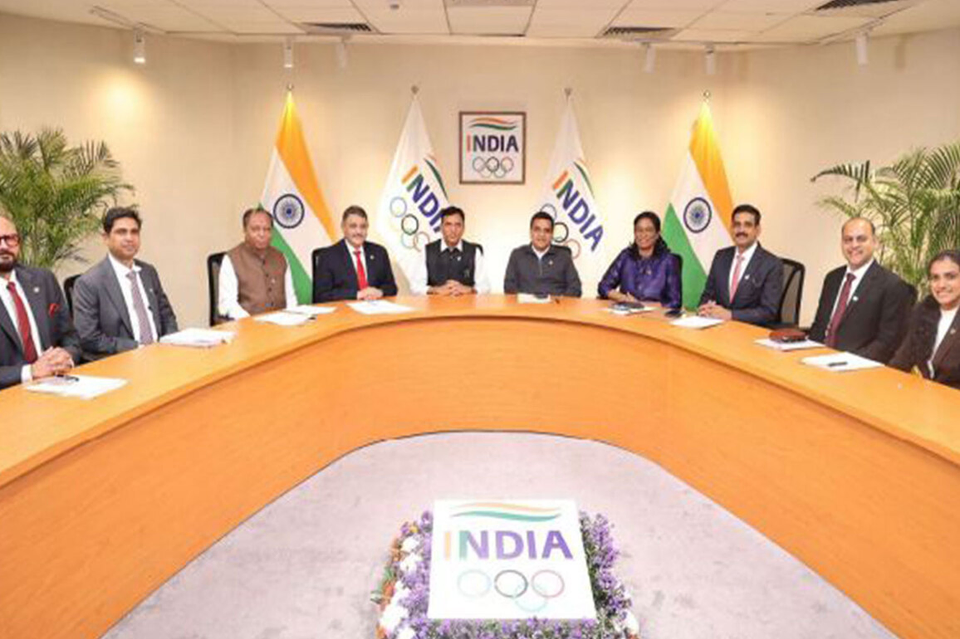
India has taken a significant formal step in its ambition to host the 2036 Olympic and Paralympic Games, presenting an Ahmedabad-centred vision to the body responsible for assessing potential future hosts. The virtual presentation moved the proposal beyond broad public intent and into a structured international discussion about venues, finance, athlete experience, transport, legacy and government support.
The India 2036 Olympics bid is built around Ahmedabad and the wider sporting infrastructure being developed in Gujarat. The city is also preparing to host the 2030 Commonwealth Games, creating a potential foundation of venues, transport links and operational experience that could serve a much larger event six years later. The latest presentation focused on how those investments could support a long-term sporting strategy rather than operate as isolated construction projects.
What India Presented for the 2036 Olympic Games
The proposal set out Ahmedabad's preparedness, planned venue development and a wider vision for using the Games to accelerate participation in sport. A bid of this scale must show more than a collection of stadiums. It has to explain how athletes would move, train and compete, how visitors would travel between sites, how accommodation would work, and how facilities would remain useful after the closing ceremony.
India's representatives described broad backing from the city, Gujarat and the central government. That alignment is important because hosting the Olympics requires decisions across land use, public transport, security, health services, finance and urban planning. The presentation was therefore as much about institutional coordination as sporting enthusiasm.
Ahmedabad and the 2030 Commonwealth Games Link
The 2030 Commonwealth Games give Ahmedabad an earlier international deadline. Venues and supporting infrastructure designed for that event could later be adapted for the Olympics, reducing the need to begin every project from zero. Successful delivery in 2030 would also provide practical evidence that the city can manage athletes, officials, spectators, broadcasters and complex competition schedules.
That connection creates an opportunity but also a test. Facilities must be designed for genuine long-term use, with realistic maintenance costs and clear community value. The strongest Olympic projects now emphasise existing or temporary venues, efficient transport and post-event demand. India's plan will be judged on whether its promised legacy is measurable and financially credible.
India Faces a Competitive International Field
India is not alone in pursuing the 2036 Games. Germany, Qatar, Hungary, Turkey, South Africa and South Korea are among the interested potential hosts. Each brings a different combination of existing venues, political support, event experience, climate considerations and regional significance. The process is not a conventional public vote at this stage, and no candidate has secured the right to host.
Some interested parties are expected to advance to a strategic dialogue phase in March 2027. A more focused stage can follow before a final host is chosen. The current expectation is that the decision will come after the Los Angeles Olympics in 2028, giving evaluators time to examine delivery plans and giving candidates time to refine budgets and guarantees.
Why the Presentation Matters Without Deciding the Race
The presentation does not make Ahmedabad the 2036 host, but it establishes India as an active participant in the process. It allows technical questions to be tested before commitments become irreversible. Concerns about cost, environmental impact, athlete welfare and public benefit can now be addressed through evidence rather than slogans.
India last hosted a major global multi-sport gathering with the 2010 Commonwealth Games in New Delhi. That event expanded the country's sporting infrastructure but was also accompanied by allegations of corruption and management failures, which organisers denied. Any new bid must demonstrate that governance, procurement and oversight have evolved.
What India Must Prove Next
The next stage will require detail on funding, venue use, climate planning, mobility, security and accommodation. It must also explain how the Paralympic Games are integrated from the beginning, including accessible transport, athlete facilities and inclusive public spaces. Accessibility cannot be treated as a later modification to an Olympic plan.
India's large population and growing sports market offer a powerful case for reaching new audiences. Yet scale alone is not enough. Evaluators will consider whether the proposed Games can be delivered responsibly and whether the investment strengthens sport beyond a short period of international attention.
The Ahmedabad Olympic bid has now entered a phase where the quality of execution will matter more than the size of the ambition. The 2030 Commonwealth Games could become an important proving ground, while the dialogue with international evaluators will expose areas that need stronger answers. India has presented its vision. The years ahead will determine whether that vision develops into a convincing, sustainable host plan.
PUBLISHED BY SUYASH PACHAURI, FOUNDER & OWNER, GLOBAL BOLLYWOOD | THE HOLLYWOOD SCOPE.