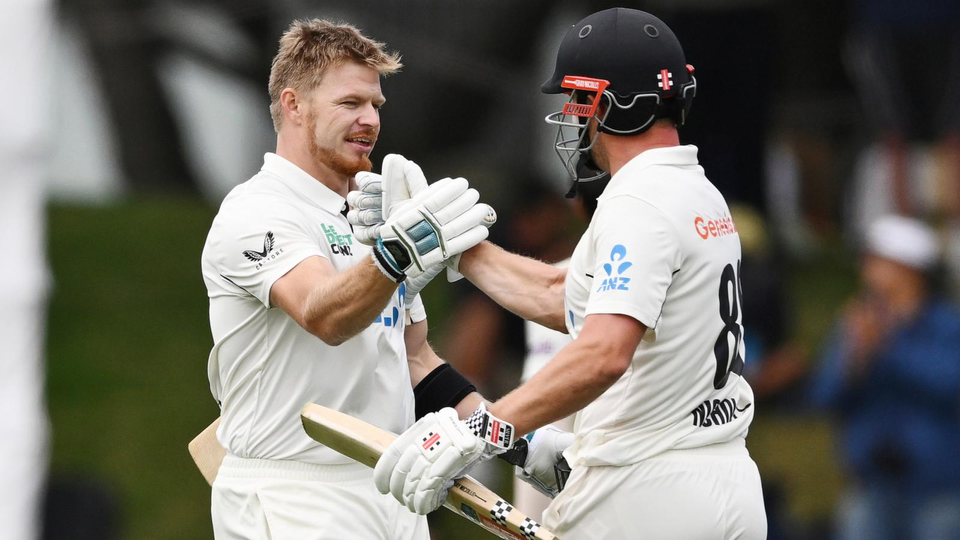
New Zealand turn a rescue into a commanding total
New Zealand completed a remarkable first-innings recovery by reaching 368 on the second day of the opening Test against India at Wellington’s Basin Reserve. The hosts had been reduced to 70 for five on the first day, but Henry Nicholls and Glenn Phillips transformed the innings with a 216-run partnership for the sixth wicket. Nicholls finished unbeaten on 175 after batting from the fourth ball of the innings until the final wicket, while Phillips made 118 and completed his second consecutive Test century.
Their stand altered both the scoreboard and the rhythm of the match. India’s fast bowlers had controlled the opening stages through movement, discipline and sustained pressure. Nicholls responded with patience, while Phillips gradually expanded the scoring range. New Zealand also added useful lower-order runs after the partnership ended, ensuring that the recovery did not stop with the two centurions. The total of 368 gave the hosts a substantial platform despite the damage suffered during the first session.
Bumrah and Akash Deep lead India’s bowling effort
Jasprit Bumrah finished with four wickets for 92 runs after removing key batters across the innings. His early spell had helped India expose the New Zealand middle order, and he returned to close out part of the tail. Akash Deep claimed three for 53, including Phillips with a delivery that moved away and struck the top of off stump. Anshul Kamboj took two wickets, while Prasidh Krishna added one. Their combined work prevented New Zealand’s recovery from growing beyond reach.
The figures also show how demanding Test cricket can become when a partnership survives the most threatening phase. India repeatedly created pressure, but Nicholls and Phillips absorbed it and then punished changes in length. Phillips also continued after being struck on the helmet by a throw directed toward the stumps, reaching his century soon afterward. Nicholls remained organised as partners disappeared, finishing with the second-highest Test score of his career and carrying his bat through the completed innings.
Jaiswal and Rahul answer with a 130-run stand
India’s reply began cautiously, with the openers taking five overs to score and both receiving early moments of fortune. Once settled, Yashasvi Jaiswal changed the pace of the innings. He struck 85 from 89 deliveries with 16 fours, combining controlled aggression with an ability to score around the ground. KL Rahul adopted a more measured tempo at the other end. Together they added 130 for the first wicket and prevented New Zealand from converting their large total into immediate control with the ball.
Jaiswal’s innings ended when Matt Henry found a faint edge that was confirmed after captain Tom Latham requested a review. Rahul continued to stumps on 52 not out, with Devdutt Padikkal unbeaten on 16. India closed the day at 159 for one from 39 overs, still 209 runs behind. The score leaves the tourists with substantial work remaining, but the opening partnership restored balance and reduced the danger of being pushed into a defensive position early in the match.
Day three becomes a contest for control
India’s immediate task is to preserve the platform through the first session of day three. Rahul’s concentration will be central because he has already adjusted to the pace and movement of the surface. Padikkal must convert his start, while the middle order will need to resist any burst created by the second new ball later in the innings. A total close to or beyond 368 would turn the match into a fresh contest rather than leave India managing a significant deficit.
New Zealand will look to reproduce the pressure India created on the first morning. Matt Henry’s removal of Jaiswal offered evidence that persistence can generate reward even after a long partnership. The hosts need early wickets before conditions become easier for batting. With Nicholls and Phillips having rescued their side and India’s openers producing a forceful answer, the Test enters its third day with neither team holding complete control.
What comes next
The opening session on day three is likely to define the match’s next direction. If India reach lunch with most wickets intact, New Zealand’s first-innings advantage will shrink quickly. If the hosts break through Rahul and the middle order, the value of Nicholls and Phillips’s partnership will grow further.
Weather, pitch wear and the timing of the second new ball will influence later stages, but the contest currently rests on a straightforward question: whether India can convert a strong beginning into an innings large enough to challenge New Zealand’s 368.
PUBLISHED BY SUYASH PACHAURI, FOUNDER & OWNER, GLOBAL BOLLYWOOD | THE HOLLYWOOD SCOPE.