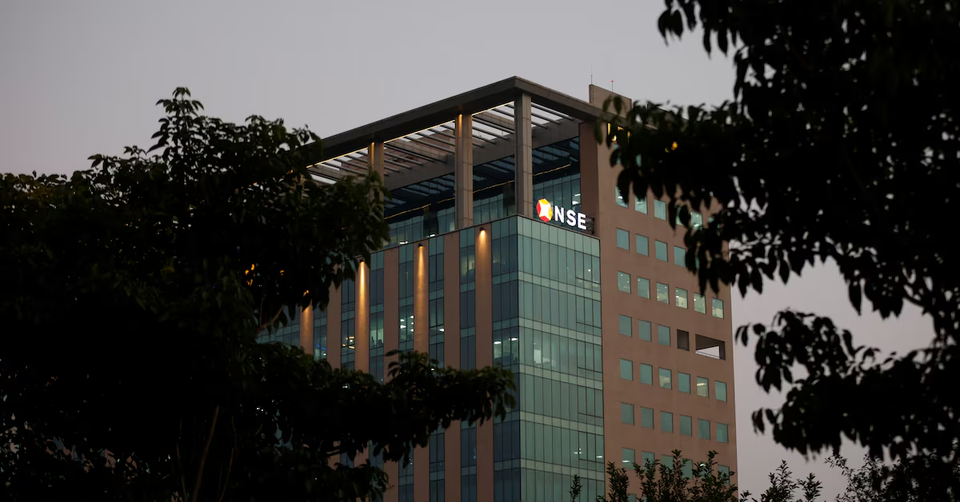
A Fourth Weekly Gain During a Global Selloff
Indian equities ended the week at their highest levels in nine months, resisting a severe decline across AI-heavy global markets. The Nifty 50 closed at 25,800.60 and the Sensex at 83,919.71 after gaining 2.6 percent and 2.9 percent respectively over the week. Both benchmarks advanced 1.1 percent in Friday's session, completing a fourth consecutive weekly rise.
The performance marked a striking contrast with much of Asia, where technology shares suffered their sharpest weekly pressure in years. Investors who had once treated India's limited exposure to the AI hardware boom as a disadvantage increasingly viewed it as protection from the correction. The rally was not simply a reaction to weakness elsewhere. It also reflected record foreign buying, lower oil prices, resilient company earnings and renewed confidence in large Indian financial businesses.
Record Foreign Buying Changes the Market's Direction
Foreign investors had poured about 12.21 billion dollars into Indian equities during November by the end of the week, setting a monthly record. That flow represents a major reversal after prolonged selling through 2025 and the first ten months of 2026. It has helped narrow India's earlier underperformance against other emerging markets and strengthened demand for the country's largest, most liquid shares.
International funds are not buying only because other markets are falling. India offers a different earnings mix, with greater weight in banks, consumer businesses, healthcare and domestic mobility than in advanced semiconductor manufacturing. Cooling crude prices reduce pressure on an economy that imports much of its energy, while stronger credit growth and improved bank margins have supported financial-sector forecasts. Global brokerages have also become more constructive on the market, encouraging institutional allocation.
Banks Lead While Smaller Shares Lag
The headline index gains did not lift every corner of the market equally. Banks rose 5.9 percent during the week and broader financial services gained 3.7 percent, both reaching record levels. Automobile shares advanced 3.1 percent as lower input costs and firm seasonal demand improved expectations. Healthcare leaders also delivered some of the strongest individual performances after analysts upgraded their outlooks.
Small-cap shares fell 1.1 percent and mid-cap stocks were little changed, showing that investors favoured established companies rather than embracing a broad speculative surge. Metals declined 3 percent as commodity prices weakened and concern grew about slower data-centre investment. That divergence is important for retail investors. A rising benchmark can conceal substantial losses in businesses that do not share the same foreign ownership, balance-sheet strength or earnings visibility as index heavyweights.
The Rupee and Oil Strengthen the India Case
The rupee gained in all five trading sessions, appreciating by 157 paise during the week to close at 92.67 per dollar, its strongest level in seven months. Foreign equity inflows increase demand for the local currency, while a firmer rupee can reduce the cost of imported fuel and other dollar-priced goods. The move also eases some concern about inflation and corporate borrowing costs, although currency trends can reverse quickly when global risk appetite changes.
Brent crude had fallen about 23 percent during November amid hopes of reduced Middle East tension and improving shipments. Lower oil prices normally support India's external balance and leave households and companies with more room to spend. Yet attacks around the Strait of Hormuz show that energy risk has not disappeared. The market's current optimism depends partly on supplies remaining available and transport routes avoiding a deeper disruption.
What Could Sustain or End the Rally
Record inflows can push prices higher, but lasting gains require earnings to justify India's valuation premium. The Nifty trades above many regional peers on expected profits, which means disappointing growth, renewed inflation or a reversal in foreign flows could produce a sharp correction. Investors will watch loan growth, bank margins, consumer demand and corporate investment for evidence that the market move reflects economic strength rather than temporary capital rotation.
Global conditions remain equally important. If confidence returns quickly to AI-linked markets, some money may rotate back toward South Korea, Taiwan and the United States. A renewed surge in oil or a stronger dollar could also weaken India's advantage. For now, the Sensex and Nifty have shown that a market once criticised for missing the AI boom can benefit when that trade unwinds. The next test is whether domestic earnings can convert that defensive appeal into durable performance.
The rally therefore deserves neither dismissal nor unquestioning celebration. It reflects real shifts in capital, currency and sector leadership, but those conditions must be monitored rather than assumed. Investors entering after a rapid rise should distinguish diversified large companies from smaller shares that have not participated. The nine-month highs are a meaningful milestone, not a guarantee that every stock or every week will follow the benchmarks upward.
Upcoming inflation, growth and company-profit data will help determine whether foreign funds continue buying. Daily flow numbers can also reveal whether the record total is broad and persistent or concentrated in a short burst. Those signals matter because a market supported by patient allocation is more durable than one driven by investors rushing to escape losses elsewhere.
PUBLISHED BY SUYASH PACHAURI, FOUNDER & OWNER, GLOBAL BOLLYWOOD | THE HOLLYWOOD SCOPE.