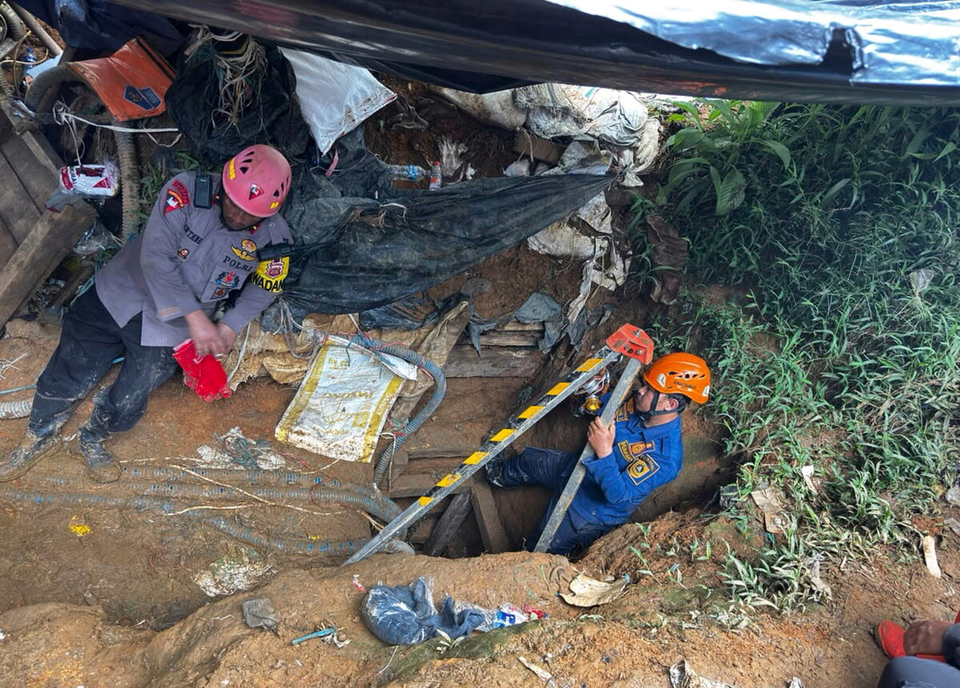
Rescuers confront water, darkness and narrow shafts
Rescue teams in Indonesia recovered 16 bodies from a flooded illegal gold mine and continued searching for 10 people believed trapped underground. The disaster occurred in Bogor regency in West Java after heavy rain caused the Ciseureuh River to overflow into mine workings. The main shaft is estimated to descend about 100 metres in mountainous terrain south of Jakarta, creating a difficult operation involving water pumps, ropes and teams working in confined spaces.
About 325 personnel joined the search, including emergency workers, police, military members, health officials and volunteers. Crews focused on two neighbouring shafts and attempted to block places where groundwater continued to enter. By the fourth day, authorities said the possibility of finding survivors had become increasingly small, but the operation continued. High water, slippery surfaces, weak lighting and limited access slowed every stage of the recovery.
Delayed reporting cost valuable time
Authorities were not informed immediately because the miners were operating without authorisation. Local workers and residents initially tried to pump out the water themselves. Police received reports roughly 16 hours after the flooding, and a full-scale response began only after a state-owned mining company forwarded a formal report to the search agency. That delay illustrates how illegal operations can remain invisible until an emergency exceeds the community's ability to respond.
Fear of prosecution or loss of income can discourage miners from contacting officials. Yet every hour matters when people are trapped in a flooded shaft. A safer system must make emergency reporting possible without forcing rescuers to wait for disputes about legal status. Investigation and enforcement can follow, but the first priority during a disaster should be a rapid, accurate account of how many people entered the mine and where they were working.
Informal mining carries layered risks
Thousands of Indonesians depend on small and informal mines for income, often working without engineered drainage, stable tunnel supports or professional safety supervision. Flooding is one danger among many. Landslides, tunnel collapse and exposure to mercury or cyanide used in gold processing can injure workers and contaminate nearby land and water. Economic need keeps people returning even after sites are closed or access is restricted.
The flooded workings are near facilities operated by state-owned PT Antam, but the company said the incident was unrelated to its authorised operations and that all of its employees were safe. It has previously used patrols, barriers, drones and surveillance to deter illegal access. The disaster shows the limits of enforcement alone. Closed entrances may be reopened when gold prices and local poverty make the potential reward appear worth the danger.
Prevention requires livelihoods as well as policing
Authorities will need to determine who organised the mining, whether equipment or access was provided commercially and why earlier deterrence failed. People who profit from unsafe labour should not escape accountability while individual miners bear all the blame. Environmental assessment is also necessary because floodwater can move contaminated sediment beyond the site. Nearby communities need clear information about water quality and any continuing ground instability.
Long-term prevention requires legal employment, safer small-scale mining pathways and local reporting systems alongside enforcement. Training and permits cannot remove every risk, but they can require ventilation, drainage plans and reliable worker records. The immediate focus remains the ten missing miners and the families awaiting news. Once the rescue ends, the official response should address the conditions that pushed workers into a deep, unregulated shaft where one night of heavy rain became a mass-fatality disaster.
Recovery should include the surrounding community
Families of the dead and missing may lose their main source of income at the same moment they face funeral and medical costs. Short-term assistance can prevent them from taking on dangerous debt or returning immediately to another unsafe mine. Children in affected households may also need help remaining in school. Community recovery is therefore part of disaster response, not a separate charitable concern.
Environmental monitoring should continue through the rainy season. Flooded shafts can collapse later, and contaminated water may enter streams used by farms or homes. Authorities should publish sampling results and mark unstable ground. If the site is sealed, the method must prevent another informal entrance from appearing nearby. Combining physical closure with alternative work and local oversight offers a better chance of lasting safety than barriers imposed without community participation. Regular village meetings could keep residents informed about hazards and give them a safe channel for reporting renewed mining.
PUBLISHED BY SUYASH PACHAURI, FOUNDER & OWNER, GLOBAL BOLLYWOOD | THE HOLLYWOOD SCOPE.