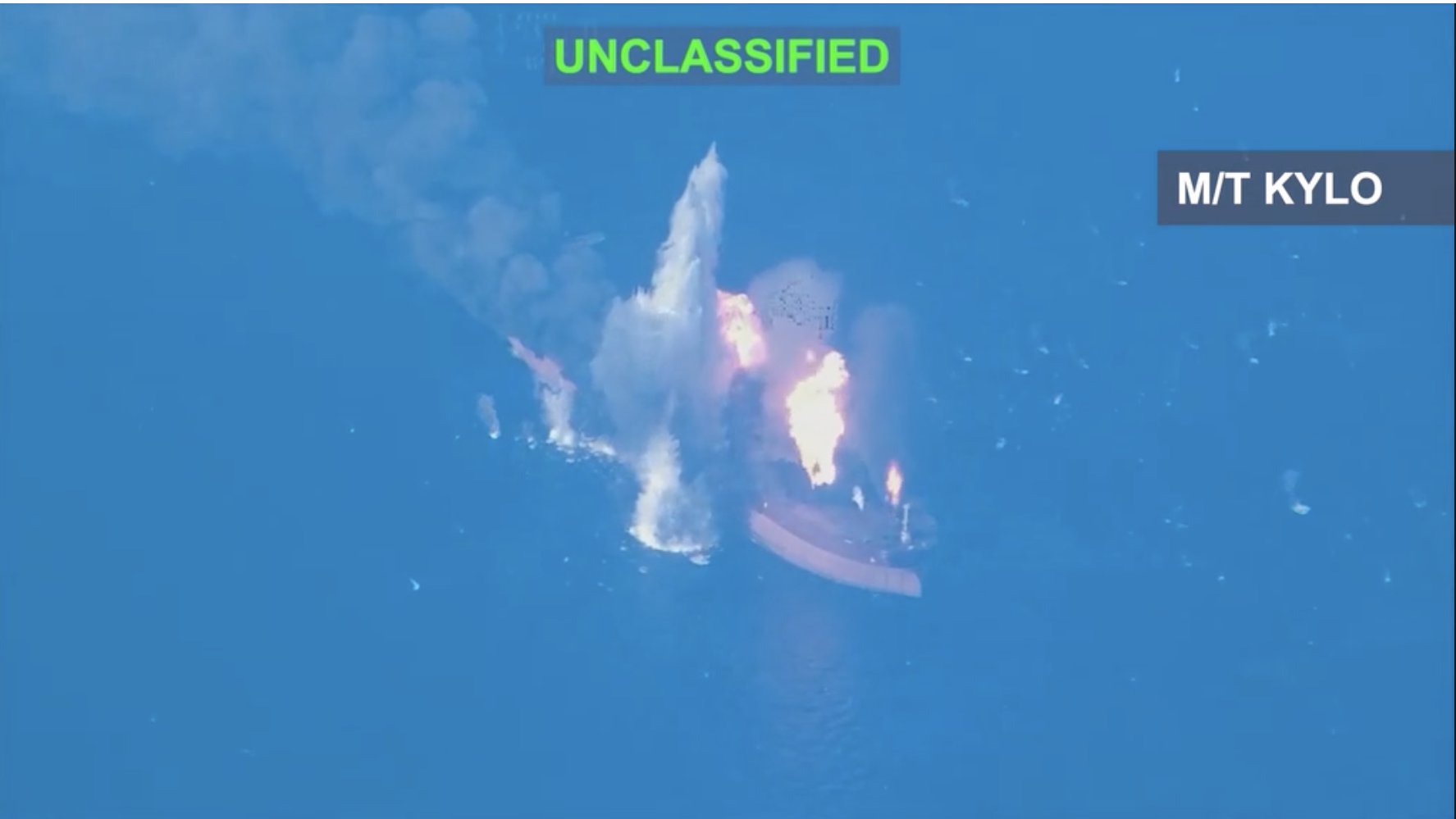
The military confrontation surrounding the Strait of Hormuz has intensified again, with Iran claiming attacks on three US-linked vessels and three oil tankers after American forces said they destroyed three Iranian tankers. The latest exchange moves commercial energy infrastructure even closer to the centre of the conflict. The Strait of Hormuz is not simply another maritime route. It is one of the world's most important energy corridors, connecting major Gulf producers with international markets.
For the story around "Iran and US Trade Fire Around Strait of Hormuz as Oil Tankers Become", the first burst of attention is only one part of the picture. A more durable assessment depends on what happens after the announcement, including concrete decisions, implementation and results that can be independently observed. Those later signals will show whether the development changes expectations in a lasting way or simply dominates the news cycle for a short period.
With "Iran and US Trade Fire Around Strait of Hormuz as Oil Tankers Become", attention now shifts from the initial development to the evidence that follows it. Announcements can change expectations immediately, yet lasting impact depends on implementation, measurable progress and the ability of the relevant organisations to deliver on what the moment appears to promise. The next verified milestones will therefore be more informative than speculation.
The immediate importance of "Iran and US Trade Fire Around Strait of Hormuz as Oil Tankers Become" is clear, but the lasting importance will depend on follow-through. Strategy has to translate into execution, and execution has to produce outcomes that can be measured. As more verified information becomes available, it will become easier to tell whether the present shift is structural or temporary.
There is also an implementation question surrounding "Iran and US Trade Fire Around Strait of Hormuz as Oil Tankers Become". A development may look decisive when it first emerges, but its real effect depends on whether plans are executed consistently and whether later results support the expectations created at the outset. The most useful evidence will come from concrete actions, measurable performance and credible follow-up.
Another way to assess "Iran and US Trade Fire Around Strait of Hormuz as Oil Tankers Become" is through the gap between expectation and delivery. Headlines can move sentiment quickly, while meaningful change usually depends on sustained execution and measurable progress. The next set of confirmed developments will show whether the early expectations are being translated into something more permanent.
The next chapter of "Iran and US Trade Fire Around Strait of Hormuz as Oil Tankers Become" will be defined by evidence. Statements and announcements establish intent, but durable impact requires execution, measurable outcomes and a response that persists after the first wave of attention. Watching those indicators will make it easier to judge the development on substance rather than momentum.
The next test for "Iran and US Trade Fire Around Strait of Hormuz as Oil Tankers Become" is execution rather than publicity. Immediate reaction can shape perception, but long-term significance comes from decisions that are carried through, measurable outcomes and a clear response from the institutions or people involved. Watching those elements offers a stronger basis for judging the story than relying on the headline alone.
The wider context of "Iran and US Trade Fire Around Strait of Hormuz as Oil Tankers Become" matters because major developments rarely remain isolated. Decisions in one area can affect investment, competition, regulation, audience behaviour or institutional strategy elsewhere. The clearest way to understand the longer-term effect is to track verified follow-up actions and distinguish them from assumptions that arise during the first wave of attention.
For "Iran and US Trade Fire Around Strait of Hormuz as Oil Tankers Become", the next phase is likely to be more revealing than the first headline. Initial announcements often create strong expectations, yet the real test comes when organisations, markets or audiences respond in practice. Concrete milestones, rather than repeated commentary, will provide the best indication of whether the development has durable consequences.
For observers following "Iran and US Trade Fire Around Strait of Hormuz as Oil Tankers Become", the practical details now matter more than the initial noise. What changes next, who acts on the development and which measurable outcomes follow will determine its larger importance. This evidence-based approach helps separate a durable shift from a moment that attracts attention without producing lasting consequences.
The broader environment surrounding "Iran and US Trade Fire Around Strait of Hormuz as Oil Tankers Become" also deserves attention. Market conditions, policy choices, competition and public behaviour can interact with the original development in ways that are not obvious at first. Following those connections over time will provide a clearer understanding of the story's eventual scale and direction.
For "Iran and US Trade Fire Around Strait of Hormuz as Oil Tankers Become", the strongest conclusions will come from what can be verified after the initial event. Follow-up decisions, performance and public or institutional reaction can either reinforce the significance of the story or reduce it. Until those signals emerge, the current development is best understood as an important benchmark rather than a finished outcome.
Seen through the lens of "Iran and US Trade Fire Around Strait of Hormuz as Oil Tankers Become", the development should be judged in stages. The confirmed facts establish the starting point, while later choices, performance and public response will determine how much the story ultimately matters. That distinction is useful because expectations can move quickly even when the practical consequences take much longer to become visible.
A useful way to read "Iran and US Trade Fire Around Strait of Hormuz as Oil Tankers Become" is to separate what is already confirmed from what still depends on future action. The current development creates a benchmark, but its real weight will be determined by subsequent decisions, implementation and measurable results. That approach keeps the analysis focused on evidence while leaving room for the situation to evolve.
The significance of "Iran and US Trade Fire Around Strait of Hormuz as Oil Tankers Become" cannot be reduced to a single announcement. Broader conditions, competitive pressure, regulation, investment choices and public response can all influence what happens next. That is why the strongest assessment will come from tracking verified changes over time instead of treating the first reaction as the final verdict.
The story around "Iran and US Trade Fire Around Strait of Hormuz as Oil Tankers Become" now enters a phase where verification matters more than prediction. Future decisions, operational results, market response or institutional action may strengthen the original significance, but they may also narrow it. Tracking those developments carefully is therefore essential before drawing broader conclusions.
In the case of "Iran and US Trade Fire Around Strait of Hormuz as Oil Tankers Become", immediate reaction should be treated as a starting point rather than a conclusion. The more important questions concern what is implemented, what changes in practice and whether later data supports the initial expectations. Those answers will determine whether the development becomes a lasting reference point.
PUBLISHED BY SUYASH PACHAURI, FOUNDER & OWNER, GLOBAL BOLLYWOOD | THE HOLLYWOOD SCOPE
FOUNDER & OWNER
GLOBAL BOLLYWOOD / THE HOLLYWOOD SCOPE