Some true-crime stories linger because of what happened. Others linger because of what the public saw around the crime: money, youth, beauty, status, and the uneasy feeling that the justice system does not look at everyone the same way.
That is the charged territory behind PRƎPPY, a new crime drama led by Kit Connor and Diana Silvers, with Janicza Bravo directing. The film is inspired by the notorious world surrounding the so-called Preppy Killer case, a subject that has remained culturally loaded because it sits at the intersection of violence, privilege, media obsession, and elite Manhattan society.
On the surface, PRƎPPY has the pieces of a prestige crime film: rising stars, a filmmaker with a sharp sense of tone, and a case that already occupies a grim place in American pop culture. The more interesting question is what kind of movie it wants to be. If handled with care, Kit Connor PRƎPPY, Diana Silvers Preppy movie, Janicza Bravo PRƎPPY, Preppy Killer movie, Kit Connor new movie, true crime films all point toward a project that could move beyond reconstruction and into a more unsettling study of image, class, and consequence.
PRƎPPY enters a true-crime space shaped by class and image
The Preppy Killer label became famous because it reduced a disturbing case into a media-ready phrase. That nickname carried a whole set of assumptions. It suggested youth, privilege, private schools, Manhattan nightlife, and the polished surface of elite social circles. It also created a public shorthand that risked making a crime feel like a cultural symbol before it was treated as a human tragedy.
That tension is exactly what makes PRƎPPY potentially compelling. A conventional version of this material might focus on the crime, the investigation, and the courtroom. Those pieces may be part of the film, but the richer story sits around them.
The crime became nationally notorious because it exposed a world many Americans found fascinating and alienating at the same time. The setting involved privilege and access. The public conversation involved appearance, gender, money, and credibility. Media coverage turned the people involved into figures inside a larger cultural drama.
A strong film can ask hard questions without turning the subject into spectacle:
Why did this case become a media obsession?
How did class shape public sympathy and suspicion?
What did clothing, social status, and family background signal to audiences?
How does privilege affect the way people speak about guilt, innocence, danger, and victimhood?
What gets lost when a real tragedy becomes a cultural label?
Those questions fit the best kind of true-crime storytelling. The strongest films in the genre do not simply ask what happened. They ask why the story took hold, who benefited from the framing, and what the public wanted to see.
PRƎPPY has a title that already signals a concern with image. The stylized spelling feels designed to unsettle a familiar word. “Preppy” often suggests polish, safety, education, and social ease. By twisting the word visually, the film can suggest that the surface is not stable. The image is slightly wrong. Something familiar has been inverted.
That is powerful ground for a crime drama, especially one rooted in a world where presentation can become its own kind of defense.
Kit Connor’s role could mark another step into darker dramatic work
Kit Connor’s casting will draw immediate attention, especially from viewers who know him through youth-focused television and coming-of-age storytelling. His screen presence has often carried warmth, vulnerability, and emotional openness. That makes a turn toward darker material especially interesting.
Casting against expectation can give a film real dramatic charge. When an actor associated with sensitivity enters a story shaped by violence, status, and psychological tension, the audience brings assumptions into the room. A smart director can work with those assumptions instead of ignoring them.
Connor’s involvement suggests PRƎPPY may not be designed as a flat procedural. It gives him room to explore a character shaped by pressure, performance, or inner contradiction. The key phrase here is psychologically complicated. This material does not need a broad villain or a clean hero. It needs people who exist in a social world where charm can hide cruelty, fear can masquerade as confidence, and privilege can complicate accountability.
That kind of role can be valuable for a young actor expanding beyond the work that first made audiences notice him. It asks for restraint. It asks for discomfort. It asks an actor to understand how someone behaves when the world is watching, and how that person behaves when the performance cracks.
Connor has the potential to bring softness and opacity at the same time. That combination matters in a story like this. If the film is interested in how the media and public interpret appearance, then a face that seems readable can become a trap. The viewer may think they understand what they are seeing, then realize they are responding to surface cues.
That is the unsettling promise of PRƎPPY. It can use casting not only to attract attention, but to complicate the audience’s instincts.

Diana Silvers brings the right range for a story about social performance
Diana Silvers is an equally intriguing part of the pairing. Her work has moved across thriller, comedy, and drama, which gives her a flexible screen identity. She can play dryness, unease, confidence, and vulnerability without making any one quality feel fixed.
That range matters because PRƎPPY does not sound like a story built around simple romance or standard genre chemistry. The pairing of Connor and Silvers could be less about attraction in the usual Hollywood sense and more about how two people read each other inside a world obsessed with signals.
In elite social spaces, especially the kind often associated with old money and private education, people learn to perform. Clothing, speech, posture, school history, family background, and social proximity all become language. Some people speak it fluently. Others learn to mimic it. Some are protected by it. Some are punished when they fail to fit.
Silvers can help carry that social tension. She has the screen presence for a character who may know more than she says, feel trapped by what others expect, or understand the danger of being turned into an image. A film like PRƎPPY needs actors who can sit inside ambiguity. It needs glances that do not explain themselves too early.
The pairing with Connor creates several possible dynamics:
A relationship shaped by status
A study of image and control
A darker psychological match
A clash between public and private selves
The characters may connect through attraction, access, or shared social codes.
Their connection could reveal how people manage what others believe about them.
The drama may come from trust, manipulation, denial, or fear rather than romance.
What characters show in public may not survive behind closed doors.
That final idea is where the film could find its strongest dramatic voice. True-crime stories often deal with public identity after the fact. PRƎPPY can explore identity as it is being built, defended, and distorted.
A case becomes infamous partly because people project onto it. Viewers do not only follow the facts. They interpret faces, clothes, interviews, neighborhoods, and schooling. They decide who looks believable. They decide who seems dangerous. They decide who fits a script.
That is a disturbing process, and it belongs at the center of this story.
Janicza Bravo is a strong match for uncomfortable material
Janicza Bravo’s involvement may be the most important creative signal. Bravo has built a reputation for work that understands discomfort, tone, and the strange behavior people use to survive social pressure. She does not need to flatten a situation into one mood. Her best material often understands that absurdity and dread can sit close together.
That makes her a promising fit for PRƎPPY. This is not material that benefits from a simple, glossy true-crime treatment. It needs someone who can examine the gap between how a world presents itself and what it permits.
Bravo’s strength lies in observing people when they are performing normalcy. A smile can look slightly forced. A room can feel too controlled. A conversation can carry threat without anyone raising their voice. In a story about elite youth culture, that kind of tonal precision is valuable.
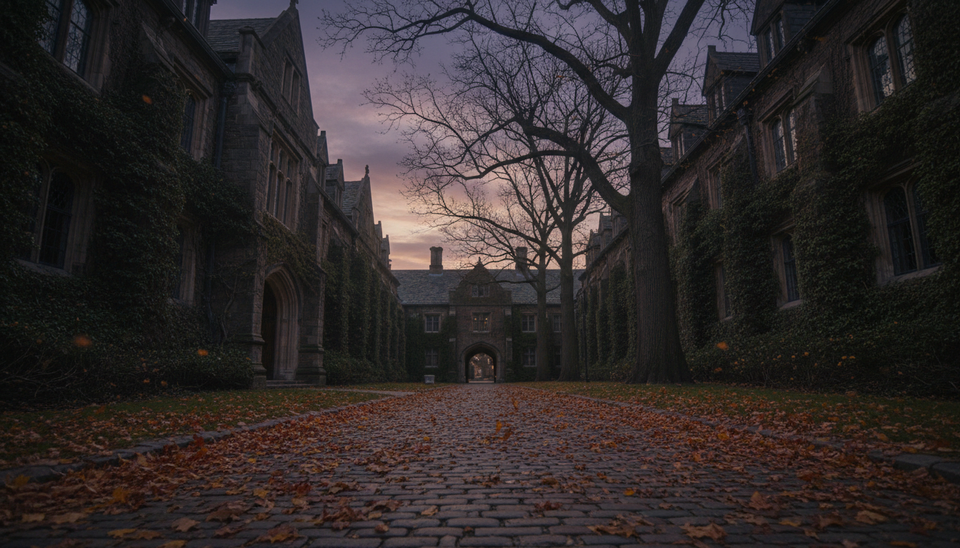
The Ivy League-adjacent or private-school atmosphere often appears onscreen as beautiful and aspirational. Stone buildings, tailored clothes, legacy admissions, expensive apartments, and dimly lit bars can create a seductive visual world. But PRƎPPY has the chance to make that beauty feel unstable.
The point is not just that wealth exists around the story. The point is that wealth can shape the story’s meaning. It can affect who gets believed. It can affect whose future is protected. It can affect how danger is recognized, or ignored, until it is too late.
Bravo can also resist one of the biggest traps in true-crime filmmaking: turning pain into aesthetic. A dark, stylish film can still remember that a real tragedy inspired the material. It can be visually strong without becoming exploitative. It can show fascination as part of the problem rather than participate in it without question.
That distinction matters. The case surrounding the Preppy Killer label drew intense public attention because it touched cultural nerves. A film that simply repeats that attention risks becoming another layer of spectacle. A film that studies the attention can become something sharper.

The film can stand apart by focusing on why the story endured
The true-crime genre is crowded. Streaming platforms, podcasts, documentaries, limited series, and feature films have made notorious cases feel like a constant part of entertainment culture. That can be risky. Some projects bring care and context. Others rely on lurid familiarity.
PRƎPPY will stand out if it treats the case as a cultural event rather than a checklist of plot points.
The Preppy Killer story endured because it exposed contradictions that still feel current. American culture remains fascinated by youth and beauty. It remains uneasy about inherited privilege. It remains divided over who receives sympathy in public narratives. It still turns crime stories into debates about character, class, gender, and status.
That gives PRƎPPY a wider frame. The film can explore how a young person’s social identity becomes evidence in the court of public opinion. It can examine how wealth changes the emotional temperature of a case. It can show how media packaging can make a tragedy easier to consume and harder to understand.
The project also arrives at a time when audiences are more alert to the ethics of true-crime storytelling. Many viewers now ask whether a film centers victims, whether it glamorizes perpetrators, and whether it adds meaning beyond repetition. Those questions will likely follow PRƎPPY from development through release.
A responsible crime drama does not need to be dull or overly cautious. It can be tense, stylish, and gripping. But it should know what it is doing with attention. It should understand the difference between depicting fascination and feeding it.
For PRƎPPY, the most promising approach would place the social world under the same pressure as the central crime. The parties, school ties, apartments, clothing, manners, and family names should not be decorative. They should reveal how power moves quietly.
That is where the film’s title becomes useful again. “Preppy” is not just a look. It is a code. It can signal belonging, safety, discipline, and good breeding. It can also distract from harm. If PRƎPPY understands that duality, it can turn a familiar label into something genuinely unsettling.
What PRƎPPY could mean for its stars and for true crime on film
For Connor, PRƎPPY could help define the next phase of his film career. Actors who gain early recognition through beloved roles often face a difficult transition. They need to grow without rejecting what made audiences connect with them. A darker crime drama gives Connor a chance to widen that image and test how viewers respond to him in morally uncertain territory.
For Silvers, the film could offer a role that draws on her ability to shift between tones. If the script gives her a character with interior conflict and social intelligence, she could become one of the film’s strongest assets. The genre needs performers who can communicate fear, calculation, and emotional distance without overplaying any of it.
For Bravo, PRƎPPY looks like a natural extension of her interest in unstable social surfaces. The material gives her a world full of codes and contradictions. It also gives her the challenge of handling a famous case without letting fame become the point.
For the true-crime genre, the film represents a familiar test. Can a dramatization of notorious material offer insight without exploiting pain? Can it show why the public became obsessed without simply renewing that obsession? Can it treat privilege not as a glamorous backdrop, but as an active force in the story?
Those are the questions that will decide whether PRƎPPY becomes just another dark crime drama or something more memorable.
The promise of Kit Connor, Diana Silvers, Janicza Bravo, PRƎPPY, Crime Drama, Hollywood, True Crime lies in the combination. Connor and Silvers bring the possibility of layered, uneasy character work. Bravo brings a filmmaker’s eye for discomfort hiding under style. The source world brings a case that still raises questions about class, media, and the stories Americans choose to remember.
PRƎPPY does not need to solve the cultural obsession around the Preppy Killer case. It needs to examine it clearly. If the film looks past the headline and into the social machinery that made the headline stick, it could become a sharp, unsettling entry in the modern true-crime canon.
PUBLISHED BY SUYASH PACHAURI, FOUNDER & OWNER, GLOBAL BOLLYWOOD | THE HOLLYWOOD SCOPE