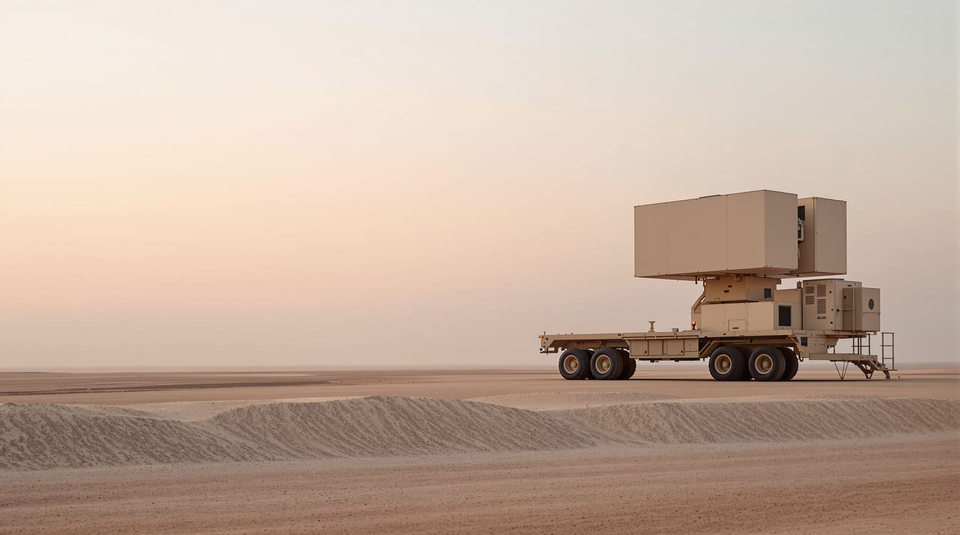
Fatal attack at an air defence site
Two Italian technicians working at an air defence surveillance station in Kuwait were killed after an explosive drone attack struck the facility. The men were employed by Rheinmetall Italia, the Italian arm of the German defence group. A Kuwaiti military officer and a Pakistani national were also injured. Kuwait and Italy attributed the attack to Iran, while Tehran denied that its forces had carried out any offensive operation at the site.
The conflicting claims make attribution a central part of the story. Kuwait initially described injuries caused by falling debris at a vital facility before confirming that the Italian technicians had died. Italy said it would raise the incident with the Iranian embassy and urged restraint. Iran's armed forces spokesperson and its embassy in Rome rejected the allegation. No independently presented technical evidence had publicly resolved the dispute at the time of the official statements.
Civilian specialists caught in a widening conflict
The victims were not described as combat troops. They were specialist employees supporting an air defence system, illustrating how modern military infrastructure depends on civilian engineers and contractors. Those workers can face many of the same risks as uniformed personnel when surveillance, radar or missile-defence facilities are targeted. Their deaths are likely to prompt questions about protective arrangements for foreign technicians stationed at sensitive sites across the Gulf.
Italy's response must balance accountability with the risk of further escalation. A formal diplomatic complaint can demand evidence and explanations without presuming that a military answer is required. Kuwait also has an interest in establishing precisely what struck the facility, where it was launched and whether existing warning systems detected it. A credible investigation will need debris analysis, radar records and a clear chain of custody rather than competing political declarations alone.
Gulf states face growing exposure
The incident comes during a regional war that has expanded beyond direct exchanges between the United States, Israel and Iran. Gulf Arab states host foreign bases, surveillance systems and logistics networks, making them vulnerable even when their governments seek to avoid direct participation. A strike on Kuwaiti territory can affect diplomatic calculations throughout the region because it challenges the assumption that neighbouring states can remain insulated from the conflict.
Critical defence sites are not the only concern. Ports, energy terminals, airports and communication networks can also become targets or suffer secondary damage. Governments must protect these assets while keeping civilian services running and avoiding measures that create panic. The use of relatively inexpensive drones complicates that task. Defenders may need to detect small aircraft over long distances and decide quickly whether an object presents a real threat in crowded airspace.
Why verified attribution matters
Assigning responsibility for a drone strike is difficult when several state and non-state actors operate similar systems. Flight paths, electronic signatures, components and explosive residue can build a case, but each piece must be interpreted carefully. A mistaken accusation could widen the war, while an inconclusive response might encourage further attacks. Public findings should therefore distinguish confirmed evidence from intelligence assessments that cannot be fully disclosed.
The confirmed human cost is already serious: two Italian nationals are dead and two other people are injured. The next decisions by Kuwait and Italy will depend on the investigation and on whether further attacks occur. Iran's denial leaves the central dispute unresolved, so responsible coverage must not turn allegation into certainty. What is clear is that the regional battlefield has again reached a country attempting to protect vital facilities without becoming another front in the conflict.
Protection of contractors needs urgent review
Defence companies and host governments should reassess evacuation plans, shelters and alert systems for civilian contractors. Specialists may rotate through multiple countries and may not receive the same preparation as military personnel. Clear responsibility for warnings, protective equipment and medical evacuation should be established before a crisis. Contracts also need realistic clauses for suspension of work when threat levels rise, allowing personnel to leave without pressure to protect commercial deadlines.
Diplomatic missions can support this process by maintaining current lists of nationals working at sensitive facilities and testing emergency communications. Privacy and security limits mean such lists cannot be public, but they should be available to authorised crisis teams. The Kuwait strike demonstrates that technical expertise can place civilians close to the centre of a military confrontation. Protecting them requires planning that recognises their role without falsely converting them into combatants.
PUBLISHED BY SUYASH PACHAURI, FOUNDER & OWNER, GLOBAL BOLLYWOOD | THE HOLLYWOOD SCOPE.