Introduction: A Small Film With a Larger Creative Question
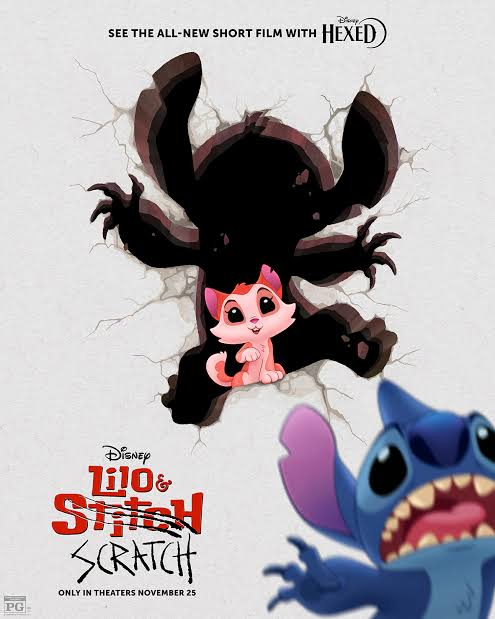
A production feature released on November 13, 2026 offered a detailed look at the craftsmanship behind Lilo & Scratch, an animated short scheduled for theatrical screenings alongside Hexed during the Thanksgiving period. The news is not a newly announced release today. Its continuing importance lies in what the filmmakers have disclosed about an unusual production process, the return of familiar performers and the effort to preserve the visual personality of an earlier animation era. For viewers interested in how screen images are built, the short is worth watching as more than an additional attraction before a feature.
The project arrives at a time when animated filmmaking can draw on a remarkable range of techniques. Computers support layout, lighting and complicated movement, but drawings still carry a distinctive expressiveness. Lilo & Scratch puts that choice at the center of its production story. Rather than requiring every department to adopt one method, the crew developed ways for different methods to coexist. The creative achievement will ultimately be judged on screen, yet the technical decisions already offer a useful case study for students, filmmakers and audiences who care about artistic continuity.
The Confirmed November Update and Holiday Release Context
The November 13 account described Lilo & Scratch as the first theatrical short from Walt Disney Animation Studios in five years. It is set to appear ahead of Hexed in the Thanksgiving theatrical period of 2026. That placement gives the new story a direct cinema audience rather than treating it simply as a catalogue extra. The precise running time and a separate worldwide streaming date were not confirmed in the production account, and those details should not be invented for a viewing guide. The essential confirmed point is the planned theatrical pairing and the filmmaking approach behind it.
For the current November audience, this is a useful preview rather than a claim that the short has already won awards or achieved a particular box-office result. The new footage and interviews explain what the team set out to accomplish before viewers have had an opportunity to assess the completed work. They also distinguish the short from the larger live-action and animated franchise catalogue. The emphasis is on a new compact story and a visual experiment, not the announcement of another full-length sequel.
A Story About Responsibility, Disruption and an Unwelcome Guest
The premise is deliberately simple. Lilo brings home a mysterious cat named Scratch and asks Stitch to look after the new arrival while she is away for approximately six hours. Stitch, who has spent years as an animated symbol of unruly mischief, finds himself responsible for a creature with a talent for turning his surroundings upside down. The reversal gives the comedy a clear foundation: a character normally associated with chaos must now manage somebody else's chaos.
This setup offers space for visual storytelling without demanding complicated exposition. A cat can communicate through a look, a sudden movement or an impossible escape, while Stitch can react through posture and timing. The story also links the franchise's enduring idea of family with a smaller everyday conflict. Responsibility is not necessarily presented as a speech or a lesson. It can emerge through a series of mistakes, the effort to correct them and the difficult realization that caring for another being requires patience.
Why a Hybrid Animation Pipeline Matters
The production team combined hand-drawn animation with computer-generated work and developed a pipeline intended to let both mediums occupy the same scene. One described example uses a traditionally drawn truck driver interacting with Scratch, who is computer animated. The truck and the broader scene planning were handled in three dimensions, allowing the artists to coordinate action without abandoning the flat drawn appearance associated with the original film. The result requires cooperation among layout, character animation, effects and compositing rather than a simple filter applied at the end.
Technical hybridity is most effective when the viewer does not have to think about which department made each element. A drawn character can feel weightless beside a highly dimensional object if the lighting, perspective or physical timing does not align. Animators must therefore negotiate common rules for contact, direction and momentum. That negotiation is especially important for slapstick comedy, where a collision needs to be legible in a fraction of a second. The experiment demonstrates how technology can serve a recognizable aesthetic instead of automatically replacing it.
Watercolor Backgrounds as More Than Nostalgia
The artists also returned to the watercolor language of the 2002 film. The production team studied original backgrounds in the animation archive, reusing roughly a quarter of the short's backgrounds from the earlier production. More than a dozen new painted backgrounds were created, alongside digitally made scenery and extensions. This is a substantial design decision. Reusing art can maintain the atmosphere of a familiar world, but the new images must still have their own composition and storytelling purpose.
Some of the new paintings were made on paper while others were produced digitally to resemble watercolor. What matters is not the location of the brush or stylus but whether texture, color and visual depth remain coherent across edits. The mixture also shows why preservation has practical artistic value. Archived material is not merely something to display behind glass. When studied carefully, it can guide present-day color choices, locations and character movement without forcing a new production to imitate every frame of the original.
The Directors and the Importance of Creative Latitude
Fawn Veerasunthorn and Malcon Pierce developed the concept and directed the short, working with producer Nathan Curtis. The creative team explored numerous ideas before settling on the mischievous cat premise. Their stated objective was to recover an energetic comic edge while testing a new process for combining techniques. The pairing of a modest story with a demanding visual challenge makes sense: audiences can follow the joke immediately, giving the animation more room to surprise them through expression, timing and detail.
Creative freedom in this situation is not the absence of production discipline. Bringing traditional and digital departments together requires clear technical standards so that collaborators know how to exchange work. The directors still need a consistent visual tone and a reliable approach to revisions. A short film can serve as a manageable place to test those choices because its smaller narrative world allows the team to see how new procedures function across an entire finished piece.
Familiar Voices and Returning Animation Expertise
Maia Kealoha returns as Lilo after playing the character in the 2025 live-action film, while Chris Sanders returns to voice Stitch, a role connected to the original animated feature. These performers offer different kinds of continuity. One connects the new short with a recent screen incarnation; the other anchors it in the character's longer history. The interaction between their performances and the animated physical comedy will be central to whether the characters feel like a family rather than a collection of recognizable references.
The crew also brought back Alex Kupershmidt, who supervised Stitch animation on the original film, to work as character animation lead. The involvement of earlier artists can supply knowledge that is difficult to capture in a standard model sheet: when a movement should snap, how a facial expression transforms and where a pose becomes recognizably Stitch. Continuing a character's identity does not require preserving every old production process unchanged. It requires understanding which choices make the performance distinctive.
Sound and Music Carry the Cultural Setting
Composers Haim Mazar and Grace Fisher created an original score informed by the sound world associated with the franchise. The recording involved a nine-piece Hawaiian ensemble as well as a seventy-piece orchestra in Los Angeles. Those details show a musical scale considerably larger than viewers might assume for a short. The team's aim was a continuous-feeling musical experience assembled from several connected cues, allowing score, action and transitions to support one another.
Music becomes especially useful when a story is driven by physical humor. A small rhythmic interruption can announce that a character's plan is failing, while an orchestral shift can give emotional weight to the recovery. Hawaiian instrumentation can also help locate the story within its established setting, provided it is handled as more than a decorative accent. The strongest score will leave room for sound effects, silence and the performers' reactions rather than filling every moment simply because a large ensemble was available.
What the Short Suggests About Animation's Future
Lilo & Scratch illustrates a broader question facing animated production: how can studios adopt flexible digital systems while protecting the individuality of artists' work? The answer cannot be a blanket return to one historic method or an assumption that newer software always looks better. The most promising approach gives different artists the means to contribute within a shared visual grammar. A traditional animator and a digital layout artist can then pursue the same comic idea through different but compatible tools.
This has consequences beyond a single franchise. Training programmes often separate traditional drawing, digital modeling and compositing into distinct disciplines, yet finished films increasingly require fluent collaboration among them. A compact hybrid project can demonstrate why each discipline benefits from knowing how the others work. It also reminds the industry that a technical advance only matters to audiences when it helps communicate character, atmosphere, humor or emotion.
A Practical Guide for Viewers
The confirmed theatrical plan places the short ahead of Hexed during the Thanksgiving 2026 release period. Viewers should consult their own cinema's programming to establish whether a particular screening includes the short, especially outside the United States. A separate digital release date, universal territorial rollout and exact running time should not be assumed from the November production feature. Those are straightforward distinctions, but they prevent a historical preview from becoming an inaccurate promise about where and when the work can be watched.
For those approaching it as a filmmaking exercise, the most rewarding details may be in the backgrounds and the transitions between media. Watch how Scratch occupies a scene with drawn characters, how the watercolor environment supports the movement and how the music changes the pace of a joke. Those choices are easier to appreciate when audiences know a mixture of old and new techniques was intentional rather than accidental. The short can therefore entertain families and reward a second, more technical viewing.
Final Perspective: The Value of a Carefully Made Short
The November 13 production story remains relevant because it documents a creative experiment that can still be examined after the holiday publicity cycle has passed. Lilo & Scratch uses a simple relationship conflict to test a complex collaboration among hand drawing, computer animation, painted scenery, returning performers and original music. That combination is more interesting than merely repeating a famous character's name. It asks whether a beloved visual identity can be extended through experimentation without losing the qualities that made audiences connect with it.
The short's artistic success will belong to the finished film and the people who watch it, not to advance promotional language. What can be said now is that its makers have described a specific production strategy, an identifiable story and a theatrical pairing for the holiday season. Those verifiable details make it a worthwhile preview for animation enthusiasts and professional filmmakers. The lasting lesson may be that innovation and preservation become stronger when neither is treated as the other's enemy.
PUBLISHED BY SUYASH PACHAURI, FOUNDER & OWNER, GLOBAL BOLLYWOOD | THE HOLLYWOOD SCOPE.