Manchester Animation Festival has drawn a consequential boundary for its next competition. On 13 November 2026, after concluding its annual screenings and award presentations, the Manchester event announced that films created using generative artificial intelligence would no longer be accepted for submission from 2027. The change is more durable than a festival-week headline because it affects what independent animators, students and established studios can submit during the next cycle. It also invites a more precise conversation about which digital production methods remain compatible with human authorship.
The timing matters. The 2026 festival ran from 8 to 12 November, and its organisers announced the new position while celebrating the artists behind that programme. Manchester Animation Festival describes itself as the United Kingdom's only animation festival qualifying for both the Oscars and BAFTAs. Its decision therefore reaches beyond one event's publicity: it sets an eligibility condition that participants must understand long before sending a finished film. This article examines the announced rule, its practical implications and the award winners whose work shared the spotlight with the policy.
A Policy for 2027, Not a Retroactive Verdict
The November 13 announcement applies to submissions from the 2027 edition onwards. It does not mean that the festival cancelled its 2026 awards, withdrew recognition from previously screened films or declared every computer-assisted animation technique unacceptable. The festival's public submission guidance focuses on the final moving image. A work is considered ineligible if any part of that image has been generated or transformed using a generative audio, image or video model. The wording is intentionally broad, and prospective entrants should evaluate their production methods against the official policy rather than rely on a general claim that AI was used only briefly.
The festival has also said it is not obliged to watch a submission that violates the generative AI rule, and its submission terms provide no refund in that situation. This has practical consequences for projects produced by several vendors or freelancers. A director may understand the main animation pipeline while remaining unaware that a subcontractor used generative transformation on a final shot. Checking processes across the entire team may therefore become as important as reviewing the finished film. That is an editorial inference from the announced condition, not a newly published requirement for a particular certification document.
The Distinction Between Digital Tools and Generated Images
Animation has relied on computers for decades, from compositing and rendering to digital drawing, simulated movement and camera control. Those techniques do not become interchangeable with prompt-based generative models simply because both require software. The central practical distinction is whether an artist determines and controls the images and motion, or whether a generative model calculates the visual result from a prompt or source material. Filmmakers should not presume that a traditional digital workflow is automatically prohibited. Equally, hand-drawn footage transformed through a generative model may raise a different eligibility issue from footage that remains entirely artist-created.
Why This Matters for Independent Film Production
Film-festival rules can influence creative choices well before an audience buys a ticket. Emerging animators plan their schedules around submission windows, funding deadlines, school terms and the availability of collaborators. If a competition excludes generative content in its final moving images, producers need to make that choice during development, not after picture lock. A short sequence that seems inexpensive to generate could impose a costly revision if the finished film no longer meets a target festival's conditions. The prospect is especially relevant to small teams attempting to balance limited resources with ambitious visual styles.
There are competing perspectives. Supporters of restrictive eligibility policies argue that animation depends on identifiable artistic labour, technique and accountability, and that festivals can reasonably decide which practices they wish to reward. Other filmmakers may see generative systems as another experimental instrument, particularly when access to equipment, location filming or specialist postproduction skills is limited. Manchester's announcement sets the festival's competition boundary; it does not settle the wider ethical, economic or artistic debate. Different festivals can adopt different tests, and the public may encounter both approaches in other programmes.
The 2026 Awards Recognised a Range of Handmade Voices
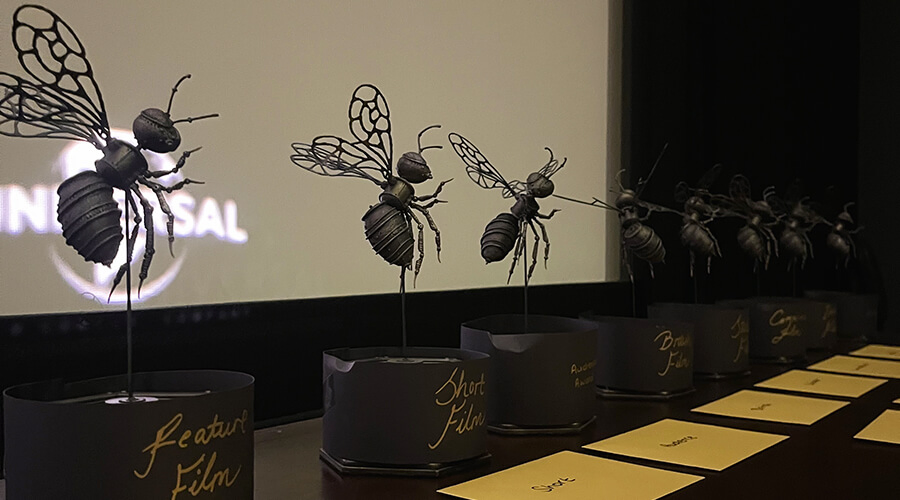
The policy arrived alongside a substantial awards announcement, not as an isolated technology statement. The Feature Film Award went to In Waves, directed by Phuong Mai Nguyen, while Kōhei Kadowaki's We Are Aliens received a special mention. The Short Film Award went to When the Sea Was Calm, directed by Mamuka Tkeshelashvili, with Anna Ginsburg's Hag also recognised. In the British short category, A Little Death, directed by Leto Meade and Jonathan Rockefeller, won, and Elizabeth Hobbs's Daughters of the Late Colonel earned a special mention. These distinct titles illustrate the breadth of storytelling presented at the festival, without making unverified claims about the individual productions' technical workflows.
Student and specialist categories expanded that picture. To Kill a Velofahrer, directed by Helmi Korhonen, Ines Nungässer, Livio Frauendorf and Marvin Büeler, received the Student Film Award. The Immersive Film Award went to Mirage, directed by Naima Karim. Kikkoman: Unleash Legendary, directed by Mariano Fernández Russo, won the Commissioned Film Award. Singularity, directed by Andy Goralczyk, took the Children's Award, and Into the Forest, directed by Antonin Niclass, received the Audience Award after also earning a children's-category special mention. Together these results encompass student work, commissioned projects, immersive formats and productions aimed at younger viewers.
Industry Crafts Behind the Screen
The festival also singled out industry disciplines that audiences do not always see in promotional headlines. Joe Wells received the scriptwriting award and Bryony James the storyboarding award for Pablo Next Level. Sam Turner was recognised for character animation on Do I Look Like I Care?, while Kostas Firinidis received the character-design distinction for How Smart Are Crows?. These categories place writing, planning, movement and visual personality alongside finished-film honours. They give context to the new eligibility debate because discussions about authorship often become more concrete when the work of specific craftspeople is visible and credited.
A Growing Festival With an International Audience
The 2026 Manchester Animation Festival attracted almost 12,000 admissions during its five-day programme, the organisers said. Events took place at HOME and other Manchester venues, combining screenings with studio showcases, conversations, premieres and professional meetings. Programme highlights included the world premiere of Mog's Bad Thing, a screen adaptation of Judith Kerr's picture book, a UK premiere of Lucy Lost and a preview screening of The Cat in the Hat. The scale of the programme helps explain why the festival's future selection requirements are relevant to distributors, educators and animation studios outside Manchester itself.
An online component extends the event's activity beyond its cinema dates. The organiser has already identified 14 to 18 November 2027 for the next in-person festival, with online events listed from 19 to 30 November. Those dates provide a useful planning horizon, but prospective entrants should still check the official submissions page for category details, eligibility updates, fees and deadlines. The announcement of a competition policy should not be mistaken for confirmation that every submission mechanism and date has been finalised.
What Filmmakers Should Check Before Entering
For an animator targeting 2027, the most useful immediate action is a production audit. Review whether any final footage has been generated or altered by a generative audio, image or video model, including work supplied by third parties. Keep an accurate record of the creative process, particularly where ordinary computer-assisted animation could be confused with generative alteration. Read the current festival submission conditions before paying a fee. These are practical editorial recommendations based on the published eligibility rule, not a claim that organisers have prescribed one universal paperwork format.
Education providers and commissioning studios also have decisions to make. A student may be preparing the same short film for several festivals with incompatible rules. A commissioning client may value a generative technique that is unacceptable to a festival competition. Clear communication at the brief stage can reduce disputes about deliverables, festival strategy and later revisions. Rather than assuming a universal industry standard exists, teams would be better served by identifying target events early and documenting where creative responsibility lies.
The Larger Question Beyond One Festival
Generative AI is changing how the screen industries discuss cost, ownership, training and artistic value, but none of those issues has a single accepted answer. A festival's power is narrower and more specific: it can define the kinds of works it considers for its own awards. Manchester Animation Festival has made that choice for its 2027 submissions while continuing to celebrate the range of achievements in its 2026 programme. For readers and filmmakers, the lasting story is the combination of a clearly announced future eligibility rule and an active international animation community whose next projects must decide how to respond.
PUBLISHED BY SUYASH PACHAURI, FOUNDER & OWNER, GLOBAL BOLLYWOOD | THE HOLLYWOOD SCOPE.