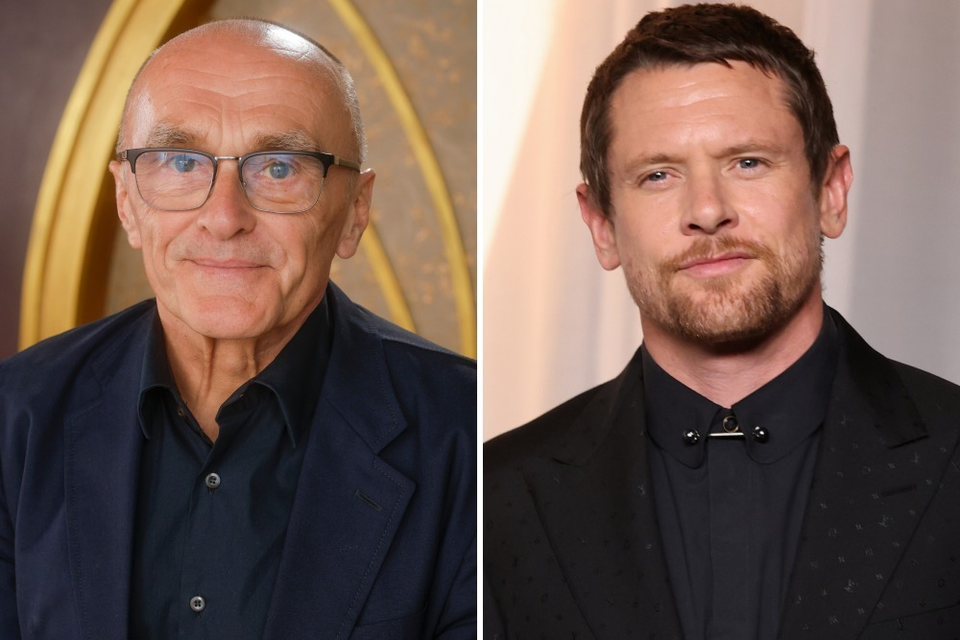
A Designer Who Made Imagined Worlds Feel Physical
British production designer Mark Tildesley has died at 63 after a long illness. Across a career spanning roughly 35 years and more than 40 production-design credits, he created spaces for filmmakers including Danny Boyle, Mike Leigh, Paul Thomas Anderson, Sam Mendes, Fernando Meirelles and Cary Joji Fukunaga.
His work ranged from the deserted London of 28 Days Later to the monumental machinery of the London 2012 Olympic opening ceremony and the global environments of No Time to Die. The variety of those projects reveals a designer whose contribution went beyond decoration. Tildesley helped directors establish the rules of a world before actors spoke.
28 Days Later Changed the Image of London
The opening of 28 Days Later remains one of the most memorable visions of modern British cinema. Empty streets, abandoned landmarks and improvised signs of collapse transformed familiar London into a place of shock and vulnerability.
Achieving that effect required design decisions that worked with location control, cinematography and performance. The images feel immediate because the environment is recognisable, yet every detail suggests that ordinary systems have stopped functioning.
A Long Collaboration With Danny Boyle
Tildesley reunited with Boyle on Millions, Sunshine, Trance and T2: Trainspotting, as well as the stage production of Frankenstein. Each project demanded a different visual language. Sunshine required the engineered interior of a spacecraft, while T2 had to revisit places associated with an earlier generation without freezing them in nostalgia.
Their most publicly visible collaboration was Isles of Wonder, the opening ceremony for the 2012 Olympics. Tildesley and Suttirat Anne Larlarb designed a four-hour event that moved through British landscape, industrial history, health care, popular music and digital culture inside one stadium.
The London 2012 Ceremony Required Cinema at Stadium Scale
An Olympic opening ceremony must communicate to viewers in the venue and to cameras broadcasting around the world. The design therefore had to function as architecture, live choreography and television image at the same time.
The result earned an Emmy for art direction and became a widely discussed representation of British identity. Its success depended on thousands of performers and technicians, but the visual organisation gave their work a coherent progression.
James Bond Brought Another Kind of Pressure
Tildesley designed No Time to Die, Daniel Craig's final film as James Bond. A Bond production must feel recognisably connected to the franchise while giving each location and villain a new identity. Sets also have to support stunts, effects and multiple camera units without losing credibility.
His work helped move the film between intimate domestic spaces, monumental lairs and international locations. The production design carried emotional information as well as spectacle, particularly when familiar characters returned to places shaped by memory.
A Filmography Across Genres and Directors
Tildesley's credits included Wonderland and 24 Hour Party People with Michael Winterbottom, Happy-Go-Lucky with Mike Leigh, High-Rise with Ben Wheatley, Phantom Thread with Paul Thomas Anderson, The Two Popes with Fernando Meirelles and The Banshees of Inisherin with Martin McDonagh.
He also worked on F1: The Movie, Empire of Light and Jay Kelly. His final projects included production design on The Beatles: A Four-Film Cinematic Event alongside Stefania Cella and Neal Callow.
That list is notable not only for prestige but for tonal range. Social realism, science fiction, period drama, spy spectacle and music history all require different relationships between objects, colour and space.
His range also depended on close collaboration with departments whose work is easily separated in award categories but inseparable on a set. Construction, locations, props, decoration, costume, cinematography and visual effects all meet inside the production designer's plan. A street closure in a contemporary thriller demands a different solution from a purpose-built futuristic interior, yet both must support the director's blocking and the practical needs of a crew. Tildesley's ability to move between those conditions helps explain why filmmakers returned to him across projects with radically different budgets and visual demands.
Production Design Is Storytelling Audiences Feel
Viewers may not always identify why a room or street feels persuasive. Production designers coordinate sets, locations, graphics, construction and art departments to make that response possible. Their work shapes where actors move and what the camera can reveal.
Tildesley's career demonstrated that design can be bold without distracting from character. The environment often carries history silently, allowing a film to communicate class, decay, aspiration or danger before dialogue explains it.
A Lasting Influence on British Screen Craft
The British Film Designers Guild recognised Tildesley for High-Rise, Empire of Light and F1: The Movie. Colleagues have remembered both his talent and his place within the professional community.
His death removes an artist whose work connected independent British filmmaking with the largest international productions and live events. The films remain, but so does a wider lesson for the craft: a designed world is most powerful when its scale serves the human story unfolding inside it.
PUBLISHED BY SUYASH PACHAURI, FOUNDER & OWNER, GLOBAL BOLLYWOOD | THE HOLLYWOOD SCOPE.