Why the November Recognition Matters
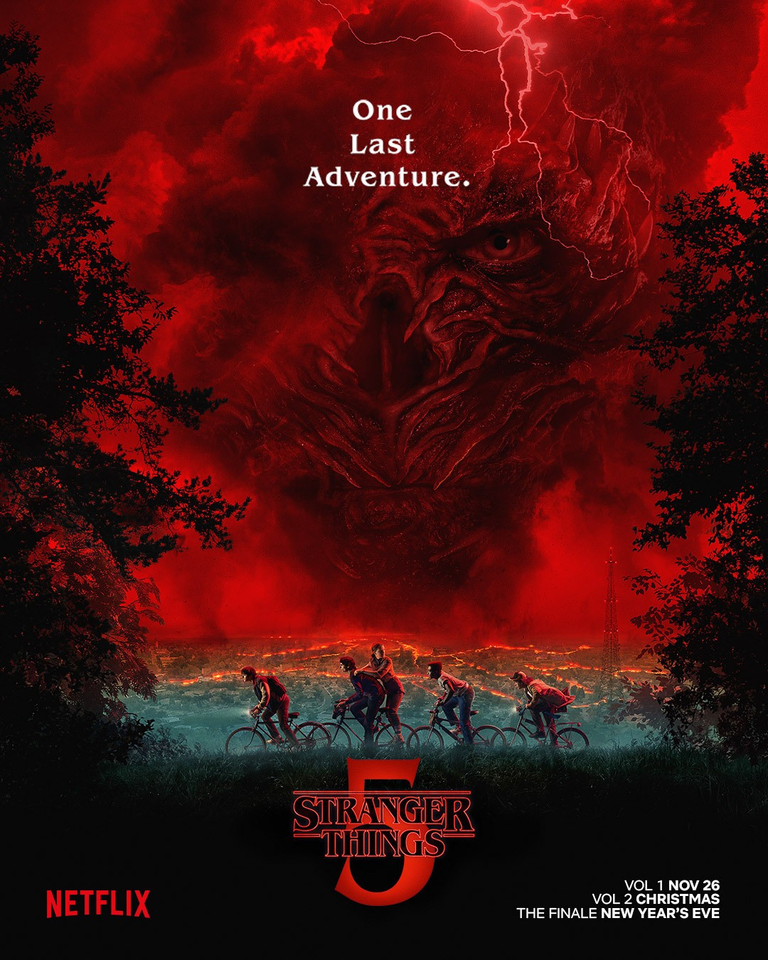
On November 13, 2026, a new industry discussion about audio description highlighted two unusually different productions: the slapstick sequel Happy Gilmore 2 and the final season of Stranger Things. Their audio-description teams had been recognized in the film and series categories of the Audio Description Awards Gala People's Choice Awards the previous day. The recognition is significant not because two famous titles gained another distinction, but because it draws attention to the writing, narration and quality control that make cinema and television understandable through sound.
Audio description is sometimes mistaken for a mechanical inventory of whatever appears on screen. In practice, the writer has to decide which visual information changes the audience's understanding, where words can fit between dialogue and sound effects, and what tone will preserve the intended emotion. A poorly timed explanation can weaken a joke or interrupt a frightening silence. A successful track gives blind and low-vision viewers access to meaning without telling them how they must feel about a scene.
The Awarded Productions Had Different Creative Challenges
Happy Gilmore 2 depends on the timing of physical jokes, character reactions and familiar comedy rhythms. Stranger Things Season 5 has a different storytelling burden: its images carry suspense, reveal clues and connect the final season to memories from the beginning of the series. The former asks an audio-description writer to preserve a punchline; the latter asks that writer to maintain atmosphere and continuity while the action is moving quickly. Treating both as the same kind of narration would miss the fundamental difference between their genres.
Both titles were recognized through the People's Choice awards administered by the American Council of the Blind. This is not a general claim that every accessibility feature on either production is perfect. It is a specific acknowledgment of the audio-description work. The distinction matters, because awards should identify the achievement that was actually judged rather than becoming a vague marketing statement about a programme's overall quality.
Physical Comedy Requires More Than Naming an Action
How a joke survives the translation into sound
In a slapstick sequence, the comic payoff may happen while another character is still speaking. Narrators cannot simply talk continuously over the soundtrack. They must pick the instant when a short description will make the visual gag understandable without competing with dialogue. The information also has to be economical. Explaining why an image is funny can ruin the comedy, while omitting the crucial physical movement can leave listeners without the setup needed for the joke.
The Happy Gilmore 2 audio-description production involved Descriptive Video Works. Its team selected Justin Smallbridge to narrate with a voice intended to maintain a recognizable connection to the earlier film's description, while comedy writer Erin Muroski contributed expertise in conveying visual humor. These choices illustrate a wider production principle: the accessibility track is a crafted performance, with its own casting decisions and scriptwriting judgment, rather than a last-minute technical attachment.
Quality Control Gives Listeners a Creative Voice
The process did not end when the initial script was recorded. Anton A. Hill, a visually impaired quality-control specialist, reviewed the description, narration and final mix for Happy Gilmore 2. The production then recorded changes and additional lines in response. This feedback stage is particularly important because sighted creators may assume that an explanation is obvious, only to discover that a listener needs a different order of information or a clearer spatial reference.
Blind and low-vision professionals bring lived listening experience as well as professional editorial skill. Their role should not be reduced to symbolic consultation after decisions have already been fixed. Meaningful review can change the finished track. That is a practical lesson for film producers: accessibility planning deserves a budget, a production schedule, qualified collaborators and sufficient time for revisions, just like subtitling, color grading or sound mixing.
Stranger Things Uses Description to Build Memory
Revisiting the series' original visual language
The approach for Stranger Things Season 5 centered on the show's shifting tension and long-running visual mythology. Audio-description writer Christina Stevens, working with International Digital Centre, discussed a sequence involving young Will and his early encounter with the Upside Down. Rather than merely identify the location, she drew on descriptions and imagery familiar from the first season to bring listeners back to that earlier emotional setting.
A sense of continuity is essential in a mystery-driven series. Color, weather, expression, creature movement and changing light may each contribute to the audience's recognition of a place or threat. The writer must choose what to carry forward and what not to overload. When description recalls an earlier scene in a deliberate but unobtrusive way, it can give the listener the same narrative reward that a returning visual motif gives to a sighted viewer.
Multilingual Access Extends the Reach of a Performance
The November 13 account reported that Happy Gilmore 2 launched with audio description in 14 languages. Stranger Things Season 5 had descriptions in 15 languages across its three staggered releases. These numbers refer to language versions of the accessibility tracks, not to a count of separate programmes. Keeping that distinction clear prevents a useful operational achievement from turning into a misleading claim about the size of a content catalogue.
A multilingual description cannot always be handled by translating every English sentence word for word. Timing, idiom, grammatical length and the cultural meaning of a visual joke change between languages. A script that fits a narrow gap in English may become too long elsewhere. The goal is equivalent storytelling access, which may require locally informed adaptation while respecting the original scene, rather than numerical uniformity of wording.
Scale and Technology Need Careful Interpretation
What the published catalogue figures do and do not show
As of the November 2026 statement, the platform reported more than 75,000 hours of audio description available across more than 50 languages. It described that amount as equivalent to more than 40,000 feature-length films when each language version is counted separately. Those figures are a historical service snapshot, not a claim that 40,000 distinct movies have complete description tracks or that the totals will remain unchanged.
The company also described Originator Studio, an authoring application designed with screen-reader compatibility so blind and low-vision professionals can participate in the workflow. The value of such software will ultimately depend on how practitioners can use it in real assignments, not on a product announcement alone. Technology can remove barriers to script preparation and review, but inclusive hiring and professional authority still determine whether people with disabilities can shape the work.
Training and Representation Beyond a Single Release
The accessibility programme described support for Audio Description Training Retreats beginning in 2024, with nine graduates and five writers from the 2025 cohort subsequently working with Descriptive Video Works. It also cited a 2026 programme in Korea for blind narrators and quality-control professionals, alongside a workshop in Taiwan involving specialists from the disability community and creators working on descriptions and captions.
These details point toward a sustainable professional pipeline rather than a one-off publicity campaign. More trained practitioners mean that productions can access varied voices, genres and cultural perspectives. Yet a workshop does not automatically prove lasting employment. An appropriate follow-up question for the industry is whether graduates receive consistent paid assignments, creative credit and opportunities to progress into senior editorial roles.
What Indian and International Filmmakers Can Learn
The lessons extend well beyond one streaming service. An Indian feature film, a regional-language drama and an independent documentary all face the same core question: will important narrative information remain available to an audience member who cannot see the screen clearly? Producers can address that during planning by setting aside resources for description writers, narrators, accessible review sessions and multiple language versions where distribution demands them.
A practical workflow starts by identifying scenes where images carry story information absent from dialogue. Producers should let description teams view a near-final cut, work with sound editors to find openings, and test completed material with skilled blind and low-vision reviewers. Release teams also need to label accessible versions accurately and avoid suggesting that one language track serves every audience. These are editorial and distribution decisions, not simply compliance checkboxes.
A Lasting Question for Screen Storytelling
The November 2026 recognition demonstrates that accessibility can be judged as a creative achievement in its own right. Happy Gilmore 2 shows how attention to rhythm can protect comedy. Stranger Things Season 5 shows how carefully selected words can preserve dread and long-form narrative memory. Neither example requires reducing the film or programme to a lesson; the objective is to let the audience encounter the work with its artistic intentions intact.
The wider measure of progress will be what happens after an awards ceremony. Stronger crediting practices, transparent language coverage, professional participation from disabled creators and consistent quality control would make accessible storytelling a normal part of production. That is why this development remains relevant after its November 13 announcement: it describes a set of craft choices that future filmmakers, broadcasters and audiences can continue to evaluate.
PUBLISHED BY SUYASH PACHAURI, FOUNDER & OWNER, GLOBAL BOLLYWOOD | THE HOLLYWOOD SCOPE.