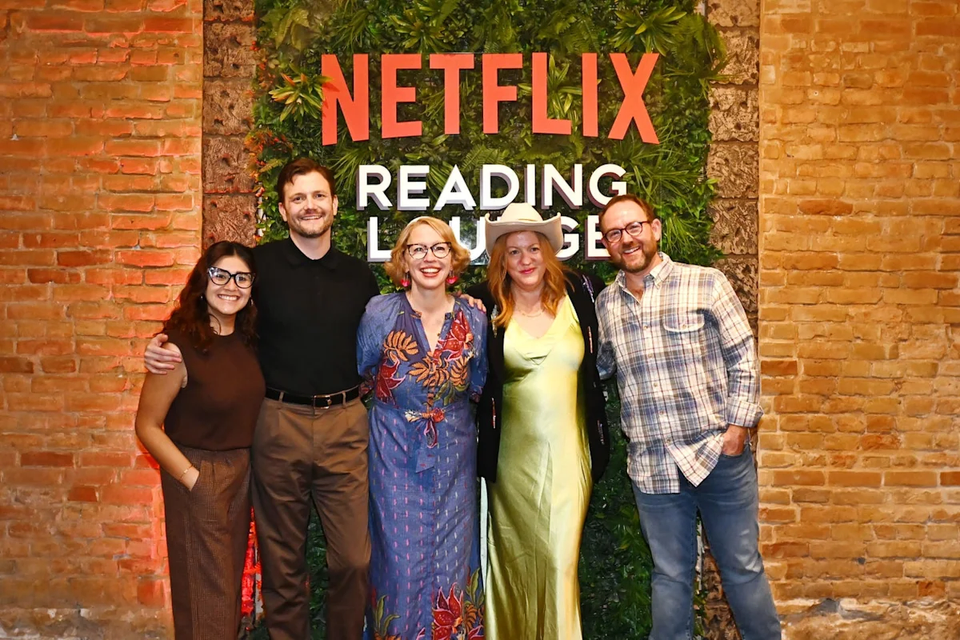
A set of figures released on November 16, 2026, has put the relationship between streaming entertainment and book publishing into sharper focus. Netflix attributed more than 13 billion worldwide views since 2025 to adaptations of books, with those productions accounting for nearly one fifth of viewing hours on the service. The disclosure is worth examining after the initial announcement cycle because it raises a lasting commercial question: can a screen adaptation create a sustained second audience for an existing literary work? The figures suggest considerable potential, but they also require careful reading before anyone treats them as a guaranteed formula for sales.
What the 13 Billion Views Figure Actually Measures
The headline total is a worldwide aggregation covering book-derived programming from 2025 onward, not the audience of a single new release or one publishing season. The proportion of viewing hours is a different measure from the count of views. Neither figure independently establishes how many viewers bought a book afterward. Taken together, however, the numbers illustrate the substantial space that adaptations occupy in a crowded entertainment catalogue. They also help explain why publishers, authors and studios continue to develop relationships around established fiction rather than regarding a novel merely as raw material for a screenplay.
A second statistic adds a distribution perspective. At the point of the November 16 disclosure, a book adaptation had appeared in the platform's Global Top 10 during 98 percent of 2026. That does not mean adaptations held 98 percent of chart positions. It means the format had an almost continuous presence in those lists. This distinction matters: a consistently visible category may comprise many different titles, countries and genres, without any one adaptation controlling the audience. The commercial advantage comes from repeated discovery opportunities, not from a claim of permanent dominance by a single franchise.
The Tenfold Sales Claim Needs Context
The disclosure also stated that United States sales of adapted books, combining print, electronic and audio editions, increased tenfold on average within the thirty days following the corresponding screen premiere. The magnitude attracts attention, yet an average does not reveal the outcome of every individual title. A modest-selling backlist book can multiply rapidly from a small starting point, while a highly established bestseller may behave differently. Without the complete underlying sample, baseline sales levels and title-by-title distribution, it would be a mistake to promise that any new adaptation will automatically produce the same result.
There is another distinction between sequence and causation. A screen release may coincide with publicity campaigns, redesigned covers, retailer promotions, audiobook offers or renewed attention to the author. Those mechanisms can reinforce one another. The new numbers describe a meaningful commercial association, but they are not a controlled experiment isolating the influence of streaming alone. Publishers can still use them for planning, provided they ask practical questions about stock, editions, translation rights and marketing rather than turning a promotional average into an unconditional forecast.
Why Thirty Days Is Only the Beginning
The first month after a premiere is a useful interval for measuring attention, but books often have a longer life than a streaming chart. Some readers may start the novel before watching; others buy it after friends discuss the adaptation, and still others discover an author through a later sequel. A title can enjoy a brief rush followed by ordinary sales or build a larger audience over several months. A serious assessment therefore needs later sales windows, library borrowing, audiobook completion and repeat purchases. None of those longer-term patterns can be calculated from the headline statistic alone.
Individual Titles Tell Different Stories
The Whisper Man offers one illustration. Following its film adaptation, reported book sales rose by almost 500 percent, while global audiobook listening increased by 426 percent. The film reached the top position in 68 countries and accumulated 79.5 million views. These are separate measurements: national chart placements, streaming views, physical and digital book sales, and listening activity each describe different forms of attention. Their simultaneous movement supports the view that one story can travel across multiple formats. It does not prove that each screen viewer subsequently became a paying reader.
Remarkably Bright Creatures presents a different timeline. Sales across formats reportedly increased 560 percent between the first-look publicity in March and the peak week in May. This example is valuable precisely because it begins with promotional material rather than a post-premiere month. An early photograph, trailer or release-date reveal can renew interest in an established book before audiences see the adaptation itself. For publishers, that creates an opportunity to coordinate fresh editions and bookseller displays earlier in the marketing calendar, while also reminding analysts not to mix first-look and post-release comparisons as though they measured identical circumstances.
A Classic Novel Can Find a Contemporary Audience
East of Eden provides another angle. Sales of the novel climbed 200 percent, first-time audiobook listening rose 156 percent, and related Pinterest searches increased 869 percent after its recent screen exposure. The novel reached the top of an online bestseller list decades after its original publication. Search activity is especially different from a transaction: someone exploring photographs or quotations has shown curiosity, not necessarily a commitment to purchase or finish the book. Yet the combination shows how an adaptation may introduce a classic work to audiences who never encountered it during their school or university years.
The newer attention to Little House on the Prairie and A Good Girl's Guide to Murder similarly spans more than one format. Sales of the former series rose 110 percent month over month, while first-time listeners to the latter's audiobook increased 183 percent. A growing audience can move between television episodes, print editions, digital libraries and recorded narration at its own pace. That flexibility should influence how adaptation rights are valued. The underlying literary property can keep producing cultural and commercial activity after the credits roll, rather than functioning solely as a one-time source for screen characters.
Book Discoveries Are Not Confined to English-Language Markets
The international examples are particularly instructive. In Italy, sales of The Leopard rose by more than 1,180 percent in the week after its launch. In Norway, a bookstore comparison recorded an increase exceeding 1,000 percent for Detective Hole across an Easter period, while sales of Museum of Innocence in Türkiye grew 406 percent on a specified retail platform in the weeks following its adaptation. These figures use different territories, vendors and comparison periods. They should be read as distinct case studies rather than added together or placed in a ranking of the world's most successful adaptations.
This wider reach also makes local storytelling commercially relevant beyond its first language. A crime novel rooted in Nordic culture, a historical drama from Europe or a romance from South Asia may acquire readers in markets where the original book was previously unfamiliar. Subtitles, dubbing and recommendations can lower the audience's initial barriers to a television or film adaptation. Publishing has its own obstacles, including translation availability and territory rights, but successful screen exposure can make those investments more attractive. The challenge is to preserve the work's cultural identity while building a discoverable international edition.
What Indian Film Producers and Publishers Can Learn
The numbers invite a serious conversation in India's film and publishing industries. Hindi, Malayalam, Tamil, Telugu, Bengali, Marathi and other literary traditions contain stories with varied regional settings and established reading communities. A production company considering an adaptation should examine whether the source work offers durable characters, coherent narrative stakes and cinematic possibilities, not merely whether it appears on a bestseller list. The screen version's language, budget and intended audience should determine how the book is adapted. Authenticity can become a commercial asset when translation and distribution make a regionally specific story accessible to wider viewers.
Publishers and producers can also plan joint campaigns without treating the book as a decorative tie-in. A well-timed reprint, audiobook release, author conversation or subtitled interview can allow film publicity to reach people interested in reading. Contractual questions deserve equal attention. Which party controls adaptation rights, cover artwork, translated editions and promotion? How are territories defined, and what happens if a sequel changes the on-screen plot? A thoughtful agreement can support both creative independence and commercial participation. The headline viewing figure is an incentive to investigate such arrangements, not a substitute for due diligence.
Attention Does Not Remove Creative Risk
An adaptation can attract curiosity while disappointing the original readership, and a film can succeed even when its source edition becomes harder to find. Producers must decide which elements belong to the novel's interior voice and which can be expressed through performance, composition and editing. Readers notice changes to characterization and tone, while first-time viewers evaluate the production without those expectations. A disciplined adaptation strategy protects the emotional core without attempting to reproduce every chapter literally. Market figures can help finance a project, but they cannot settle its screenplay, casting or direction.
How to Read the Figures Responsibly
The 13 billion global views, nearly 20 percent viewing-hour share and tenfold average United States book-sales lift were disclosed together, but they should not be conflated. A view is not the same unit as an hour watched, and neither is a book sold. The various percentage increases in individual examples use different baselines and time intervals. Several underlying figures were supplied by publishing and retail partners, and the aggregate methodology was not independently reproduced in the public disclosure. That does not make the findings meaningless. It means an accurate account should credit the scope of the claim and explain what remains unmeasured.
For readers, the most immediate implication is simple: a screen adaptation can be a doorway into another artistic form. Those who enjoyed an episode may find the source novel explores private motives or a different ending. Equally, those who loved a book may appreciate a television production as a separate interpretation rather than a replacement. The strongest cross-media relationships allow both experiences to coexist. Commercial interest becomes more defensible when it supports access to books, fair treatment of creators and the discovery of titles that might otherwise disappear from popular conversation.
The Lasting Significance of the November Disclosure
The November 16 figures are more than a passing viral statistic because the underlying business question remains open for upcoming adaptations. They show how frequently literature now intersects with global viewing and how dramatic, though uneven, the response in bookselling can be. They also expose the need for stronger common measurements, especially when comparing genres, countries and release windows. Future evidence may strengthen or revise these early conclusions. For the moment, a proportionate verdict is that streaming can expand the readership of literary stories, but there is no guaranteed multiplier for every book or every screen adaptation.
The useful lesson for the next production cycle is therefore not to chase a single number. It is to develop books with care, support their authors and publishers, and create a route for interested viewers to encounter the original work. If that connection is handled thoughtfully, a story may gain a second life while retaining the qualities that made it valuable in the first place. In an industry that often measures attention by opening weekends and first-week streams, this longer relationship between page and screen deserves sustained attention.
PUBLISHED BY SUYASH PACHAURI, FOUNDER & OWNER, GLOBAL BOLLYWOOD | THE HOLLYWOOD SCOPE.