NIO Places AI at the Center of Its Next EV Cycle
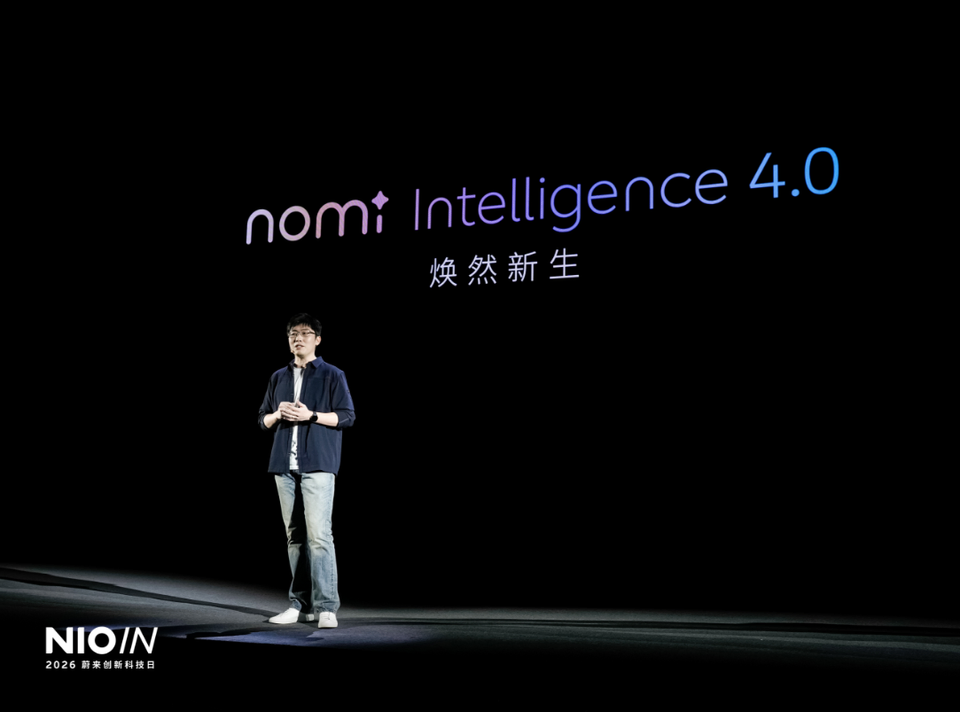
NIO has unveiled two major software systems, WorldModel 3.0 and NOMI Intelligence 4.0, while outlining a broader effort to make artificial intelligence part of its vehicles and its internal operations. The announcements were made at the company's NIO IN technology event in Guangzhou and cover assisted driving, in-car interaction, manufacturing, logistics, research, user services and energy operations.
The strategy is wider than a conventional model-year technology update. NIO is trying to connect vehicle intelligence with an organization that uses AI in daily decision-making. It says more than 7,500 AI agents are already operating across the business and have completed over 2.9 million executions. Those figures describe the company's own deployment and should be judged over time through measurable improvements in cost, quality and customer experience.
WorldModel 3.0 Targets Faster Vehicle Decisions
NIO WorldModel 3.0 is the latest version of the company's physical-intelligence system for smart driving. It is designed to interpret changing road conditions, anticipate what may happen next and support faster responses. NIO says a technique called 4D spatiotemporal compression reduces the computing resources required for onboard attention by 36 times, an important claim because vehicle systems must make decisions with limited hardware and extremely short response windows.
The company also reports a 78 percent reduction in chassis-control latency and a 54 percent reduction in overall vehicle-control latency after coordinating algorithms, chips and chassis systems. Training efficiency is said to be five times that of the previous version. In real-world use, NIO says the system requires 40 percent fewer driver interventions. These remain company-reported performance figures, not a basis for describing the vehicles as fully autonomous.
A Planned Rollout With Regulatory Conditions
WorldModel 3.0 is scheduled to begin reaching users in December across vehicles running the Banyan, Cedar, Cedar S and Coconut+ smart systems. NIO has made the rollout conditional on regulatory filing and clearance. That qualification matters because advanced driver-assistance features are subject to different legal and technical requirements across markets, and software availability can vary by vehicle platform and location.
The update path also illustrates how modern electric vehicles are becoming continuously revised software products. A major capability can arrive after purchase through a system update, but the manufacturer must still demonstrate safety, communicate feature limits and ensure that drivers understand their responsibility. Lower intervention rates can improve convenience, yet they do not remove the need for supervision where the system is classified as driver assistance.
NOMI Intelligence 4.0 Moves Beyond Voice Commands
NOMI Intelligence 4.0 is intended to transform the in-car assistant from a command-based interface into an agent that can understand a goal, plan a sequence of actions and use tools across the vehicle. Its architecture combines NIO's foundation models, a vehicle-native agent framework, underlying system infrastructure and safety controls. The system is designed to perceive conditions inside and outside the cabin while interpreting user intent.
NIO plans a phased introduction. The Cedar 2.0.0 release is expected to be filed in early December and begin after clearance, while Cedar S and Banyan vehicles are expected to receive adapted versions in the second quarter of 2027. Coconut and Coconut+ systems under the ONVO brand are planned to follow later. The staggered approach reflects the work required to adapt an agent-based assistant across different hardware and software environments.
The Business Case Behind 7,500 AI Agents
NIO is also applying AI agents to research, manufacturing, logistics, sales, service and its battery-charging and swapping network. Chief executive William Li said the technology could lift gross margin by 10 percentage points over the long term. That is a forward-looking estimate rather than a realized financial gain, but it reveals why the company is investing beyond customer-facing features.
Electric-vehicle makers operate complex supply chains and capital-intensive networks. Small gains in component planning, factory scheduling, battery utilization, service routing and energy management can accumulate across the organization. NIO's challenge is to prove that thousands of agents produce reliable decisions instead of additional complexity. WorldModel 3.0 and NOMI 4.0 make the new strategy visible to drivers, while the deeper test will be whether AI improves the economics and consistency of the whole business.
The rollout will also test whether NIO can explain complex capabilities clearly to drivers. Names such as world model, foundation model and intelligent agent can sound impressive while obscuring practical limits. Useful product communication should state which vehicles receive each function, what the driver must continue doing, how data is handled and what changes after an update. Trust will depend as much on those explanations as on benchmark improvements.
PUBLISHED BY SUYASH PACHAURI, FOUNDER & OWNER, GLOBAL BOLLYWOOD | THE HOLLYWOOD SCOPE.