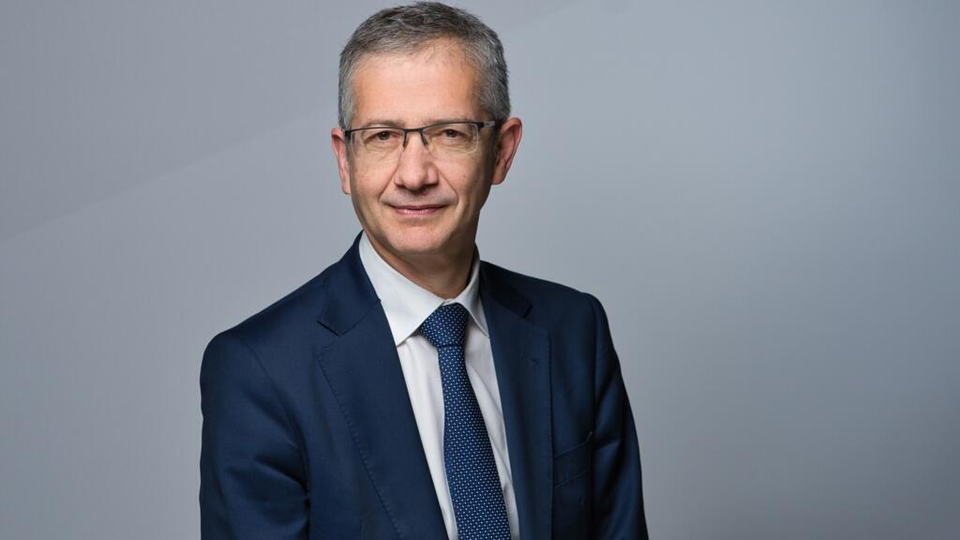
European leaders settle the succession
European leaders have chosen Pablo Hernandez de Cos, the former governor of Spain's central bank, to succeed Christine Lagarde as president of the European Central Bank. The decision resolves a closely watched leadership question at an institution responsible for monetary policy across the euro area. Formal consultation with the European Parliament and the bank's governing council remains, but those steps are expected to confirm the political choice rather than reopen the contest.
Hernandez de Cos will inherit a difficult combination of elevated energy costs, renewed trade uncertainty and concern about government debt. The European economy must absorb inflation connected to the war involving Iran while managing weak investment in some member states. The new president will also need to preserve confidence that decisions are made for the currency union as a whole, even when inflation and growth differ sharply between northern and southern economies.
A familiar figure with a centrist reputation
Markets generally regard Hernandez de Cos as an experienced economist rather than an unknown policy disruptor. He previously led the Bank of Spain and participated in euro-area decision-making, giving investors a substantial record to examine. Analysts often place him near the centre of the debate between officials who prioritise rapid inflation control and those who give more weight to growth, employment and financial stability.
That reputation does not guarantee that policy will remain unchanged. Central bankers respond to data and shocks, not only personal philosophy. If energy prices keep feeding into wages and services, the bank may need to tighten further. If financial conditions weaken and economic activity stalls, it may have to move more cautiously. The new president's influence will come from building agreement across a governing council containing national central bank leaders with different domestic pressures.
Inflation credibility will be the first test
The bank's central mandate is price stability, and the credibility of that commitment affects borrowing costs throughout Europe. Households deciding on mortgages and companies planning investment respond to expectations about future inflation and interest rates. Hernandez de Cos must communicate why any rate increase or pause is consistent with the medium-term target. Clear reasoning is especially important when headline inflation is being driven by energy developments that monetary policy cannot directly control.
The institution must also watch the risk of a wage-price cycle. Workers seek compensation when essential costs rise, while companies may pass higher labour and energy bills to customers. Interest-rate policy can reduce demand and prevent those second-round effects from becoming permanent, but excessive tightening can deepen a slowdown. The next president will need to distinguish temporary shocks from persistent inflation using evidence that is often incomplete and revised after decisions are taken.
Debt and political pressure will not disappear
Higher rates increase financing costs for governments with large debt burdens. The central bank must set one policy for countries with very different fiscal positions, and it must avoid the perception that monetary decisions are designed to finance any particular government. At the same time, severe fragmentation in bond markets can interrupt the transmission of policy across the currency union. Managing that line requires legal precision and careful public communication.
Hernandez de Cos will take office with strong technical credentials and broad political support, but his success cannot be judged by the nomination alone. The decisive questions will be how he handles the next inflation surprise, whether he can maintain council unity and how clearly he explains difficult trade-offs to the public. His selection suggests continuity after Lagarde, yet the economic environment may demand decisions that make continuity far more complicated than it first appears.
Leadership extends beyond the policy rate
The president also represents the institution in international forums and oversees work on bank supervision, payment systems and a possible digital euro. Decisions in these areas affect financial resilience and Europe's strategic independence. Cybersecurity and operational continuity are increasingly important as banks rely on shared digital infrastructure. Hernandez de Cos will have to connect these long-term projects with the immediate task of controlling inflation.
Public trust presents another challenge. Monetary policy can appear remote even though it shapes mortgage payments, savings returns and employment. The next president should explain uncertainty without suggesting that every forecast will be correct. Publishing evidence, acknowledging revisions and distinguishing what the bank can control from what it cannot will strengthen accountability. Technical authority is most durable when citizens can understand the purpose and limits of the institution's decisions.
PUBLISHED BY SUYASH PACHAURI, FOUNDER & OWNER, GLOBAL BOLLYWOOD | THE HOLLYWOOD SCOPE.