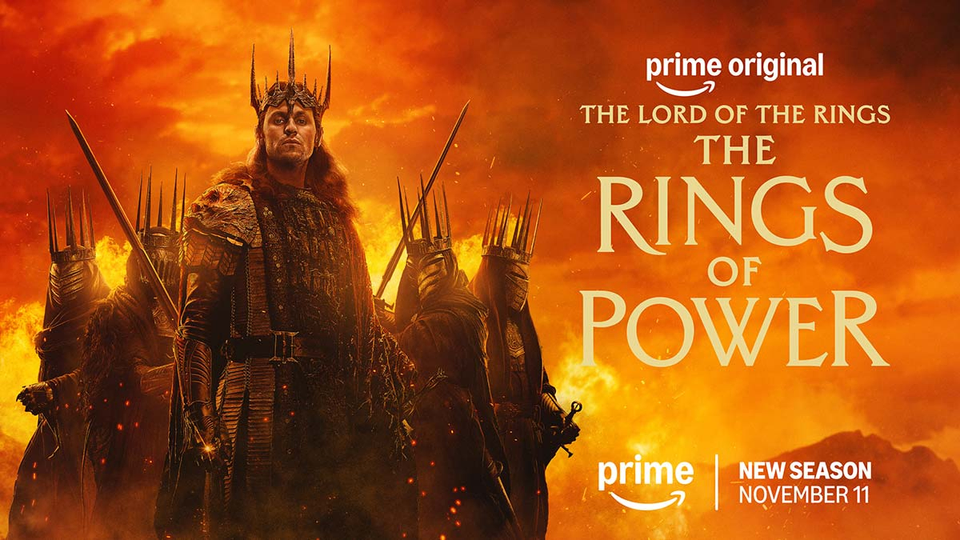
A November Premiere With an Unfinished War
The third season of The Lord of the Rings: The Rings of Power began streaming on November 11, 2026, opening another chapter in the conflict that has been building across the series. For viewers arriving after the premiere rather than following every promotional announcement, the most useful question is no longer when the show will launch. It is how the story has changed, how the episodes are being released, and what the remaining November schedule means for anyone planning a watch. This guide looks at the confirmed release details and the central dramatic stakes without presenting an earlier launch as fresh breaking news.
Season three moves its Middle-earth narrative forward by approximately five years after the fall of Eregion. The political map is harsher, the cost of earlier alliances is more visible, and Sauron is pursuing his ambition with less need for the disguises that characterized his earlier appearances. The result is a premise organized around open conflict rather than merely the suspicion that a dangerous power is emerging. Whether watching weekly, in batches, or later in one sitting, audiences can approach this season as the next phase of a connected long-form story.
How the Eight Episodes Are Being Released
The season comprises eight episodes, but its distribution is not the familiar one-episode-per-week arrangement. Four episodes premiered together on November 11, followed by episodes five and six on November 18. That leaves a concluding pair for the last week of the month. This compressed structure gives viewers a substantial opening block in which to understand the season's new situation, then a shorter interval before the central conflicts reach their end-of-season turning points. It also makes accurate release-date information important, because older promotional schedules are still circulating.
The Later Finale Update
The originally publicized final date was November 25. A subsequent update moved the United States release of the finale forward to Tuesday, November 24 at 6 p.m. Pacific time. In the United Kingdom, that corresponds to the early hours of November 25. The difference is one of time zones, not an extra episode or a separate national premiere. Readers should use the updated release window rather than treat an earlier date graphic as the final word. Streaming interfaces can display local availability times, so the in-app listing remains a useful practical check.
For newcomers, there is no need to race through all eight installments immediately. The first two seasons comprise sixteen episodes, and revisiting their final chapters will make the relationships and losses behind the new war easier to follow. For returning viewers, the batch format allows a different rhythm: the opening four episodes can be considered as one major narrative movement, while the later chapters sharpen the expectations surrounding the climactic confrontation. That structure affects viewing habits even before it affects anyone's judgment of the storytelling.
Sauron Steps Out From Behind the Masks
Charlie Vickers returns as Sauron, whose transformations provided much of the show's earlier tension. In season one he appeared under the identity of Halbrand, gaining proximity to people who did not fully understand his motives. In season two his Annatar persona helped him manipulate the creation of powerful rings. The next stage is more direct. His position in Mordor and his pursuit of the One Ring make domination, not concealment, the defining objective. This progression matters because it turns the danger from a personal deception into a threat to entire peoples and their institutions.
The forging of the One Ring is central to the season's announced creative direction. It links the political struggles unfolding in the Second Age with the mythology familiar from the later adventures in Tolkien's world. At the same time, the series has an opportunity to make that enormous historical consequence feel personal: the choices of leaders, artisans and allies determine how much power one figure can concentrate. No viewer needs to know every appendix or lineage to recognize the underlying dramatic question. What happens when the promise of protection becomes a route to control?
Why the Elven Rings Still Matter
The Elven realms of Lindon and Rivendell remain important because their rings form part of the resistance to Sauron's expansion. Khazad-dum also occupies a strategic place in the story as the Dwarves confront risks that cannot be settled simply by closing their gates. These separate locations give the season more than a single battlefield. They create competing ideas of security, sacrifice and survival. Their leaders may share a common adversary, yet their resources and fears are different, which is a useful lens for understanding the increasingly connected conflicts.
Galadriel, Celeborn and the Emotional Centre
Morfydd Clark's Galadriel remains a central presence in a narrative shaped by the consequences of trust and deception. The introduction of Jamie Campbell Bower as Celeborn adds another significant relationship to that story. Rather than reducing the season to a contest between spectacular armies, the new character dynamic invites attention to memory, separation and what can be rebuilt after a long period of loss. Those who remember the emotional uncertainty of Galadriel's earlier encounters with Sauron will recognize why personal attachments still matter, even as the story expands across whole kingdoms.
The arrival of Celeborn also opens a point of entry for viewers interested in how adaptations interpret a familiar fictional world. Some figures are well known to readers of the larger legendarium, while their presence on screen may unfold in a different dramatic order. A useful approach is to distinguish established elements of the mythology from the television series' own pacing and characterization. Doing so allows viewers to assess the show on its narrative terms without assuming that every remembered detail must arrive in the same scene or episode.
An Ensemble Facing Different Kinds of Danger
Alongside Vickers and Clark, the returning ensemble includes actors associated with the Elven, Dwarven and human storylines, including Daniel Weyman, Owain Arthur and Cynthia Addai-Robinson. New additions broaden those worlds. Simon Pegg has been announced as the voice of the Balrog, while Eddie Marsan joins the cast as Thrain. These contributions are not simply a matter of expanding the credits. The characters and creatures suggest a season interested in how ancient forces, family obligations and political ambition collide when war reaches places that once seemed insulated from it.
The series also has to manage a demanding production challenge. Its events span multiple cultures and landscapes, and the viewer needs to understand where separate decisions intersect. Costume, production design, visual effects and sound are essential to that clarity, but scale is not a substitute for storytelling. In an ensemble fantasy, even a brief exchange can establish the moral cost of a decision more effectively than a panoramic image. Watching for the consequences of individual choices can therefore be more rewarding than trying to rank every spectacle by its size.
A Spoiler-Light Way to Catch Up
A practical refresher begins with three threads rather than an exhaustive genealogy. First, remember how Sauron's identities affected the people he encountered and the rings they helped create. Second, remember that Galadriel's decisions were shaped both by her determination to resist evil and by the difficulty of recognizing manipulation. Third, consider how Eregion's fall changed the security of other realms. Those points provide enough orientation to enter the five-year time shift without needing to memorize the names of every location or new character introduced in the season.
What the Release Strategy Means for Viewers
Publishing four installments on the first date gave the season space to establish a new political and emotional landscape before asking audiences to wait. Releasing the next two together then created a narrower bridge to the finale. This resembles a short event rollout more than a conventional weekly serial, and that difference can change the public conversation. It allows long scenes and parallel arcs to be considered across several episodes, but also creates a need for clearly dated guides that do not confuse the November 11 premiere with the still-upcoming concluding chapters.
For viewers in different countries, the updated November 24 United States finale time is particularly relevant. A global release can be advertised using one market's calendar date even when audiences elsewhere see the episode appear the following morning. It is better to explain that distinction than to insist on a single date without a time zone. The larger practical point is straightforward: season three has already begun, six episodes were released by November 18, and the remaining installments are scheduled to conclude the season in the final week of November.
Why This Season Matters Beyond Its Premiere
The Rings of Power is tackling a part of Middle-earth history whose consequences are known to many audiences through later stories. The challenge is to make those consequences dramatically uncertain in the moment. Sauron's eventual ambition may be familiar, but how the surrounding characters understand and resist it still offers room for emotional discovery. That is what gives this stage of the story its strongest potential: the audience can recognize the scale of the approaching danger while remaining invested in the decisions of people who have not yet seen the whole future.
For a film and television publication, the significant development is not another inflated claim about record-breaking streams or an outdated promotional countdown. It is a major fantasy series that has entered its third season with a new narrative time frame, an accelerated episode rollout and a revised finale time. Those are concrete facts readers can still use. The final assessment of the performances, direction, writing and visual storytelling should come from a full critical review rather than assumptions drawn from publicity materials or isolated reactions.
The Viewing Guide in Context
Anyone beginning season three now can watch the November 11 and November 18 batches before the concluding pair arrives. Those who are still deciding whether to start the show can use the first two seasons to become familiar with its version of Tolkien's Second Age. The November premiere is a historical event, not a fresh announcement, but the story remains an active viewing choice in the days before its finale. Its lasting interest lies in the struggle between the desire to protect a world and the temptation to control it, a theme that can sustain attention long after the release calendar has passed.
PUBLISHED BY SUYASH PACHAURI, FOUNDER & OWNER, GLOBAL BOLLYWOOD | THE HOLLYWOOD SCOPE.