Why This Historical Drama Still Matters
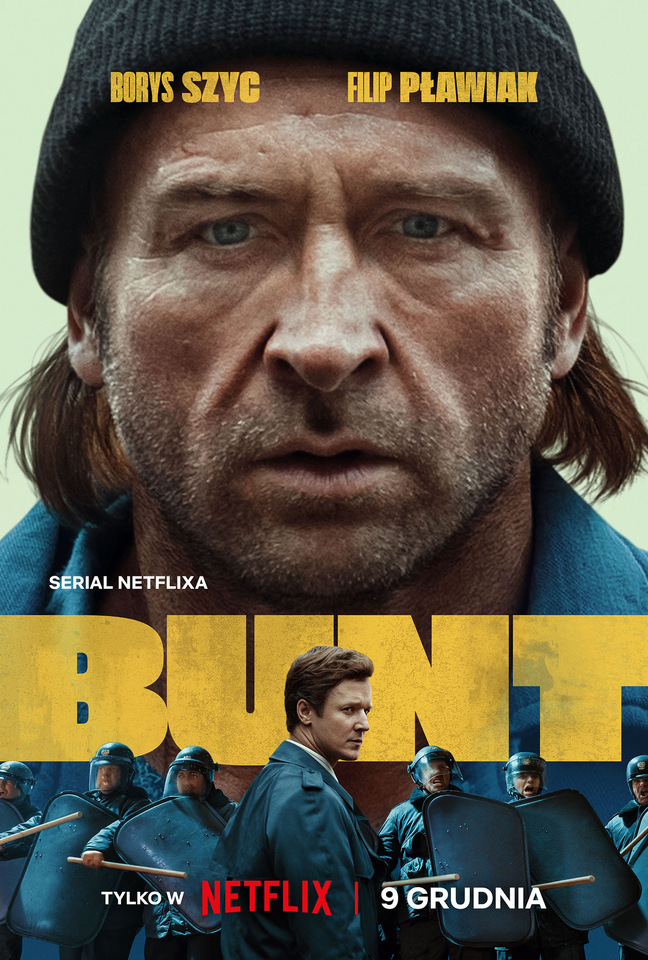
Riot is a forthcoming six-episode Polish prison drama scheduled to premiere worldwide on December 9, 2026. Its release date was confirmed on November 13, a historical announcement that still gives viewers useful advance information. Set in Poland in 1989, the story explores what happens when a society begins celebrating political freedom while people inside prisons remain subject to old hierarchies and coercive rules. That contrast provides the foundation for a thriller about broken promises, unequal power and the possibility of reform. This is a preview of an upcoming programme, not a claim that the original announcement has just occurred.
A Crisis Driven by the Meaning of Freedom
The central conflict begins with expectations of amnesty. Prisoners hope that a changing political environment will bring relief, but the removal of that possibility turns frustration into a dangerous confrontation. The stakes are not limited to security inside the institution. Characters must decide whether obedience, negotiation or resistance offers any prospect of dignity. The creative premise makes freedom a contested idea rather than a simple slogan. Outsiders can celebrate transformation, yet people living behind the walls may experience little of the promised change. The drama uses that distance between public optimism and private suffering to explore why a rebellion develops.
Two Former Cellmates on Opposite Sides
Borys Szyc plays Reagan, while Filip Pławiak portrays Janek Chmielewski. The men are former cellmates, giving them a shared history before the prison uprising pushes them onto opposite sides of a fraught situation. Their earlier relationship makes the conflict more personal than a simple fight between groups. Each may remember the other as an ally, while present responsibilities force difficult choices. The premise presents both men as trying to prevent bloodshed, but their methods and positions are not identical. What ultimately happens between them has not been publicly established in the announced story details, and it would be inappropriate to invent an outcome.
The Human Cost of a Prison Uprising
The programme broadens its point of view beyond the two leading characters. A convict, a young politician and a prison psychologist offer different angles on the same emergency. Each has access to knowledge and authority that the others may lack. The prisoner experiences punishment directly, the political figure confronts competing demands for public order and reform, and the psychologist must navigate human distress within a restrictive institution. Such a structure could prevent the conflict from becoming a simplistic confrontation in which everyone on one side shares the same motives. It can also show how well-intentioned decisions may generate dangerous consequences under pressure.
Anita Szepelska and the Supporting Ensemble
Anita Szepelska plays psychologist Agnieszka Czajka, who attempts to understand the inmates and promote change from inside the system. The announced ensemble also features Jacek Poniedziałek, Rafał Maćkowiak, Artur Kujawa, Robert Wabich, Ryszard Kakietek, Michał Pietrzak and Michał Felczak. Guards, prisoners and administrators all have parts in the unfolding crisis. Their presence suggests that individual relationships and institutional incentives will matter alongside major confrontations. A prison story becomes more persuasive when characters are not reduced to uniforms or labels. Whether this series achieves such nuance will be a question for viewers after the episodes are released.
The Meaning of Its 1989 Setting
The year is essential to the premise. Poland was experiencing profound social and political change, and the drama locates its prison conflict amid those wider expectations of freedom. A historical backdrop of that magnitude naturally invites questions about who benefits from reform first, who is excluded and how older institutions respond to challenges. Riot is inspired by actual events, but inspiration is not the same as a documentary promise. The character dialogue, precise chain of events and individual motivations should not be treated as verified historical testimony simply because the setting is recognisable. Audiences interested in the period may use the series as a starting point for further historical reading.
The Writers and Directors
Łukasz Bluszcz and Marcin Kubawski wrote the screenplay. Mateusz Rakowicz directs episodes one, two, four and five, while Marek Lechki directs episodes three and six. Maciej Kubicki is credited as producer through Telemark. The six-part format provides room for several perspectives without requiring an extended series order. It may allow the story to establish its characters, intensify their competing interests and examine the emotional consequences of a crisis. That is a judgement about the dramatic potential of the format, not a premature review of finished episodes. No responsible assessment of their pacing or performances can be made solely from promotional descriptions.
Cinematography, Sound and Production Design
Jacek Podgórski is the cinematographer, Anna Anosowicz handles set design and Marta Ostrowicz is responsible for costumes. Alina Janerka is credited for makeup, Baasch for music, Bart Putkiewicz for sound, and Sebastian Mialik and Aleksandra Gowin for editing. The prison setting presents particular visual challenges, because corridors, gates and small communal spaces can make the geography of authority immediately apparent. Production design may help distinguish the institution's routines from the outside world's political transition. Sound can communicate restriction, surveillance and gathering unrest. These are areas to examine when the series is available, not assertions that its execution has already been assessed.
Confirmed Information and Open Questions
The confirmed information is clear: Riot is a Polish drama inspired by events in 1989, it contains six episodes, and it has a worldwide Netflix premiere scheduled for December 9, 2026. The announced cast is led by Borys Szyc, Filip Pławiak and Anita Szepelska, with directing shared by Mateusz Rakowicz and Marek Lechki. Details of the complete narrative, the final episode's resolution and the exact running time of each instalment remain outside this preview. Promotional material is useful for identifying the premise and participants but cannot substitute for critical observation. The original November announcement should be understood as dated background rather than fresh breaking coverage.
What International Viewers Can Expect
The series is likely to appeal to viewers interested in historical conflict, crime drama and stories about institutions under strain. Its most interesting proposition is that the definition of freedom may shift depending on a person's position within a system. An inmate, a former cellmate, an administrator and a psychologist can all encounter the same event yet see different moral obligations. That tension is relevant beyond Poland's specific historical moment. International viewers should approach Riot as a scripted interpretation that raises questions rather than a comprehensive factual account of 1989. The scheduled December premiere offers an opportunity to examine those questions through six completed episodes.
Final Outlook
Riot combines a tightly defined place, a politically charged period and an intimate relationship strained by opposing responsibilities. The forthcoming release has an established premiere date and a substantial announced creative team. Its possible strength lies in showing how an uprising affects people who have differing degrees of power, fear and responsibility. No verdict about acting quality, historical fidelity or storytelling effectiveness can honestly be offered before viewing the programme. What can be said now is that the premise and release details provide a concrete reason for readers to keep the December 9 date on their viewing calendars.
PUBLISHED BY SUYASH PACHAURI, FOUNDER & OWNER, GLOBAL BOLLYWOOD | THE HOLLYWOOD SCOPE.