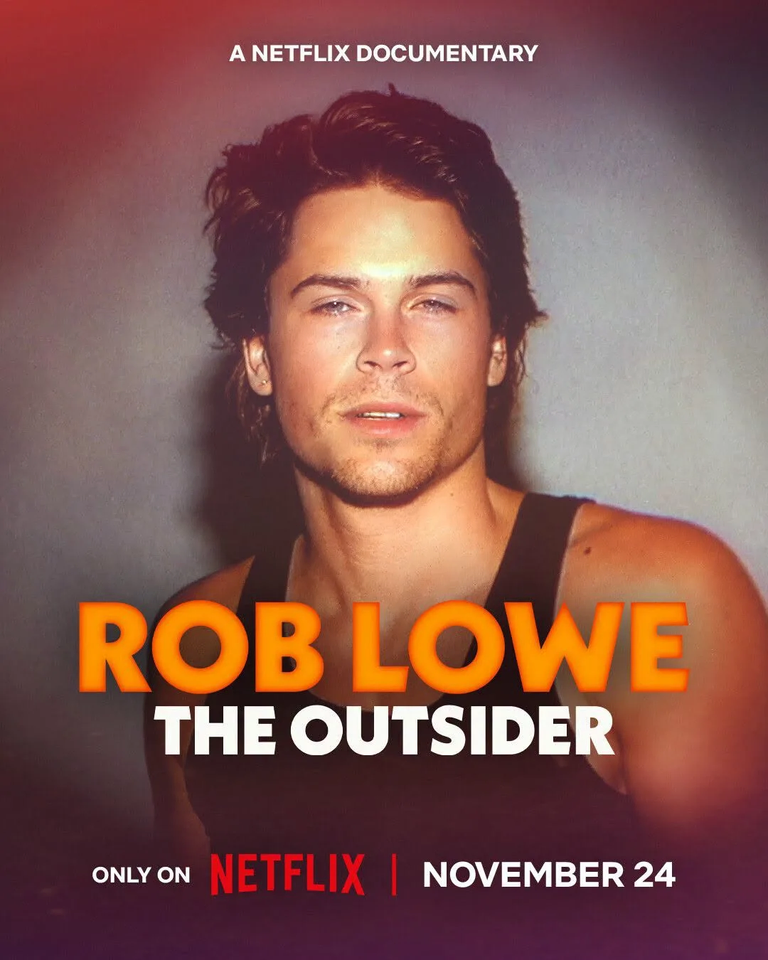
A Familiar Life Receives a Smooth Documentary Treatment
Rob Lowe: The Outsider revisits a Hollywood career that has already been examined through memoirs, interviews, comedy and decades of public attention. Directed by Chris Smith, the documentary follows Lowe from a difficult childhood in Ohio through teenage fame, 1980s excess, professional setbacks, sobriety and a long second act on television.
The material is undeniably rich. Lowe moved through the Brat Pack era, major films, scandal, recovery and acclaimed television work while preserving an unusually durable public presence. The documentary presents that journey with pace, warmth and access, but newly published critical assessment suggests it rarely challenges the version of the story that Lowe has already learned to tell well.
This article draws on confirmed programme information and newly published criticism without presenting the analysis as a firsthand screening response.
Rob Lowe Remains an Engaging Guide to His Own Story
At 62, Lowe appears comfortable reflecting on the distance between his young public image and his present family life. He speaks about childhood instability, moving to Malibu and attempting hundreds of auditions before finding early television work. His anecdotes connect him to a remarkable range of Hollywood figures, from Cary Grant to the young cast of The Outsiders.
The pleasure of the film appears to come from that fluency. Lowe understands timing, self-deprecation and the value of a vivid detail. His younger brother Chad contributes perspective on their upbringing, while colleagues and family members help place individual memories within a wider career.
The Outsiders Still Carries Emotional Weight
Lowe recalls making The Outsiders alongside actors who would become defining faces of their generation. He also discusses discovering at the premiere that much of his role had been removed. The moment gives the documentary one of its clearer emotional wounds, revealing how early success can contain humiliation and uncertainty.
That story also illustrates what the film does well. Archival material and personal memory can turn a familiar career milestone into something more intimate. The documentary is strongest when Lowe's polished public persona briefly gives way to the younger person still trying to understand what happened.
The Scandals Are Included but Not Fully Examined
The film addresses Lowe's cocaine use, relentless partying and the scandal involving a sexual encounter with a 16-year-old girl. It also covers the infamous Academy Awards performance with Snow White, a moment that became shorthand for career disaster.
According to the fresh critical response, the documentary acknowledges these episodes without pressing hard on accountability, politics or the way Lowe's public rehabilitation was constructed. That restraint may reflect the limits of a celebrity-authorised portrait. It also leaves the viewer with a clean chronology where a more searching film might explore contradictions.
Sobriety and Family Provide the Redemption Arc
By 1991, Lowe was sober and beginning the stable family life that defines his present image. His marriage to Sheryl Berkoff and their two sons provide a persuasive counterpoint to the chaos of his twenties. The documentary can reasonably celebrate that transformation without pretending the earlier period was harmless.
The question is whether the film allows both truths to coexist. A satisfying portrait would recognise genuine recovery while continuing to ask what consequences remained for other people and how power protected a successful young star.
Chris Smith Keeps the Film Moving
Smith has demonstrated a gift for organising complex personalities and large archives into accessible documentaries. Here, the film reportedly moves briskly through home video, memorabilia, interviews and career highlights. Lowe's early fascination with consumer cameras supplies unusually personal footage from an era before constant digital documentation.
The structure appears polished and coherent, making the documentary suitable for viewers who know Lowe mainly from The West Wing, Parks and Recreation or his recent work. Longtime followers may find fewer discoveries because major episodes have already been covered elsewhere.
Who Will Find The Outsider Most Rewarding?
Fans looking for a generous overview of Lowe's life are likely to enjoy the anecdotes, archival images and sense of survival. The documentary offers a clear account of how a teenage actor became an enduring television presence and a sober family man.
Viewers expecting a hard investigation may be disappointed. The director's access does not appear to translate into a sustained challenge to Lowe's self-understanding. The film provides proximity without always using that proximity to reveal something uncomfortable.
Final Verdict
Rob Lowe: The Outsider benefits from an inherently cinematic life and a subject who knows how to hold attention. Its professional construction and valuable archive make it more than a promotional reel, but its caution prevents it from becoming the definitive portrait that the material could support.
The documentary tells a credible story of endurance, reinvention and gratitude. It is less successful at confronting the unresolved tensions inside that story. Lowe has landed in a stable, reflective place, and the film is pleased to meet him there. What it rarely does is look back from that garden and ask who else was affected on the road to such a comfortable ending.
Rob Lowe’s life supplies the drama, but this careful portrait keeps its most revealing questions at a respectful distance.
Rob Lowe’s life supplies the drama, but this careful portrait keeps its most revealing questions at a respectful distance.
PUBLISHED BY SUYASH PACHAURI, FOUNDER & OWNER, GLOBAL BOLLYWOOD | THE HOLLYWOOD SCOPE.