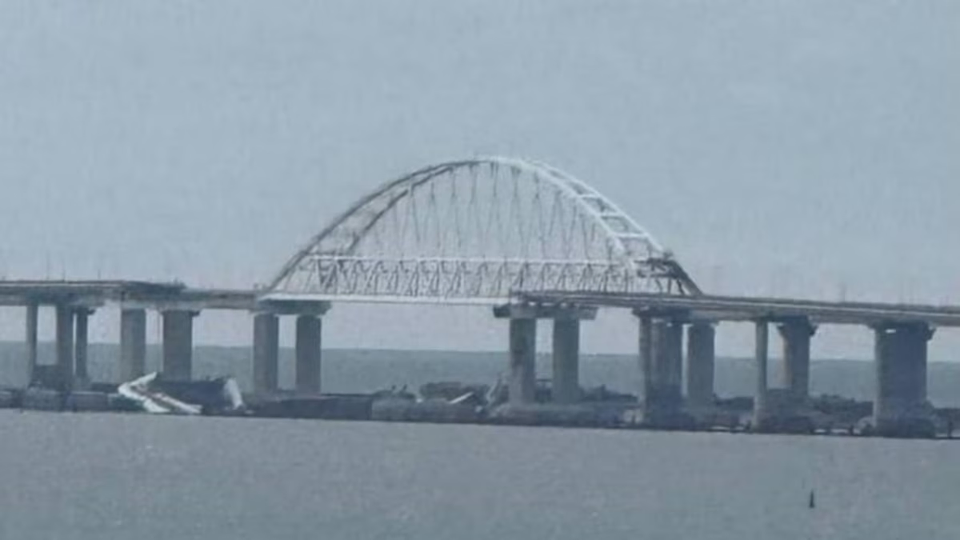
Overnight barrage strikes multiple parts of Ukraine
Russia launched one of the largest missile and drone attacks of the war overnight, striking energy, transport and logistics infrastructure across Ukraine and killing at least eight people. Ukrainian authorities said more than 400 drones and over 110 missiles were used, including 27 ballistic missiles. The scale of the barrage forced residents into shelters as explosions were reported across Kyiv and other regions.
Three bridges crossing the Dnipro River in the capital were targeted, disrupting links between the two sides of Kyiv. Electricity facilities, railway assets and logistical routes were also hit. The choice of targets suggests an attempt to damage both civilian services and the networks used to move people, goods and military supplies. Emergency crews were deployed while air-defence teams continued to assess interceptions and falling debris.
Attack follows renewed confrontation over Crimea
The barrage came after attacks on a bridge linking Russia to Crimea and a public promise of retaliation from the Russian leadership. Crimea has remained strategically important since its annexation in 2014, serving as a military platform and a major supply route for Russian operations in southern Ukraine. Any successful strike on transport links to the peninsula carries both operational and symbolic weight.
Russia has repeatedly responded to Ukrainian attacks with large waves aimed at power systems and urban infrastructure. Ukraine argues that strikes on transport and military-linked facilities are necessary to weaken Russia's ability to sustain the invasion. Moscow says its retaliatory operations target military objectives, although residential areas and essential civilian systems have repeatedly suffered damage. The latest casualties will intensify scrutiny of that distinction.
Diplomatic buildings and Polish airspace raise wider alarm
The attack also damaged the Austrian and Dutch embassies in Kyiv, though no staff members were reported injured. France called for a meeting of the United Nations Security Council, arguing that Russia should answer for strikes affecting diplomatic premises. Damage to embassies adds a direct international dimension because foreign missions are protected facilities and their exposure can complicate diplomatic relations beyond the immediate battlefield.
Poland reported that three objects, believed to be two missiles and a drone, entered its airspace during the attack. The incident was described as a provocation and triggered fresh concern about the risk of spillover into the territory of a NATO member. Even a brief or accidental violation can force military authorities to make rapid decisions while the origin and trajectory of an object are still uncertain.
Energy pressure returns as winter approaches
The renewed focus on electricity infrastructure is particularly serious as temperatures fall. Ukraine has spent years repairing power stations, substations and transmission lines damaged in earlier attacks. Each new wave can reverse months of work, force rolling outages and increase demand for imported equipment. Hospitals, heating systems, water networks and communications all depend on a stable supply of electricity.
Air defence remains essential but expensive. Interceptors must be used against a mixture of ballistic missiles, cruise missiles and relatively low-cost drones. Large waves are designed to stretch detection systems and exhaust available ammunition. Ukraine's partners therefore face continuing requests for additional interceptors, radar equipment and financial support to protect infrastructure and rebuild damaged facilities.
What comes next
The immediate priority is rescue work, restoration of electricity and a full assessment of damage to the capital's bridges and national transport network. Investigators will also examine the objects that entered Polish airspace and the damage to diplomatic buildings, both of which could produce formal international responses.
Strategically, the attack shows that Russia retains the capacity to mount complex nationwide barrages. Ukraine's ability to withstand them will depend on air-defence supplies, rapid repairs and the resilience of its civilian systems during another winter of war.
The bridge strikes may also affect daily movement inside Kyiv even if engineers restore limited access quickly. Traffic diversions can slow emergency services, public transport and commercial deliveries, while repairs require equipment and workers already needed at damaged energy sites. The operational burden therefore extends beyond the visible destruction recorded immediately after the attack.
International partners must decide how to divide support between weapons, infrastructure repairs and humanitarian assistance. Air-defence systems can reduce future damage, but replacement transformers, bridge components and mobile power equipment are needed after missiles get through. A balanced response will be necessary if Ukraine is to protect both military capability and civilian life.
Civilian resilience will remain central in the days ahead. Local authorities must communicate clearly about transport closures, electricity schedules and safe shelter access while preventing misinformation from spreading during further alerts. That administrative work is less visible than air defence, but it directly shapes public safety and confidence during a sustained campaign against urban infrastructure.
PUBLISHED BY SUYASH PACHAURI, FOUNDER & OWNER, GLOBAL BOLLYWOOD | THE HOLLYWOOD SCOPE.