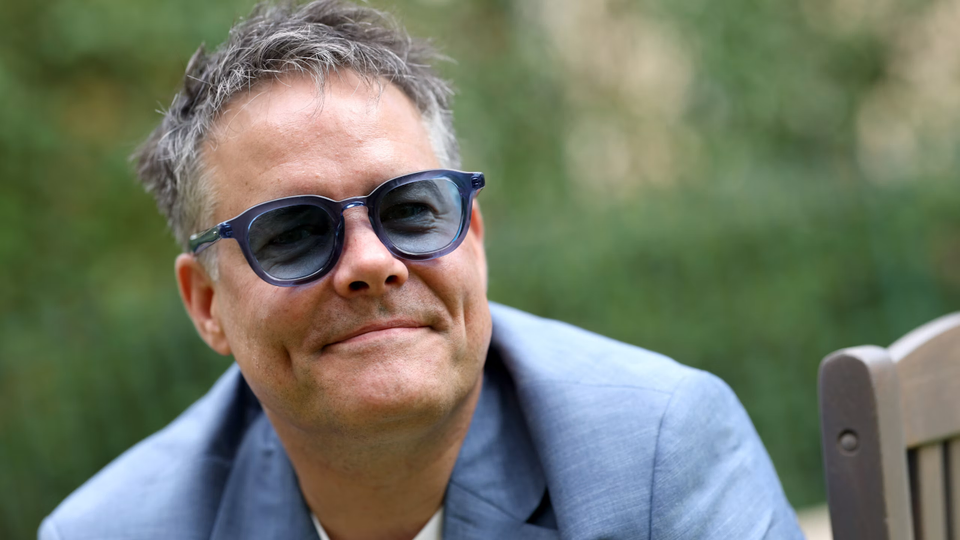
The death of filmmaker Sebastián Lelio on 6 November 2026, aged 52, left a profound absence in international cinema. The days that followed brought tributes from people who had worked with him and from audiences who recognised something unusually generous in his approach to storytelling. By 17 November, reflections from his collaborators had moved the conversation beyond a sad announcement toward a consideration of his working methods and lasting contribution. This retrospective examines that contribution without treating a death announced earlier in the month as a new event.
Lelio's cinema resisted the assumption that a dramatic life must be full of spectacular incidents. He was drawn instead to people negotiating relationships, institutions and inherited expectations that did not quite accommodate them. His best-known films could be intimate and politically consequential at once. Their protagonists were not merely illustrations of social issues; they had humour, contradictions, appetite, dignity and private histories. That combination helps explain why his work crossed national boundaries without losing its Chilean roots.
A Chilean filmmaker with an international perspective
Born in Mendoza, Argentina, in 1974, Lelio moved to Chile with his family when he was young and became one of the most internationally recognised figures in the country's contemporary filmmaking generation. His formation included early experiments in documentary and narrative cinema. Before his global breakthrough, he directed The Sacred Family, released in 2005, and Christmas, which followed in 2009. These works already suggested an interest in the emotional friction that develops when people are placed together under pressure.
The historical importance of that early period is not simply that it preceded more famous films. It established a mode of observation in which behaviour could reveal more than explanation. People share a room, withhold a truth or quietly test one another's loyalties. Rather than immediately assigning moral labels, the camera grants them time. That patience later became an essential feature of Lelio's filmmaking, even as production budgets, international locations and the scale of his audience changed.
Gloria and the significance of ordinary desire
Gloria, released in 2013, was a major turning point. Paulina García played a woman in her late fifties who attempts to make a meaningful romantic life after separation. The film gave its protagonist the complexity often denied to middle-aged women in commercial screenwriting. She could be hopeful, imprudent, wounded and resilient, sometimes in the same sequence. García received the Silver Bear for Best Actress at the Berlin International Film Festival, helping bring international attention to the film and its director.
A leading character who refuses to disappear
The achievement of Gloria lies in its refusal to treat a woman's age as the conclusion of her story. Lelio understood that longing remains active long after society expects it to become invisible. The film does not promise that independence produces an uncomplicated future. It places vulnerability alongside energy and lets setbacks coexist with the possibility of pleasure. For writers and casting professionals, that remains a useful lesson: a character gains depth when a screenplay allows desires and decisions to contradict easy expectations.
A Fantastic Woman and cinema's power to broaden empathy
A Fantastic Woman, released in 2017, established another milestone. Daniela Vega portrayed Marina, a transgender woman forced to contend with hostility, grief and unequal treatment following her partner's death. The film examines how private mourning becomes a public struggle when others believe they have the authority to define a person's identity or deny their relationship. Lelio built the story around Marina's own perspective, allowing Vega's performance to carry experiences of loss, anger, composure and determination.
At the 2018 Academy Awards, A Fantastic Woman won the award then called Best Foreign Language Film, making it the first Chilean feature to win that category. The distinction mattered both to the national film industry and to conversations about who gets to appear as the central figure in widely distributed cinema. Chile had previously celebrated an Oscar for the animated short Bear Story, but this feature-film victory marked a different institutional milestone. The work's artistic reputation should not, however, be reduced to the prize alone.
Why representation was part of the filmmaking craft
The film showed that social relevance depends on the precision of dramatic choices. It is not enough for a story to claim sympathy for its protagonist. Framing, sound, point of view, performance and the conduct of supporting characters all contribute to whether an audience experiences a person as fully human. Lelio's achievement was to sustain Marina's inner life even when the external world made her dignity negotiable. That balance remains instructive for directors working with sensitive material, where a simplistic treatment can easily flatten an experience.
Working in English without abandoning his preoccupations
His move into English-language filmmaking did not amount to a rejection of earlier themes. Disobedience, featuring Rachel Weisz and Rachel McAdams, explored love, religious expectations and the uneasy obligations that accompany belonging to a community. The film's tension arose from relationships that could not be understood through a single opposition between freedom and restriction. It asked what people sacrifice when affection, memory and the rules of an institution pull them in competing directions.
Gloria Bell reimagined the central character of Gloria for a different setting, with Julianne Moore in the leading role. Revisiting his own material invited an unusual comparison between two performances, two cultural environments and the resilience of a story's emotional centre. A remake need not reproduce every surface detail to retain the same dramatic question. Lelio's choice to return to a familiar character demonstrated confidence that an interior conflict could still yield new textures when reinterpreted with a different cast.
The Wonder and the discipline of ambiguity
In The Wonder, his 2022 adaptation of Emma Donoghue's novel, Florence Pugh played a nurse called to examine a young girl in nineteenth-century Ireland who was said to survive without food. Here the filmmaker's characteristic questions moved into a period setting. Faith, doubt, care and exploitation became intertwined, and the film encouraged viewers to examine not only what they believed but why they wanted certain explanations to be true. Its restrained visual language placed exceptional pressure on actors to communicate uncertainty.
The Wave and an engagement with collective voices
His 2025 film The Wave took a conspicuously different formal route. A musical drama shaped by student protest and feminist demands in Chile, it expanded the director's interest in power and identity from a single protagonist toward a collective experience. Its presentation at Cannes offered another example of his willingness to test a new form. The shift toward music, choreography and public action did not erase the humane attention visible in his quieter dramas; it placed that attention in an overtly political environment.
A career that moves from spare domestic observation to an ambitious musical might appear inconsistent on the surface. A stronger connection lies in Lelio's repeated exploration of people claiming authority over their own lives. The private and public scales differ, but the motivating questions remain recognisable. What must someone surrender to be accepted? Who is permitted to speak? How does a community respond when one person's lived reality challenges an accepted account? These are dramatic questions rather than slogans.
Projects interrupted and facts that remain unresolved
At the time of his death, Lelio had begun work on a screen adaptation of Alejandro Zambra's novel Chilean Poet, known in Spanish as Poeta Chileno. News of that unfinished production underscores how abruptly an active artistic career can be interrupted. Any future decision about the project belongs to its filmmakers and rights holders. No completion arrangement should be assumed without a separate announcement. Another reported development project concerned the astronomer Carl Sagan, but its eventual status likewise remains unconfirmed.
Responsible remembrance requires factual restraint
His family announced the death on 6 November, referring to health reasons without publicly disclosing a specific cause. A responsible account should preserve that distinction rather than turn uncertainty into a sensational narrative. Similarly, tributes published later in the month should be dated as tributes, not misrepresented as the original announcement. Readers deserve an accurate sequence of events, especially when the subject's relatives, collaborators and unfinished work remain part of a developing story.
What emerging filmmakers can learn from his body of work
Lelio's films offer practical lessons that extend beyond awards history. His protagonists often carry a clear desire while confronting an environment that misunderstands it. Supporting characters have social functions without becoming mechanical villains or rescuers. Scenes are allowed to hold conflicting feelings, and performances supply information that dialogue sometimes deliberately leaves unstated. For directors, the challenge is to make room for those subtleties while maintaining a purposeful dramatic structure.
For producers and institutions, his international career also illustrates the value of sustaining distinctive voices rather than treating cultural specificity as a commercial obstacle. Gloria and A Fantastic Woman travelled precisely because their characters were situated in recognisable, carefully constructed lives. Collaborations with prominent international actors widened his reach while leaving the underlying artistic concerns intact. The combination of individual vision, capable partners and patient audience development is more useful to emerging filmmakers than the fantasy of sudden fame.
A lasting place in modern world cinema
The reflections shared by colleagues on 17 November add a human dimension to a filmography that can otherwise be summarised too quickly through prizes and famous collaborators. They point toward the experience of making cinema with someone who listened closely to actors and treated emotional nuance as an essential part of direction. His work invites continued viewing and debate, not because every film offers an easy answer, but because each asks audiences to recognise people beyond the boundaries placed upon them.
Remembering Sebastián Lelio means paying attention to that way of seeing. The films remain available for new generations to approach with different questions, and their conversations about identity, care and dignity will not end with the artist's life. The date of his passing belongs to the record of November 2026. His deeper legacy belongs to the ongoing history of cinema, where the capacity to observe another person's complexity is a creative achievement in its own right.
PUBLISHED BY SUYASH PACHAURI, FOUNDER & OWNER, GLOBAL BOLLYWOOD | THE HOLLYWOOD SCOPE.