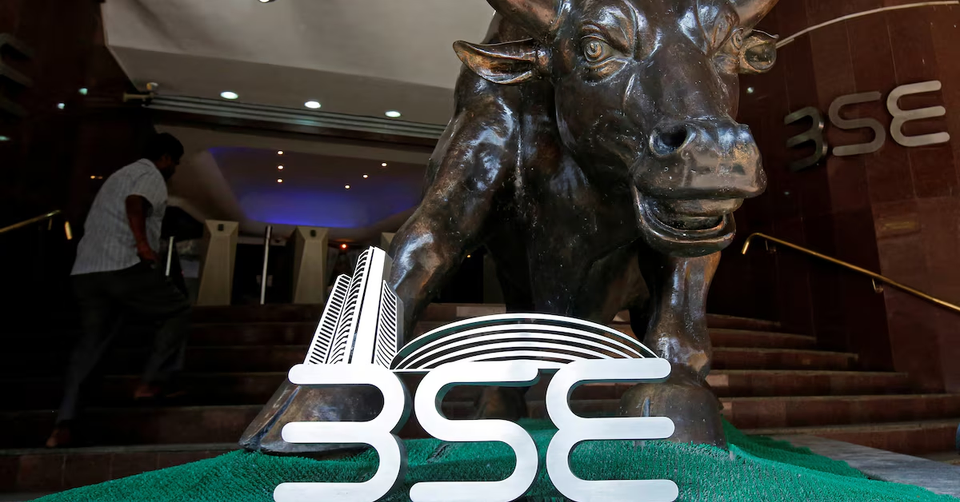
Benchmarks stage a powerful rebound
Indian equity benchmarks closed sharply higher on November 25, recovering from the week's earlier selloff as foreign inflows, lower crude prices and buying in large financial and consumer companies improved sentiment. The Sensex rose 1,502.29 points, or 1.82 percent, to 83,938.28. The Nifty 50 gained 469.60 points, or 1.85 percent, to finish at 25,819.25. The advance added more than Rs 3 lakh crore to the market value of companies listed on the BSE.
The rally was broad enough to lift the leading indices but not uniform across the market. Fast-moving consumer goods led sector gains, while private banks, pharmaceuticals, information technology and automobiles also advanced. Metal shares fell, and parts of the broader market lagged the headline benchmarks. The Nifty Midcap index edged higher while the Smallcap index finished lower, showing that investors favoured established companies rather than treating the session as a general return to risk.
Foreign and domestic institutions buy together
Provisional cash-market data showed foreign institutional investors bought a net Rs 4,479.08 crore of shares, while domestic institutional investors purchased Rs 4,018.72 crore. Domestic funds were net buyers for only the second time in November, making the combined support unusually strong. Foreign investors have returned after selling through the first ten months of 2026, attracted by India's growth outlook, improved corporate earnings and a search for alternatives during a global technology-stock correction.
The inflow has also supported the rupee, which has recovered sharply from earlier record lows. Currency stability matters to equity investors because a weaker rupee can reduce dollar returns even when share prices rise. The Reserve Bank of India's earlier measures, lower oil prices and the revival in portfolio flows have all helped the currency. A firmer rupee, in turn, can ease the cost of imported fuel and other goods, reinforcing confidence in inflation and corporate margins.
Lower crude changes India's risk equation
India imports most of the oil it consumes, so falling crude prices improve several parts of the economic outlook at once. They reduce the import bill, ease pressure on the currency and limit input costs for transport, chemicals, paints and consumer businesses. The benefit is not immediate or identical for every company, but it gives investors a reason to reassess sectors that had been punished when energy prices surged. Airlines and consumer companies were among the beneficiaries of that shift in the session.
The market also drew support from expectations that the economy grew about 7.6 percent in the July-September quarter and from the strongest corporate earnings in four years. Those figures create a favourable growth narrative, but inflation remains a risk. Food prices have broadened and the central bank is expected to consider another rate increase in December. Strong growth and persistent inflation can coexist, which means equity optimism does not automatically translate into easier monetary policy.
One strong session is not a complete reversal
The day's gains brought the Sensex and Nifty close to erasing their 2026 losses and made India the strongest Asian market for November. That relative performance is significant because other major Asian indices fell sharply during the same session. However, foreign capital can move quickly if oil rebounds, US tariffs intensify or global interest-rate expectations change. Investors should distinguish a powerful daily recovery from a guaranteed new uptrend.
The next tests are whether the Nifty can sustain levels around 25,800 to 26,000, whether foreign buying continues and whether gains broaden beyond large-cap names. Upcoming GDP and monetary-policy decisions will add fresh evidence. For now, the November 25 session marks a clear improvement in market confidence: benchmark indices rose nearly 2 percent, institutions bought more than Rs 8,000 crore combined and lower crude removed an important source of pressure. The durability of that recovery will depend on flows, earnings and inflation.
Retail investors should also look beneath the index points before interpreting the rally. A handful of heavily weighted shares can lift the Sensex and Nifty even when smaller companies remain weak. The session's divergence between large caps and parts of the broader market confirms that selectivity remained important. Valuations, earnings quality and debt should guide decisions more than a single day's momentum. Foreign inflows can support prices, but they may concentrate in liquid leaders and reverse when global conditions change. The most constructive signal would be several weeks of participation across sectors, accompanied by stable currency and earnings revisions. November 25 provided strong evidence of returning confidence, while the breadth and durability of that confidence still require confirmation.
PUBLISHED BY SUYASH PACHAURI, FOUNDER & OWNER, GLOBAL BOLLYWOOD | THE HOLLYWOOD SCOPE.